The Watch That Talks Back: The Medical Alert Seniors Actually Wear
Jean Anne Booth sold two chip companies to Texas Instruments and Apple, then un-retired to solve one stubborn problem: her 80-year-old mother would not wear anything that looked like a call-for-help button.
There are two kinds of technology for old age. There is the kind that engineers think older people need, and there is the kind older people will actually put on their bodies. For thirty years, the medical-alert industry sold the first kind: a plastic pendant with a red button, sitting in a kitchen drawer, doing nothing. UnaliWear was built on a simple, slightly stubborn bet that the second kind could win.
The company started with a specific, unimpressed customer. Jean Anne Booth had already had the career most engineers dream about - she founded Luminary Micro, maker of the Stellaris microcontroller, and sold it to Texas Instruments in 2009; then founded Intrinsity, which Apple bought in 2010. She retired. What pulled her back was her mother: active, frail, fiercely independent, and completely unwilling to wear anything that announced to a room that she might fall. Existing alert systems, to her, felt like a surrender. So in 2013, Booth un-retired and started UnaliWear in Austin, Texas, to build the thing her mother would say yes to.
“Unali” means friend. “Kanega” means speak. The company set out to build the friend that speaks to you.The Cherokee roots of the name
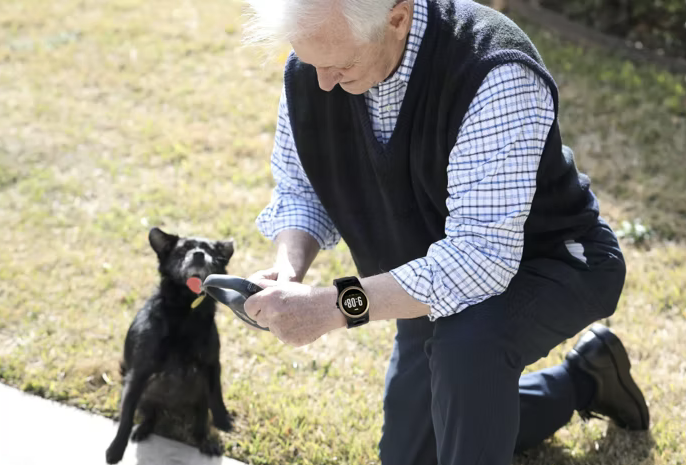
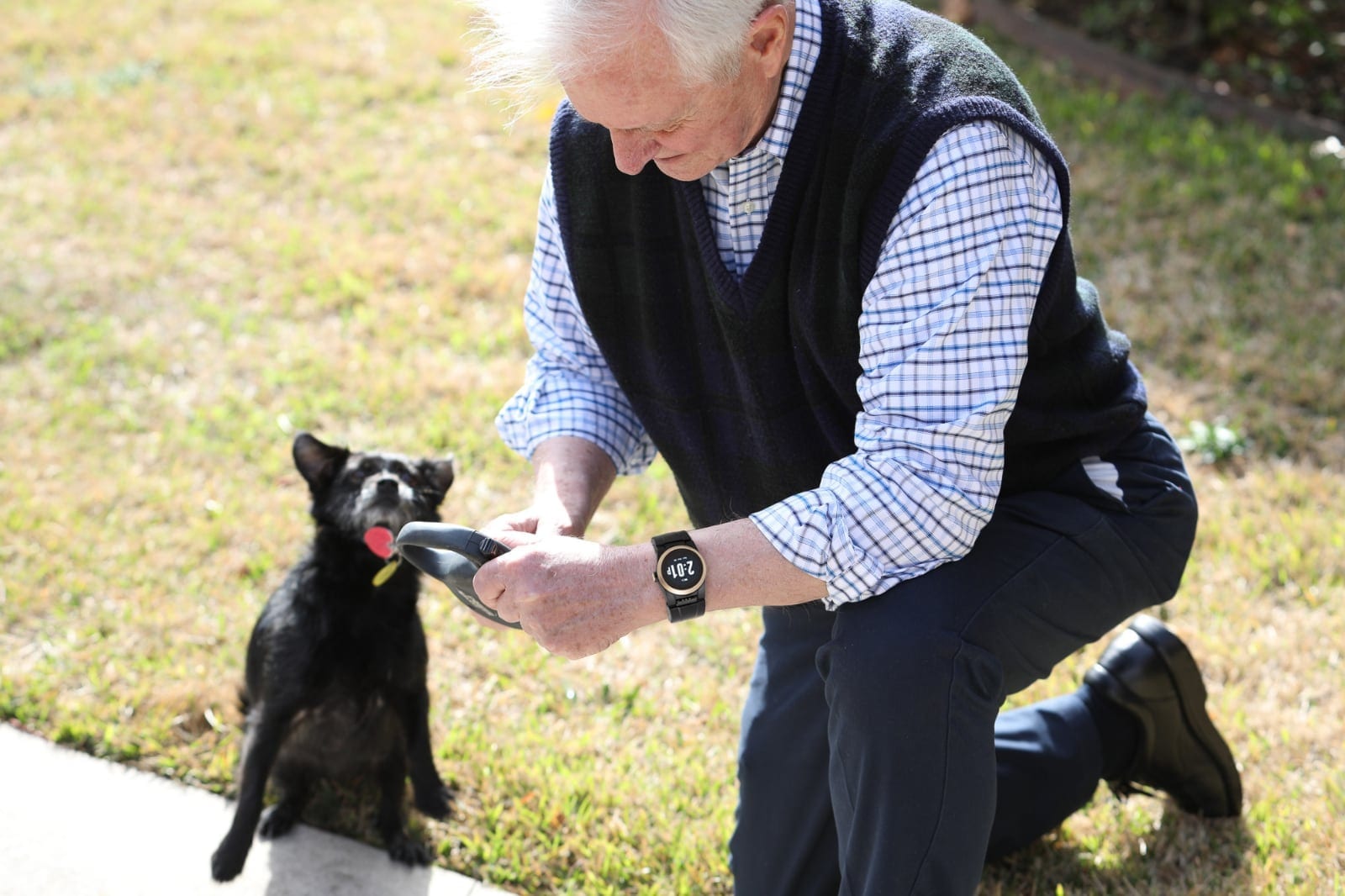
The product that came out of it is the Kanega Watch - a wrist-worn medical alert that looks, deliberately, like a watch and not like a warning label. It does the unglamorous jobs of aging-in-place extremely well: it detects a fall, reminds you to take your medication, counts your steps, watches for wandering, and, when something is wrong, connects you to a live human agent 24 hours a day, every day of the year. It runs on its own over Verizon cellular and WiFi. There is no phone to pair, no base station tethering you to the living room, and - the detail that quietly decides everything - no taking it off at night to charge.

01Designing with the customer, not for her
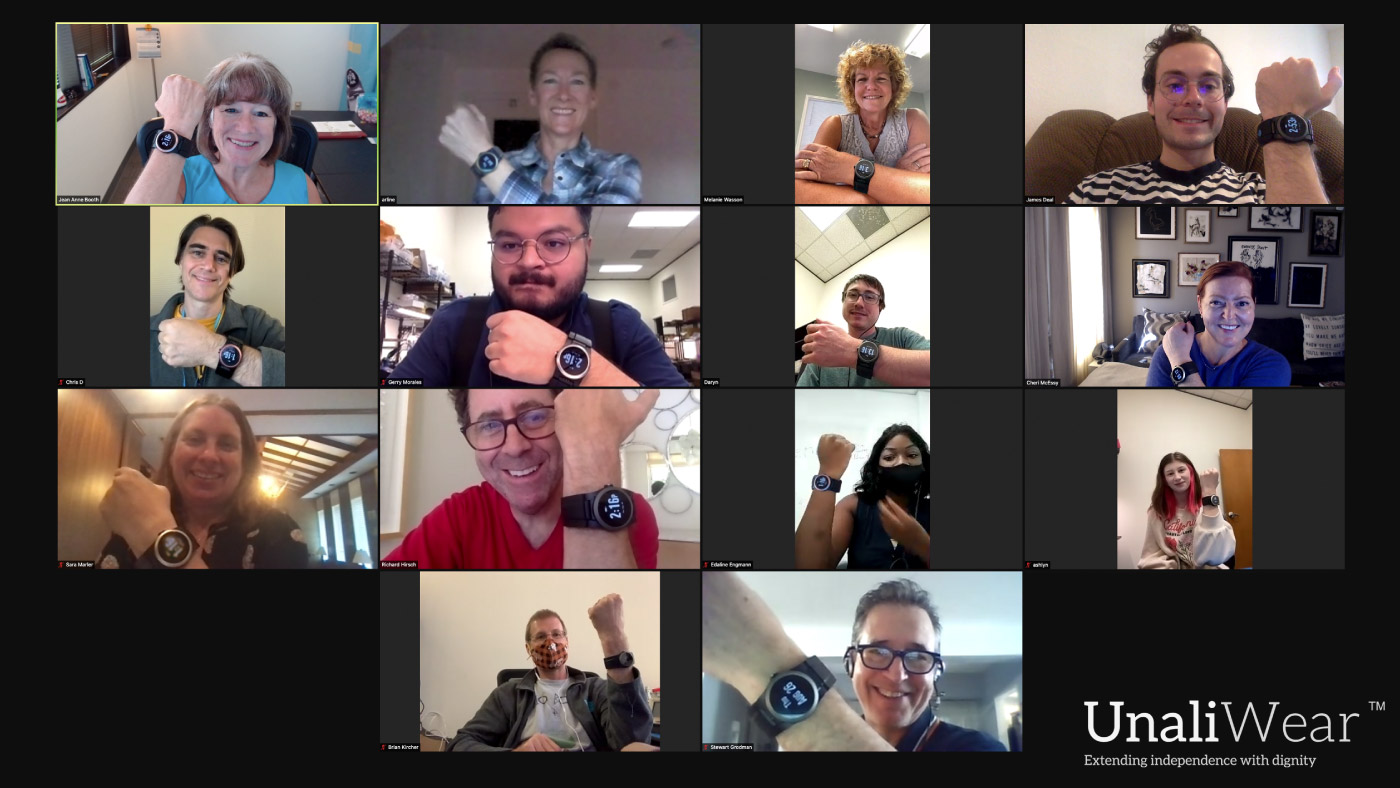
Most senior tech is designed by people in their thirties guessing what their seventies will feel like. UnaliWear did the opposite. Booth's mother held the informal title of Senior Experience Officer and tested every prototype in the actual conditions of her life until she passed away in late 2018. That feedback loop is why the watch is water-resistant enough to shower in, why it can be triggered three different ways, and why the battery never leaves the wrist.
Press
Tap the button on the watch to reach a live agent.
Speak
Say the word - voice-first, no screen-tapping required.
Fall
RealFall detection reaches out automatically if you go down.
That last one is where a lot of competitors quietly fail. Fall detection that fires every time you drop your arm onto an armrest trains people to switch it off. UnaliWear's answer is RealFall, an approach that learns from real-world fall data collected from wearers rather than lab guesswork, so accuracy improves and false alarms fall the more the watch is worn. An algorithm that gets less annoying over time is, for this customer, a feature worth more than any spec.
02The battery you never take off
Here is the deceptively small engineering decision the whole business rests on. A medical alert only works if it is being worn at the exact moment of the emergency - and most falls among older adults happen at night or in the bathroom, precisely when a watch that charges overnight would be sitting on a nightstand. UnaliWear's patented quick-swap system puts the power in small battery pods that live in the band. You swap a pod every day or so; the watch itself never comes off. Adoption, it turns out, is an engineering problem as much as a marketing one.
03Why it isn't just a cheaper Apple Watch
The obvious question is why not just buy a mainstream smartwatch that also detects falls. The honest answer is that they are built for different people. A general smartwatch assumes a confident user, a paired phone, nightly charging, and a call straight to 911. UnaliWear assumes none of that. It is voice-first, standalone, worn continuously, purpose-built for a senior's hands and eyes - and crucially, it routes to a trained monitoring agent, not raw emergency services. A stumble in the kitchen becomes a calm question - “do you need help?” - instead of an automatic ambulance and the bill that follows.
04The business, and the patience it took
UnaliWear sells the way the product is used: a one-time equipment fee of roughly $199 to $299, then an all-inclusive monthly plan in the $65-$80 range that bundles the Verizon cellular service, 24/7 monitoring, the batteries, the warranty and shipping - with no long-term contract. The watch comes in black, champagne gold and rose gold, in sizes from small to extra large, because the thing has to fit the wrist and the taste of the person wearing it.
The road there was long. The company crowdfunded early development on Kickstarter in 2015, closed a $3.4 million seed round led by Maxim Ventures in 2016, and raised additional venture capital as it moved toward a commercial launch around 2020. When it finally topped New York Times Wirecutter's medical-alert rankings, one podcast host called it a “10-year overnight success.” Hardware for a distrustful, regulated market is a patience game - and in this category, patience compounds into trust.
The mission fits on a single line: extend independence with dignity for millions of vulnerable people.
05Where it sits in the market
UnaliWear competes on one side with the old guard of medical alerts - Life Alert, Medical Guardian, Bay Alarm Medical, MobileHelp, Lively - and on the other with mainstream smartwatches that have bolted on fall detection. Its wedge is the narrow, unfashionable middle: a device dignified enough that seniors keep it on, and specialized enough that it does the aging-in-place jobs a general gadget treats as an afterthought. That it was built by a woman-led team, in hardware, in healthcare, in an AgeTech niche that venture capital has historically underfunded, makes the four-year Wirecutter streak read less like luck and more like a thesis paying off.
What can anyone building things actually take from this? Three things travel. Make your target user your toughest reviewer before you ship, not after. Treat adoption as an engineering constraint - the battery pod matters more than the demo. And when a market is unglamorous enough that competitors won't sit in it for a decade, staying is the strategy. UnaliWear didn't out-spec the smartwatch. It out-listened it.