wearable-technology
(18)
Before the Dashboard, AJ Gigler Worked the Door
Track Group's chief marketing officer took the uncommon route from fitting monitoring equipment in the field to shaping products, policy arguments, and the company's public story.
Andrew Leahy Is Turning the Safety Button Into a System
A personal loss sent the former financial analyst searching for a faster call for help. A decade later, POM Safe is moving upstream - from emergency response to the quieter work of spotting risk before a visit begins.
Nadia Kumentas Is Teaching Brain Technology to Speak Human
The Muse CMO built her career at the border between science and storytelling. Her operating lesson is simple: when a product creates a new category, education is not support for the marketing - it is the marketing.

Raoul Scherwitzl Learned to Build at the Speed of Proof
A physicist left the laboratory to build a consumer company where every launch has to survive scrutiny. His edge is not speed alone, but the patience to make evidence compound.
Sona Shah Is Building Medtech for the Hospitals Others Miss
A teaching stint in Kenya and a shelf of idle machines in Uganda changed Sona Shah’s definition of good engineering. Ten years into Neopenda, her playbook starts with context, trust and the unglamorous work after the sale.

Giovanni Battistini Is Betting the Next Wearable Breakthrough Starts With an Enzyme
After three decades moving between corporations, startups, and laboratories, the PhenoTap founder has narrowed his work to one stubborn bottleneck: the enzyme inside the sensor.

Phenotap’s $3 Million Pivot: The Ketone Wearable Became an Enzyme Business
The New York startup began with a wearable that promised hourly ketone trends. Its sharper bet is now one layer deeper: sell device makers the missing biochemical engine.

The company that turned a $6,000 diabetes gadget into a $249 ring
Piyush Gupta left Abbott, watched his wife struggle with gestational diabetes, and decided the fix wasn't a better sensor - it was a cheaper one. A decade later, Ambrosia Systems sells glucose tech in 100-plus countries and just put the whole thing on your finger.
The Watch That Talks Back: How a Retired Chip Engineer Built a Medical Alert Seniors Actually Wear
Jean Anne Booth sold two chip companies to Texas Instruments and Apple, then un-retired to solve one stubborn problem: her 80-year-old mother would not wear anything that looked like a call-for-help button.

David Kuraguntla Built Alio by Learning When to Leave the First Idea Behind
A planned surgical career became a decade-long lesson in risk, reinvention and patient-centered product design. The result is Alio - and a founder’s playbook built around fast decisions, aligned incentives and the discipline to change course.

Augie Lien’s Long Game: From Silicon Valley Exits to a Two-Country Medical-Device Build
Six ventures, decades of regulated hardware, and one recurring playbook: pair patient-monitoring engineering with the patience to build across borders.
Amir Reuveny
The Wesper founder spent years making electronics bend. Then he built a company around a harder discipline: making complex technology disappear into an ordinary routine.

WakeCap
WakeCap is a construction-technology company that puts a small IoT sensor into standard safety helmets to give project owners live, site-wide visibility into workforce, safety, productivity and progress. Founded in 2017 by Dr. Hassan Albalawi and Ishita Sood, the company runs a wireless mesh network that works without GPS, cellular or Wi-Fi and feeds field data into a single owner's dashboard. Its technology has been deployed across roughly $80 billion of active projects - including Aramco, NEOM, Qiddiya and King Salman Park - and has tracked more than 150 million labor hours. WakeCap raised a $28M Series A in 2025 and operates from Riyadh, Dubai and San Francisco.
Daniel Wagner
Daniel (Dan) Wagner is a medical device and biotechnology executive who leads Otolith Labs, the Washington, DC company building the OtoBand, a non-invasive wearable that uses patented non-invasive Vestibular Resonance Therapy (nVRT) to address chronic vertigo. With more than two decades of commercial experience spanning 60-plus countries and roles at Spark Biomedical, Olympus Corporation, HeartSciences and Signature Biologics, Wagner advised Otolith for over five years before joining full-time as Chief Commercial Officer in 2024 and now serves as Chief Executive Officer, steering the company's go-to-market strategy toward a planned market launch.

Bloomlife
Bloomlife is a San Francisco maternal health company that pairs FDA-cleared wearable sensors with a connected-care platform so high-risk pregnancies can be monitored from home. Born from a co-founder's own NICU experience, the company shifts prenatal care out of the clinic and into the living room - tracking fetal heart rate, blood pressure and glucose, then feeding the data to clinicians through risk-stratification tools meant to catch complications earlier.
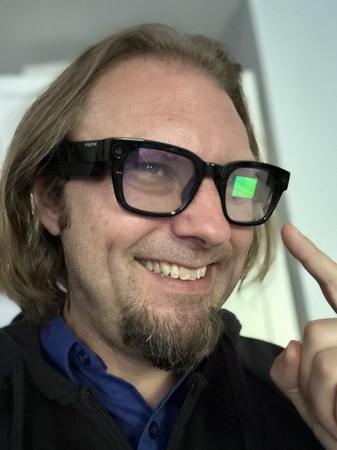
Alex Westner
Alex Westner is the co-founder and CEO of Xander, a Raleigh-based startup building AR smart glasses that print live captions of in-person conversations directly into the wearer's field of view. An MIT Media Lab-trained audio engineer who spent nearly two decades shipping sound software (including the Emmy-winning iZotope RX, nicknamed the Photoshop for Sound), Westner now turns his obsession with the cocktail party problem into a self-contained, no-cloud, no-phone device that helps people follow conversations they can no longer fully hear.
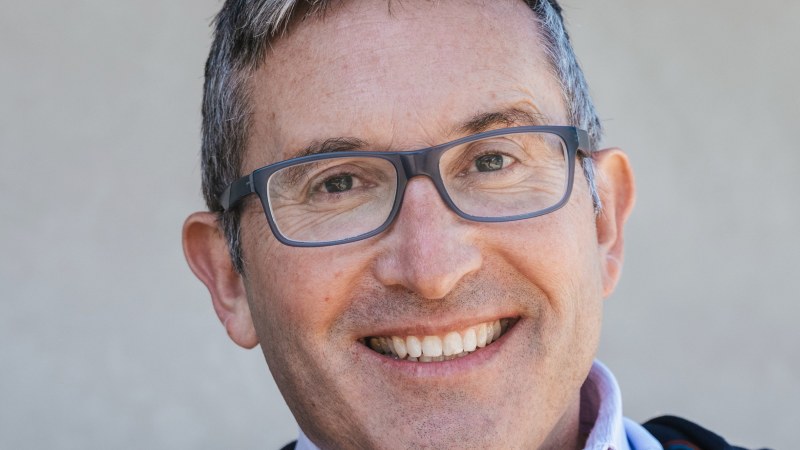
Tom Hale
Tom Hale is the CEO of ŌURA, the Finnish-American health technology company behind the Oura Ring - a smart ring that tracks sleep, recovery, and biometric data. A Harvard-educated technologist with 30+ years spanning Macromedia, Adobe, Linden Lab (Second Life), HomeAway, and SurveyMonkey, Hale came to Oura after a personal health crisis led him to the ring itself. He joined in March 2022 after writing a persuasive letter to the board after initially being rejected. Under his leadership, Oura has grown from a niche wearable to an $11 billion company on a path toward $2 billion in annual revenue, with the U.S. Department of Defense among its largest enterprise customers.
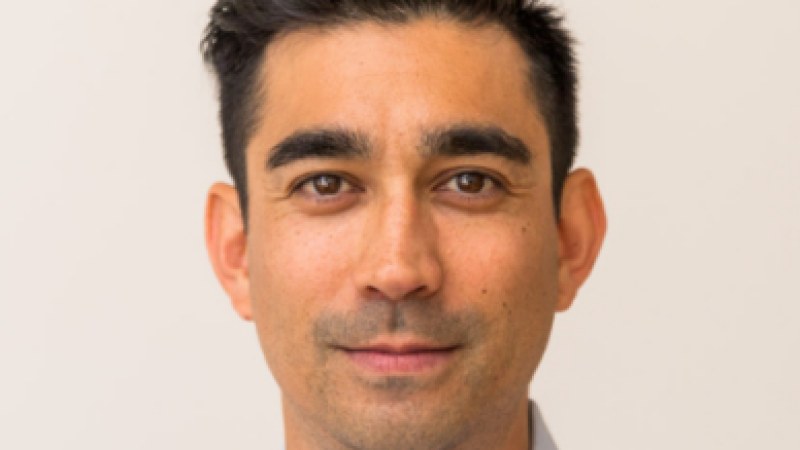
Eric Dy
Eric Dy, PhD is the co-founder and CEO of Bloomlife, a San Francisco-based women's health company building connected care solutions for maternal and fetal monitoring. A biomedical engineer by training (Cornell BSc, UCLA MSc and PhD), Dy spent four years at IMEC - Europe's leading R&D institute - establishing 17 partnerships worth $25M+ in revenue before launching Bloomlife in 2014. His personal experience watching his wife navigate a high-risk pregnancy - gestational diabetes, preeclampsia, placental complications, preterm labor, and a son who spent his first month in the NICU - drove him to attack the most underserved gap in American healthcare. Bloomlife's FDA-cleared MFM-Pro wearable lets high-risk pregnant patients be monitored at home, replacing the endless clinic visits that define the current broken system. The company raised a $12.2M Series A in September 2024 and has secured reimbursement across 18 payers.