Company Profile / Hardware & Adventure Tech
The Dog That Built a Sensor Company
A near-miss with a dog named Daisy turned a 30-year security engineer into an RV-sensor entrepreneur. The result is a phone dashboard that watches the things you can't - and pings you before they go wrong.
The company that became SmartHub Sensors did not start with a pitch deck. It started with a scare. Don Gantt, an electronics engineer who had spent three decades wiring up security and satellite systems around Mobile, Alabama, left his RV parked with the air conditioning running and his dog, Daisy, inside. The power failed. By the time he understood what had happened, the temperature had climbed and Daisy was in danger. She survived. The uneasy feeling did not go away.
Most people would buy a gadget. Gantt, who already ran a family of electronics businesses, went looking for one and found the market fractured - a battery monitor here, a propane gauge there, a separate app for GPS, nothing that talked to anything else. So he built the thing he wished had existed: a single hub that listens to a whole rig at once and puts the readings on one phone screen. That product is SmartHub Sensors, operated today as a brand of Forza Technologies, Inc.
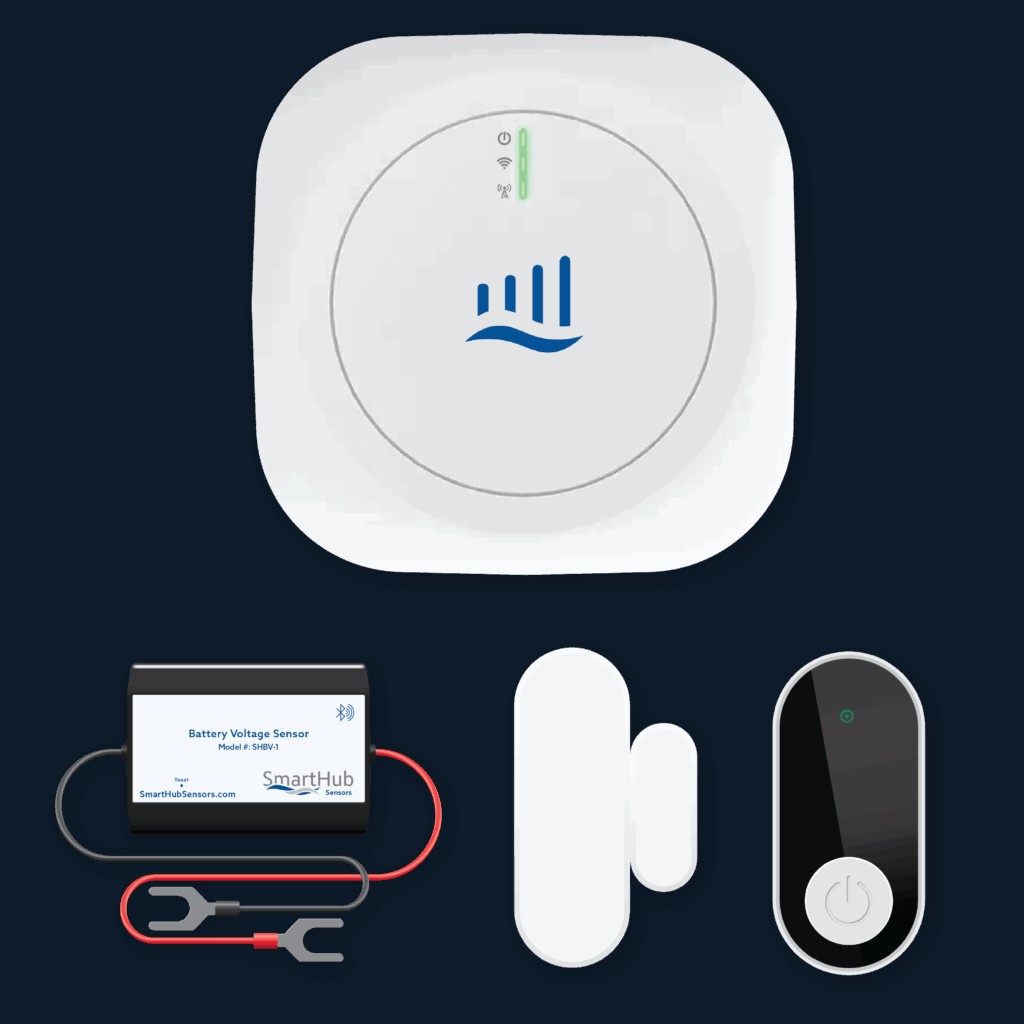
One hub, ten senses
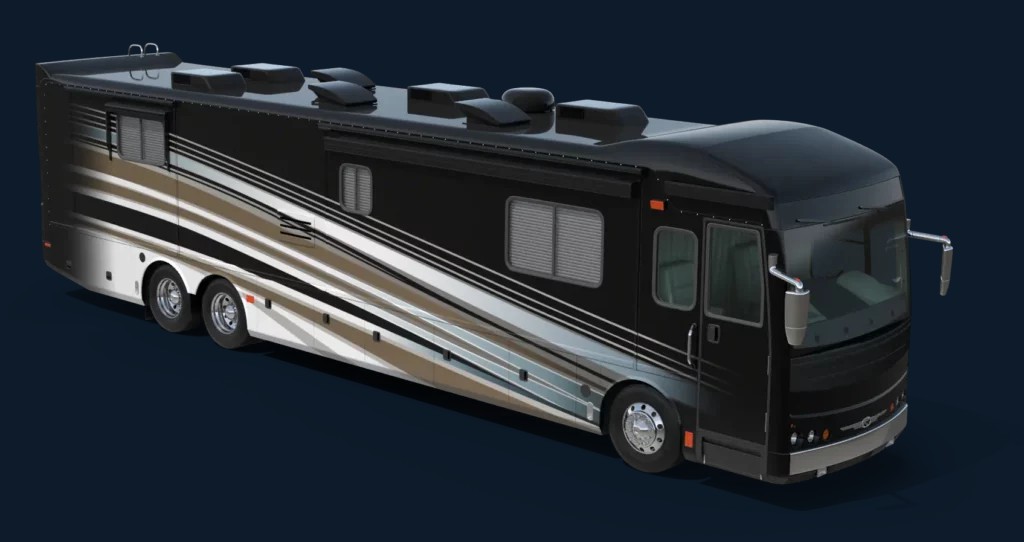
The architecture is refreshingly boring, which is the point. A central device called the SmartHub RV Gateway sits inside the vehicle and speaks wirelessly to a spread of small battery-powered sensors. Each sensor does one job. Together they cover the list of things that quietly ruin trips: a house battery drifting toward dead, a propane tank running low mid-cook, an interior baking in the sun, a slow water leak under a cabinet, a door left open, a rig that has started moving when it should be parked.
What SmartHub watches, all on one screen
The cleverest item in that list barely qualifies as a sensor. The CO and smoke alarm listener does not detect gas itself. Instead it listens for the specific tone your existing RV alarm already makes, then forwards that alert to your phone. It is a small, humble idea, and a good one - rather than asking you to rip out and replace safety equipment you already trust, it just gives that equipment a longer reach. When you are inside a restaurant and your camper is beeping in the lot, the difference is everything.
“Explore the world with peace of mind - live readings and notifications so you can relax.”
SmartHub SensorsThe part nobody wants to talk about
Then there is the tank valve. Anyone who has owned an RV knows the least glamorous chore in the hobby, and SmartHub built a wireless electronic valve that lets you open and close holding-tank valves from the app. It is not the feature that ends up on a poster. It is the feature that gets mentioned around a campfire, which in this category is the same as a marketing budget. The company's product line reads like a checklist written by someone who has actually been stranded, cold, or standing in a dump station in the rain.

Who this is for
SmartHub aims squarely at a specific kind of worrier: the RV owner, the boater, the weekend adventurer who leaves something valuable behind and cannot stop thinking about it. Pet owners are an obvious core - the temperature and humidity sensor is marketed first as a way to know your dog is comfortable while you are out. Full-timers and boondockers care about battery and propane because those numbers are the difference between a good night and a miserable one. Owners of expensive rigs care about the geofence, which turns theft anxiety into a single toggle and a location ping.
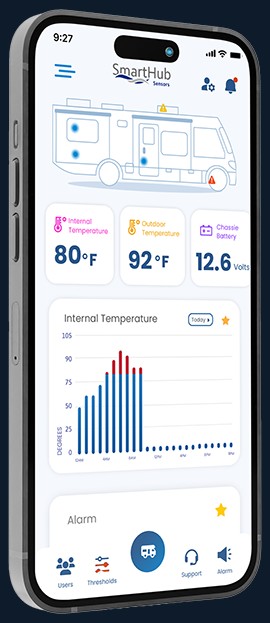
What can you actually do with it? Set a low-voltage threshold and get a push notification before the battery is too flat to start the generator. Draw a geofence around a campsite and know the instant the trailer rolls outside it. Watch the cabin climb past a temperature you have decided is unsafe for a sleeping dog, and act while there is still time to act. Confirm from a trailhead that the fridge still has power, the bilge is dry, and no hatch has popped open in the wind. Each of these is a small thing. Bundled, they add up to the feeling of not having to carry the rig around in your head all day.
How the money works
SmartHub uses the model that everyone criticizes and everyone quietly copies: hardware plus a subscription. You buy the gateway and a kit of sensors, then pay for the app that carries the alerts and cloud dashboard. Published pricing runs about $14.99 a month, $74.99 for six months, or $119.99 for a year - the annual plan working out to roughly ten dollars a month. The logic holds up better here than in most subscription pitches. A monitoring product is only worth anything if someone is always listening on the other end; the recurring fee is what keeps the servers awake and the notifications flowing when your battery starts sagging at two in the morning.
Standing apart in a crowded lot
The RV-tech aisle is not empty. Winegard's RV Halo offers a competing sensor ecosystem, Victron dominates serious power monitoring, TireMinder owns tire pressure, and LevelMatePro handles leveling. What SmartHub is betting on is not any single sensor but the bundle - the idea that owners would rather learn one app than juggle six. It also plays well with others: the propane sensing integrates with third-party Mopeka hardware rather than forcing a proprietary tank gauge, a small signal that the company would rather solve the problem than lock the door.
“A hassle-free, simple solution to extend your senses.”
SmartHub Sensors, on its missionThe engineer behind it
Gantt did not come to this from consumer gadgets. His background is in security and satellite communications - the kind of work where a false alarm and a missed alarm are both unacceptable, and where a system has to keep reporting whether anyone is watching or not. That lineage shows in SmartHub's design choices: the preference for alerts over dashboards you have to check, the willingness to listen to alarms you already own, the assumption that the owner is often nowhere near the vehicle. It is monitoring built by someone who thinks about monitoring for a living, applied to a hobby that had mostly been served by single-purpose gauges.
Where it might not work
It is worth being clear about the edges. A wireless, always-on monitor is only as good as its weakest link - a sensor with a dead coin cell reports nothing, and a rig parked deep in a canyon with no signal cannot push an alert to a phone hundreds of miles away. The subscription is a recurring cost that some owners will resent, especially those who only camp a few weekends a year. And the whole promise rests on notifications arriving reliably, every time, which is a harder engineering problem than any single sensor. For a boondocker off-grid for a week, SmartHub is a companion, not a guarantee. The company's own beta-stage caution suggests it knows the trust has to be earned, reading by reading.
A small shop with old hands
SmartHub is not a venture-funded rocket. It is a roughly six-person effort inside a family of Mobile, Alabama electronics companies under the Forza Technologies umbrella, drawing on Gantt's long background in security and automation. The store has run in a beta and demo phase as the team approaches full launch, and the company has been building the unglamorous scaffolding of a real product business - native apps on both platforms, industry ties like membership in the Florida RV Trade Association, and a catalog broad enough to cover an entire rig. It is the pace of people who intend to still be here in five years, not the pace of a company chasing a headline.
The honest read on SmartHub is that its ceiling depends on execution most buyers will never see - battery life in the sensors, reliability of the alerts, the boring durability that decides whether a monitoring product earns trust or loses it. But the instinct behind it is sound, and it is one worth stealing: find the anxious moment in someone's life, the thing they check obsessively and still cannot see, and put it on a screen. For Don Gantt, that moment had a name, four legs, and a very good outcome the second time around.
Explore SmartHub Sensors
- Website · smarthubsensors.com
- LinkedIn · /company/smarthub-sensors
- Instagram · @smarthubsensors
- Facebook · /smarthubsensors
- iOS App · App Store
- Android App · Google Play
- Parent · Forza Technologies
- Video · SmartHub tutorial & overview