Look up at your ceiling. Then over at the wall. Then down by the water heater. There is a decent chance a single company made the smoke alarm, the thermostat, and the leak sensor - and there is an even better chance you have never heard its name. That company is Resideo Technologies, and being invisible is not an accident. It is the whole plan.
Resideo is the business Honeywell spun off in October 2018, bundling its home-comfort hardware and a sprawling distribution arm into a standalone public company on the NYSE under the ticker REZI. At the time it read like a tidy way for Honeywell to shed lower-margin consumer work. What got spun out, though, was a machine sitting inside roughly 150 million homes - and, as of 2024, generating a record $6.76 billion in revenue.
01 / What it doesComfort, safety, water, air - and the wire behind them
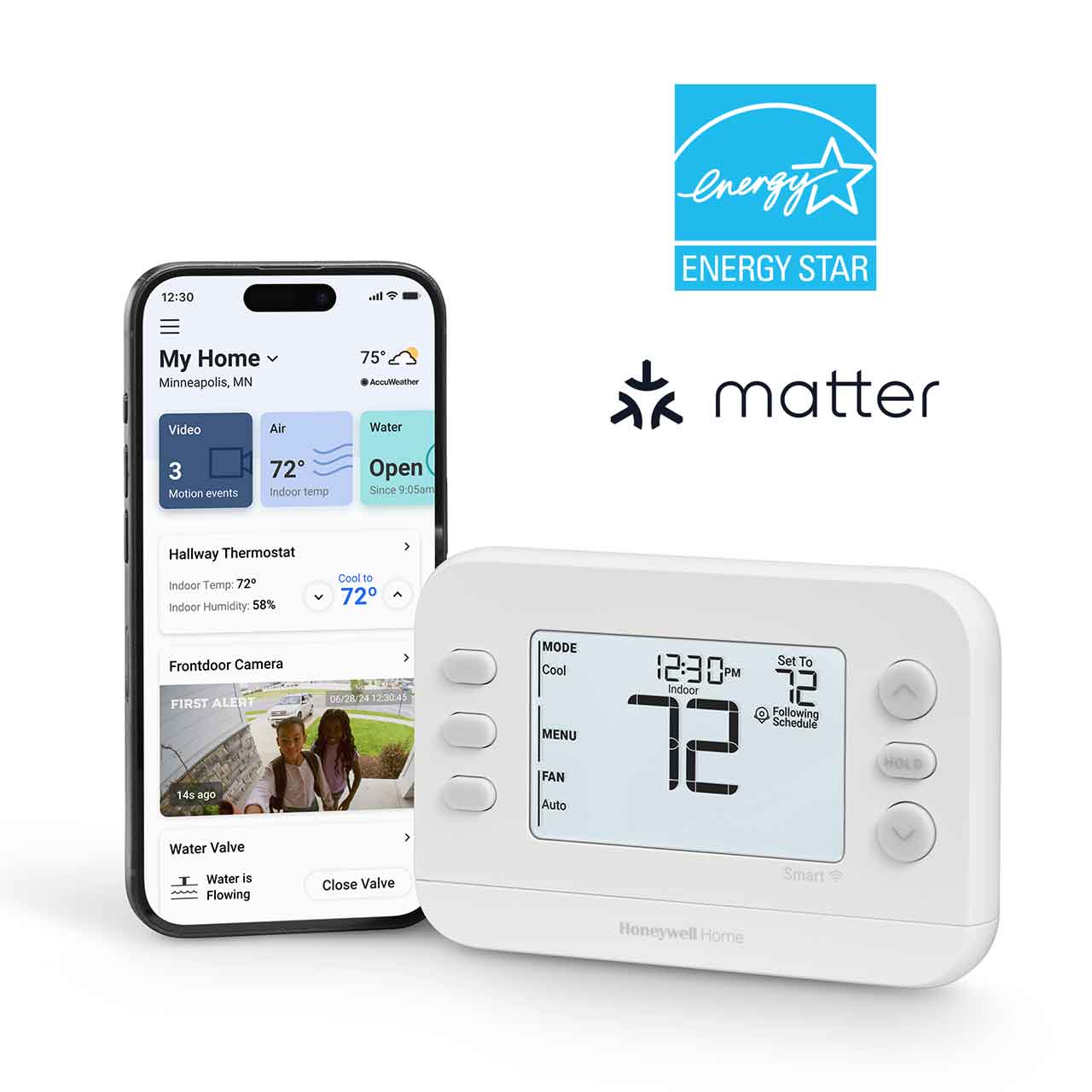
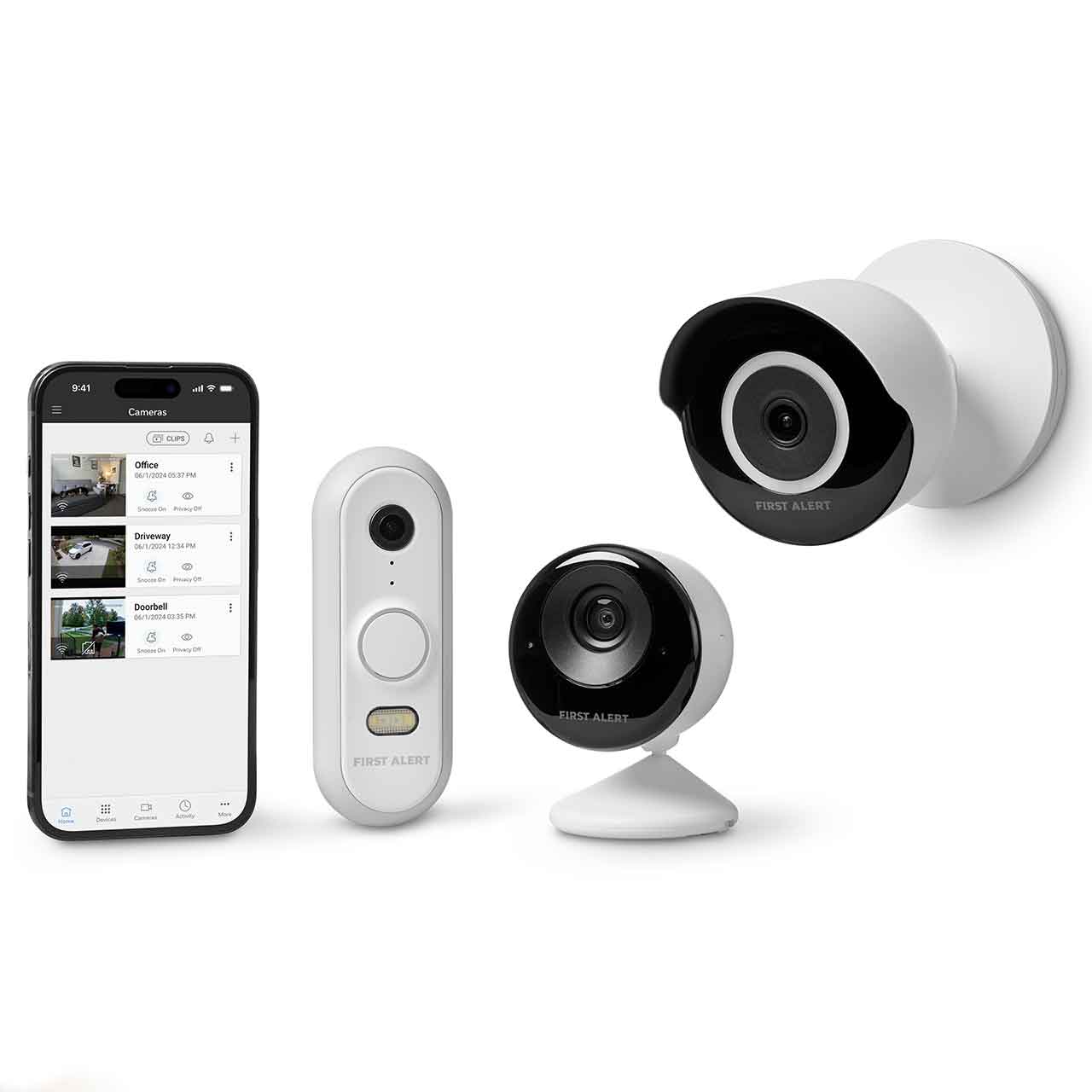
Resideo runs on two engines, and understanding the company means understanding both. The first is Products & Solutions: the branded hardware. This is where Honeywell Home thermostats live - the T-series, the newer X-series, the pro-grade ElitePRO - alongside First Alert smoke and carbon-monoxide alarms, ProSeries security panels, cameras, air-quality devices, and a growing line of water leak detectors and shutoff valves. If it hangs on a wall, watches a room, or shuts off a pipe, it probably falls here.
The second engine is the one nobody photographs: ADI Global Distribution. ADI is a specialty wholesaler that stocks and ships low-voltage security, fire, audio-video, access-control and networking gear - Resideo's own products and hundreds of other manufacturers' - out of more than 190 branch locations to the dealers who actually walk into your house. It is unglamorous. It is also roughly 62% of revenue.
02 / Who buys itThe pro on the ladder, not the shopper on the couch
Here is the quiet strategic choice at the heart of Resideo: it mostly does not sell to you. It sells to the roughly 110,000 professional installers - HVAC techs, security dealers, AV integrators - who then sell to you. The homeowner is the end user; the contractor is the customer. That is why the marketing is muted and the brand names on the box (Honeywell Home, First Alert, Control4, Braukmann) are far louder than the parent company's.
That installed base is both the moat and the trap. A contractor who has wired 500 homes with the same panel is not switching on a whim - which is defensible. But hardware in walls gets replaced slowly, on cycles measured in years, not release seasons. The entire modern Resideo strategy is an attempt to turn that slow hardware into faster, recurring software and service revenue: monitoring, insights, subscriptions like Pro-IQ.
03 / The problem it solvesSelling prevention to the people who pay for disaster
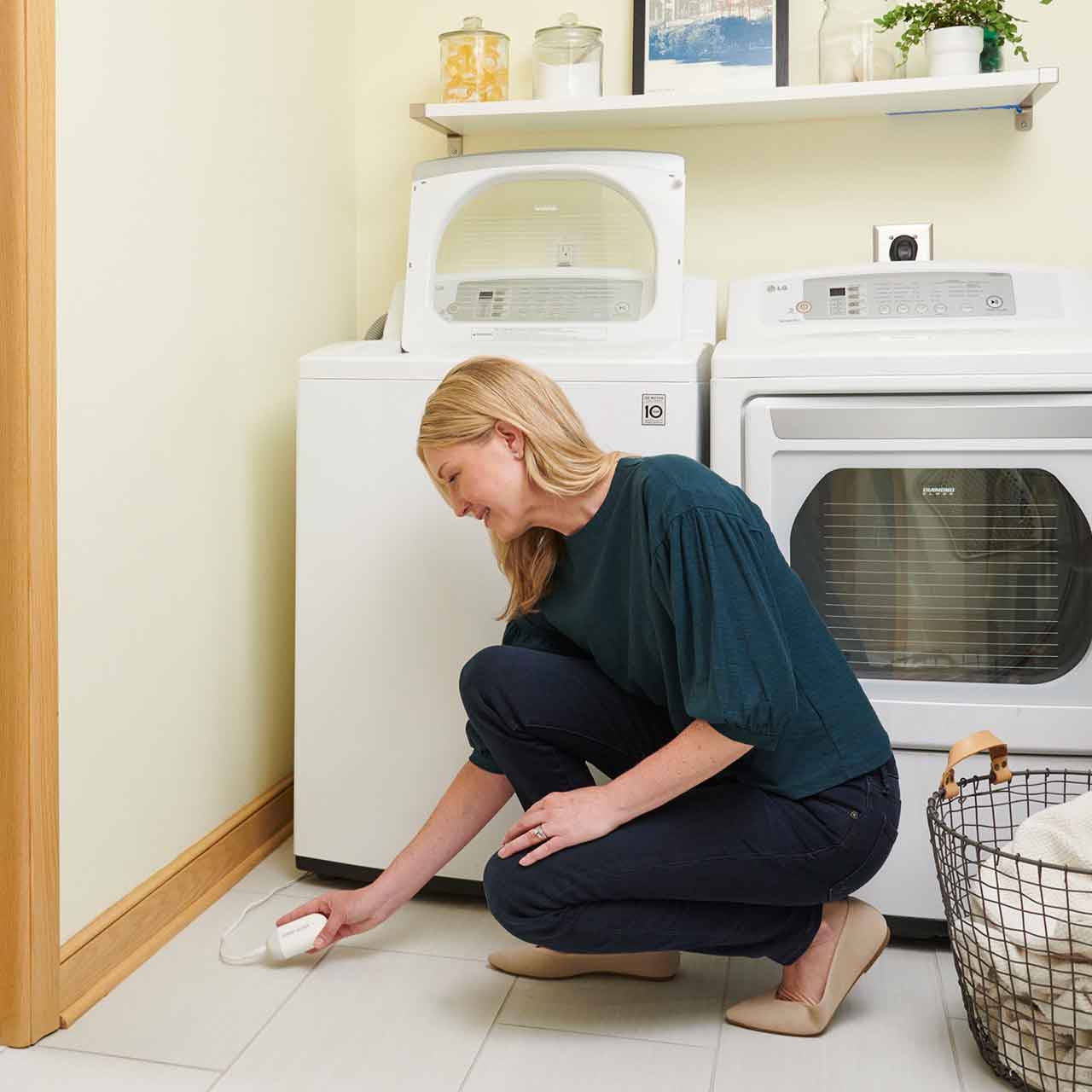
Water damage is the insurance claim nobody sees coming - a burst line, a slow drip, a ceiling on the floor. Starting in 2019, Resideo bought its way into the problem: Buoy Labs, Whisker Labs technology, and LifeWhere gave it leak detection and predictive analytics, while its Braukmann water line - still manufactured in Mosbach, Germany, and installed in 18 million-plus households - covered the plumbing hardware. Pair that with insurance partners like USAA and Nationwide and the pitch writes itself: sell prevention to the companies that write the checks for the disaster.
The same logic runs through fire and CO. When Resideo paid $593 million for First Alert in 2022, it was not buying a gadget. It was buying a brand that already sits on the ceiling of nearly every American home, plus the retail and dealer channels to keep it there.
04 / How it grewBuy, integrate, then cut in half
Resideo's post-spin history is a shopping list. First Alert in 2022. The Genesis Cable business sold off to Southwire in 2023 to sharpen the focus. Then, in June 2024, the big one: Snap One for about $1.4 billion, which folded the Control4 whole-home automation platform into ADI and pushed Resideo squarely into high-end custom integration.
And then the plot twist. In July 2025, having spent years bolting businesses together, Resideo announced it would take itself apart - separating Products & Solutions from ADI Global Distribution into two independent public companies. It is the anti-empire move. Most executives acquire to look bigger; Resideo ran the math and decided its manufacturing arm and its distribution arm were valued better, and run better, apart. In 2026 it landed on the Fortune 500 for the first time even as it prepared to cut itself in two.
05 / How it's differentNest gets the headlines. Resideo gets the walls.
The obvious comparison is Google Nest or ecobee, and it is the wrong one. Those companies win the impulse buy - the shopper who wants a slick thermostat and orders it online. Resideo plays a different game entirely: it is the default the contractor already stocks, already trusts, and already knows how to wire. On the security and monitoring side it bumps against ADT, Vivint and Alarm.com; in building controls it overlaps with Johnson Controls, Carrier and Siemens. The wrinkle is that several of those rivals are also ADI customers - they buy through the very distribution pipe Resideo owns.
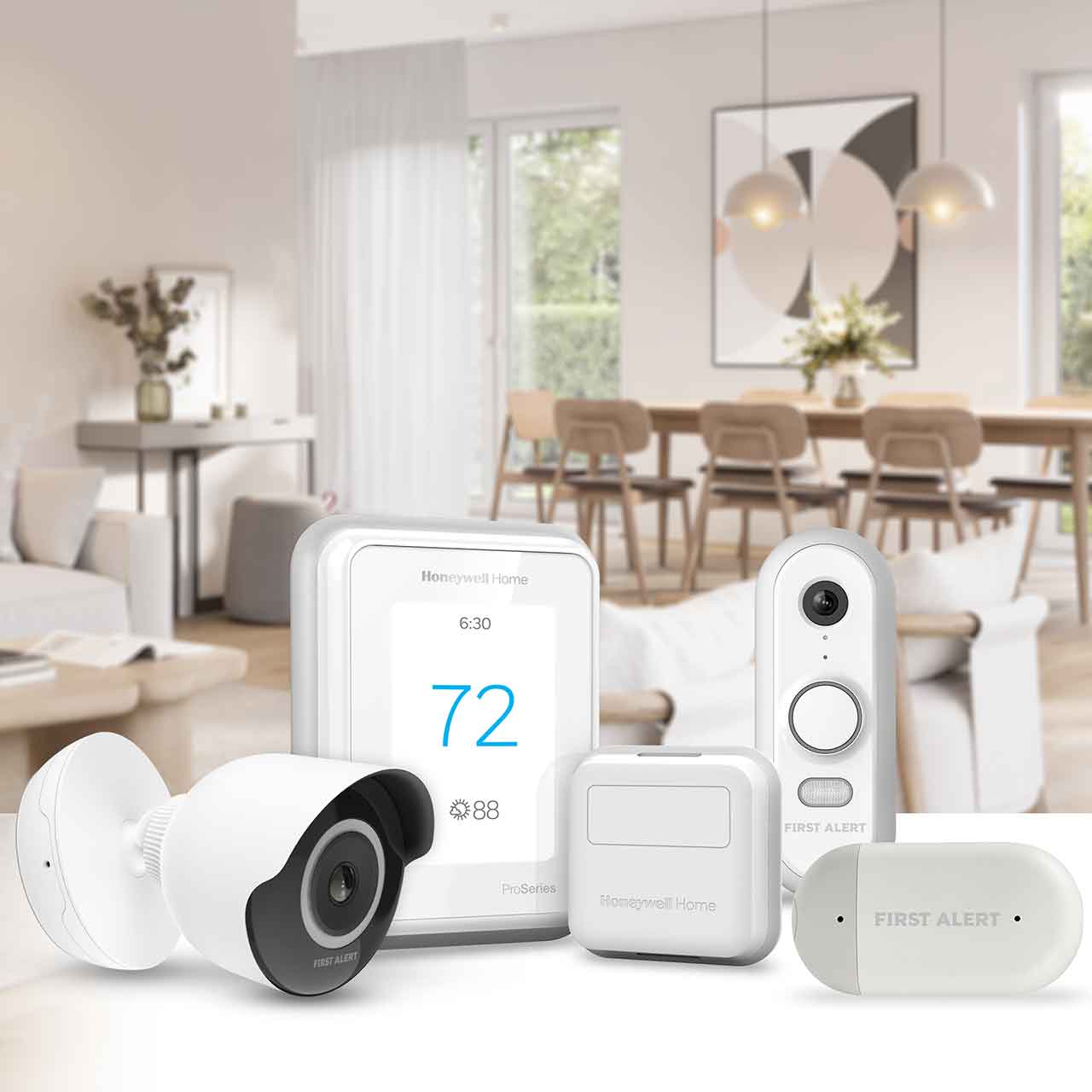
There is also the branding sleight of hand worth admiring. Resideo does not own the Honeywell name on its most famous product - it licenses it for 40 years. That means instant credibility on 150 million walls without carrying the risk of owning the brand outright. It is renting trust while it builds its own.
06 / How it makes moneyMargin on the box, margin on the shipment, and a slow bet on software
The business model is refreshingly legible. Products & Solutions earns manufacturing margin on the branded hardware, sold mostly through the professional channel and, for First Alert, through retail and e-commerce. ADI earns distribution margin - the spread on reselling security, fire and AV gear from Resideo and everyone else, extended with credit terms and same-day branch pickup that dealers depend on. Neither is a venture-funded moonshot; Resideo has never taken a funding round. It went public through the Honeywell spin and has financed its growth with cash and debt, most visibly the $593 million for First Alert and the roughly $1.4 billion for Snap One.
The expertise that ties it together is sensing and control - patented technology for measuring temperature, air, water and presence, then acting on it. That is the thread from a 1950s Honeywell thermostat to a Control4 automation panel: the house is full of things worth measuring, and Resideo has spent decades learning to measure them cheaply and reliably enough that a contractor will install thousands without a second thought.

07 / Where it sitsThe invisible middle of a very physical industry
Resideo is headquartered in Scottsdale, Arizona, after relocating from Austin, and employs around 16,000 people - a figure that will shrink sharply once ADI spins out. Leadership turned over in late 2024, when longtime CEO Jay Geldmacher retired and Thomas Surran, previously head of Products & Solutions, stepped into the top job.
What Resideo has built is a position in the invisible middle of the connected home: the hardware you forget you own and the pipeline that delivers everyone else's. It is not the flashiest square foot of the house. It may be the most defensible - and after 2026, it will be two companies making that same bet separately.