Long before artificial intelligence learned to write a meeting summary, draw a plausible otter, or inspire an alarming number of conference panels, Larry Rubin was teaching a machine to answer a smaller question: is this thing upside down?
The thing, in this case, was an object on a manufacturing line. Its printed letters or markings might vary in size, style, position, or quality. A rigid image-matching system could be fooled by a new date stamp. Rubin and fellow Bell Laboratories researcher Robert J. T. Morris proposed something more adaptable. Their system extracted symbols, normalized them, and sent them through a feed-forward neural network. The answer came back as “up,” “down,” or “indeterminate.”
That last word is the interesting one. An indeterminate result is not glamorous. It will never dance across a product launch. It is, however, honest. It admits that a machine can be useful without pretending to be omniscient. The patent was filed in 1989 and issued in 1991, and it offers an unusually tidy preview of Rubin’s later career: capture a messy signal, discipline it into a measurement, preserve uncertainty, and put the result where somebody can act on it.
01 / The first patternA career built around the signal
Rubin studied at Brooklyn College and New York University, where his professional profile places him at NYU’s Courant Institute from 1978 to 1982, working in computer science and mathematics. By 1984 he was at Bell Laboratories. The setting matters. Bell Labs treated research and application as neighbors. A good idea was expected to survive contact with wires, chips, factories, networks, and all the inconvenience of the physical world.
In 1990, Rubin, Morris, and Henry Tirri published a paper in IEEE Transactions on Pattern Analysis and Machine Intelligence about neural-network techniques for object-orientation detection. The related patent was not an airy promise about intelligent machines. It described cameras, bitmap sums, character extraction, thresholds, and the stubborn fact that roughly turned symbols can resemble other symbols. It was AI with its sleeves rolled up.
The useful machine was never the one that looked clever. It was the one that made the next decision easier.A pattern across Rubin’s public work
After Bell Labs, Rubin’s public record moves through telecommunications and entrepreneurship. He served as chairman and chief executive of Outercurve Technologies from 1998 to 2002. Later came private investment and advisory work, including a role at Forepont Capital Partners focused on machine learning and medical technology. The résumé changes vocabulary, but not temperament. Research becomes product. Product becomes company. The signal keeps asking to be made useful.
This is not the familiar tale of a laboratory specialist who discovered commerce late, or an executive who recently discovered algorithms. Rubin’s record keeps both columns open. The technical work explains his appetite for evidence; the operating work explains his interest in delivery. A model left in a notebook has no users. A product without a disciplined model has no reliable center. His career has lived in the awkward, productive negotiation between the two.
02 / The second actPutting the examination in a pocket
BeCareLink, the New York company Rubin co-founded with neurologist Charisse Litchman, applies that old discipline to a more intimate setting. The company builds mobile activities designed to quantify aspects of neurological function remotely. A user follows guided tasks on a phone. Software organizes the results. Reports can show change over time and help connect what happens between appointments with the professionals responsible for interpretation.
The product idea is easier to understand if you forget the phrase “AI platform” for a moment. An appointment is a snapshot. Life is a film. A measurement taken once can be important, but a series of consistent measurements reveals movement. BeCareLink’s central design bet is that a phone can help collect those repeated frames without requiring every observation to begin in a specialist’s office.
This does not erase the expert. It gives the expert a longer timeline. That distinction explains why the company’s public material keeps returning to collaboration among users, clinicians, researchers, and pharmaceutical teams. Rubin’s software is not presented as a mechanical oracle. It is a bridge between moments that otherwise remain disconnected.
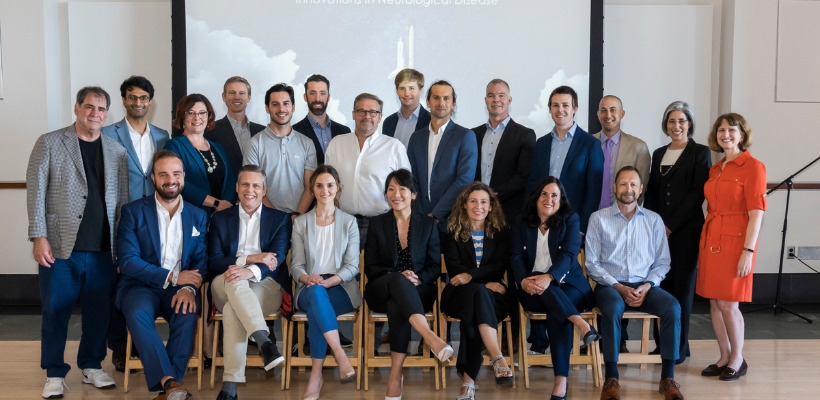
In spring 2022, BeCareLink joined ten other startups in PharmStars’ accelerator program. Twice-weekly classes over ten weeks covered the less photogenic work of partnership: how a small company communicates with large, regulated organizations; how a product fits institutional workflows; how evidence and procurement share a table without stealing each other’s dessert.
That summer, BeCareLink entered MedCity’s INVEST Pitch Perfect competition. Five startups received five minutes to present and five minutes of questions. BeCareLink won both votes, one from the judges and one from the audience. A dual verdict is a pleasant thing, particularly in a format engineered to expose fuzzy thinking. The win belonged to the company and the presentation team, but it also suited Rubin’s career-long habit: compress complexity without flattening it.
Begins the Bell Laboratories chapter recorded in his professional history.
Publishes neural-network research and receives the related US patent.
BeCareLink’s published account dates the company’s founding to this year.
BeCareLink is acquired by ReLyfe; Rubin is named ReLyfe chairman in the transaction announcement.
PharmStars graduation and a judges-plus-audience Pitch Perfect win.
Continues as BeCareLink’s founder, chairman, and chief executive.
03 / The operator’s trickKeep the hard parts visible
There is an appealing symmetry between Rubin’s early and current work. The Bell Labs system had to cope with inconsistent fonts, poor printing, noisy images, and symbols that looked similar after rotation. A mobile assessment has its own unruly inputs: different devices, different settings, different moments, and human beings who do not behave like identical components on an assembly line. In both cases, the software earns trust through structure.
The word “gamified” appears often in descriptions of BeCareLink’s activities. It can sound decorative, as though a serious process has been handed a party hat. Here it describes an interface decision. A task must be understandable enough to complete without a technician standing beside the user. The interaction has to create data while remaining tolerable to repeat. The game is not the point. Repeatability is.
Rubin’s research record reinforces that preference for verification. His name appears on work spanning automated postural assessment, mobile measurement, machine-learning classification, and repeated app use. The company lists collaborations and validation work connected with academic medical centers. The operating model is not “ship the algorithm and hope the adjective AI does the selling.” It is to build, compare, publish, and revise.
A feature gives you an answer once. A well-designed loop makes the next answer more useful.The product lesson hiding inside repeated measurement
That is also why Rubin’s cross-disciplinary career matters. The engineer wants a clean input. The clinician wants a meaningful measure. The researcher wants validation. The investor wants a market. The user wants the whole apparatus to be comprehensible before lunch. None of them is wrong; none of them gets the product alone. Rubin’s role has increasingly looked like the person who keeps those claims in the same room.
Connections are part of the product here. BeCareLink’s leadership and advisory lists span practicing specialists, computational researchers, product operators, and academic collaborators. The breadth is functional, not ornamental. Remote measurement has to pass through several kinds of scrutiny before it becomes routine: can it be completed, can it be interpreted, can it be repeated, and can it fit the day of the person expected to use it? Each collaborator tests a different verb.
What builders can steal from the Rubin playbook
- Start with the measurement problem, not the fashionable technology.
- Normalize messy inputs before asking a model for confidence.
- Keep an honest “indeterminate” state when the evidence is weak.
- Design for repeated use, because a timeline can reveal what a snapshot cannot.
- Build the handoff to the expert into the product, not as an afterthought.
04 / The long viewOld questions, newly useful
Technology careers are usually told as a parade of new things. Rubin’s is more interesting as a return. The neural network changes. The sensor changes. The organization changes. The central question remains: what can be measured reliably enough to improve the next decision?
There is restraint in that question. It does not ask software to replace judgment. It asks software to extend observation. It does not require every output to be dramatic. A small change, captured consistently and placed in context, can matter precisely because it is not dramatic. The work is cumulative, and so is the career behind it.
Rubin now leads a company with products, publications, institutional partners, and the ordinary burdens that arrive when an idea becomes an organization. His earlier patent has expired, as patents do. The instinct inside it has aged better: respect the mess in the input, give uncertainty a name, and make the answer travel.
AI has become very good at commanding attention. Larry Rubin’s public work suggests a quieter ambition. Intelligence is valuable when it helps a real person notice, compare, share, or decide. The rest is merely a machine being right in an empty room.