The most valuable thing Ring invented was not a doorbell camera. Those existed in clunkier forms. Ring made the front door legible from a phone, then turned every knock, package and prowler into an event that could be stored, searched and sold back as peace of mind. The hardware gets screwed to the wall once. The relationship can ring for years.
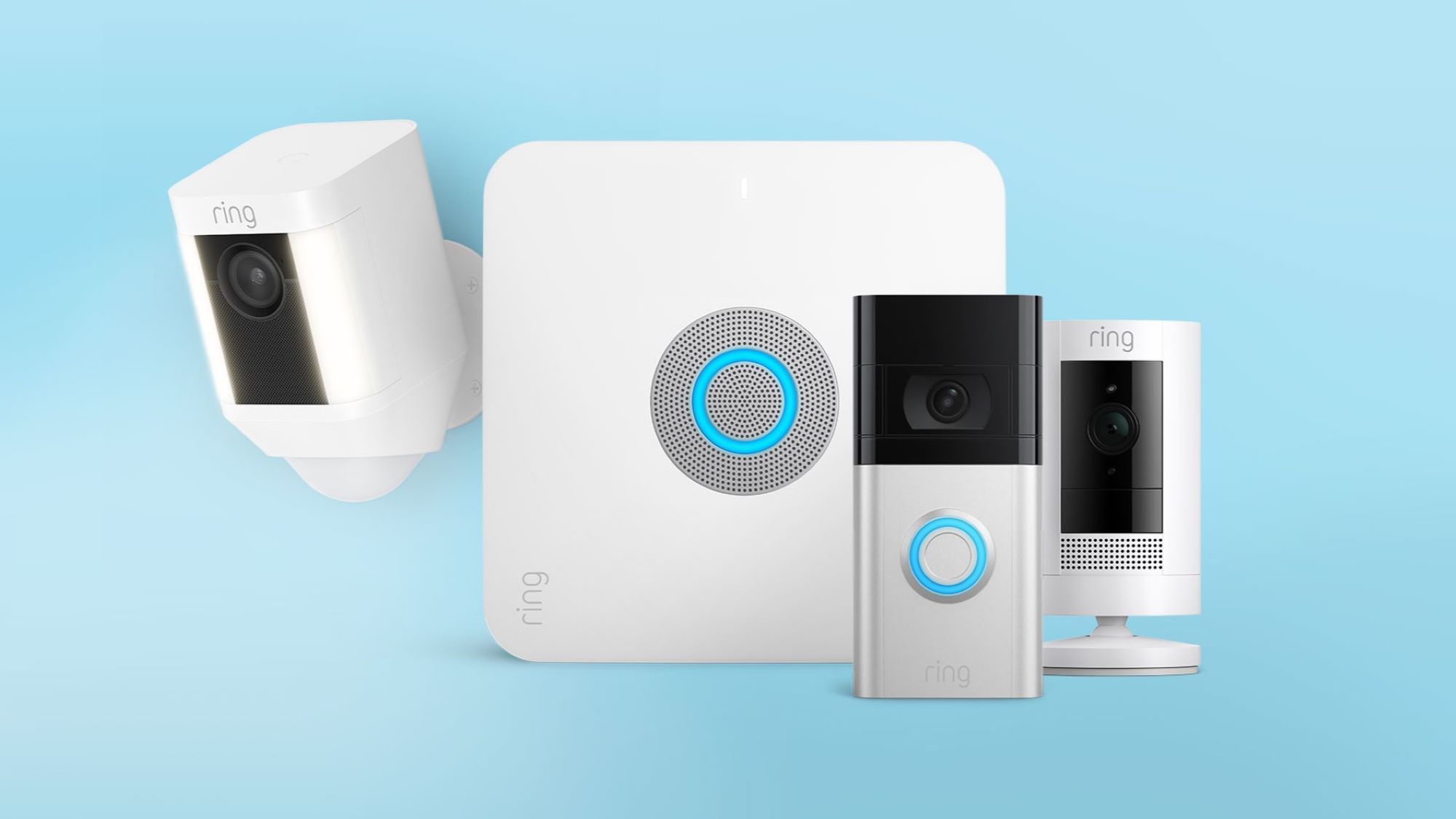
Today Ring, owned by Amazon, sells video doorbells, indoor and outdoor cameras, floodlights, a DIY alarm, intercom gear and accessories. The free layer supplies live view, two-way talk and alerts on supported devices. Paid Ring Home plans add recorded history, smarter notifications, AI search, 24/7 recording on eligible cameras and optional professional monitoring. Homeowners and renters are the obvious customers. Small businesses also use the same vocabulary - watch the counter, check a delivery, review an event, arm the alarm.
The problem is ordinary enough to sound trivial: someone is at your home when you are not. Ring makes that moment visible and actionable. Its distinction is breadth. A Nest doorbell, Arlo camera or SimpliSafe alarm can solve pieces of the job, but Ring wraps the doorstep, perimeter, interior, alarm, app, cloud archive and Alexa integration into one consumer system. That convenience is the moat. It is also why a decision about data access travels much farther than a single camera.
A garage, five people and a battery problem
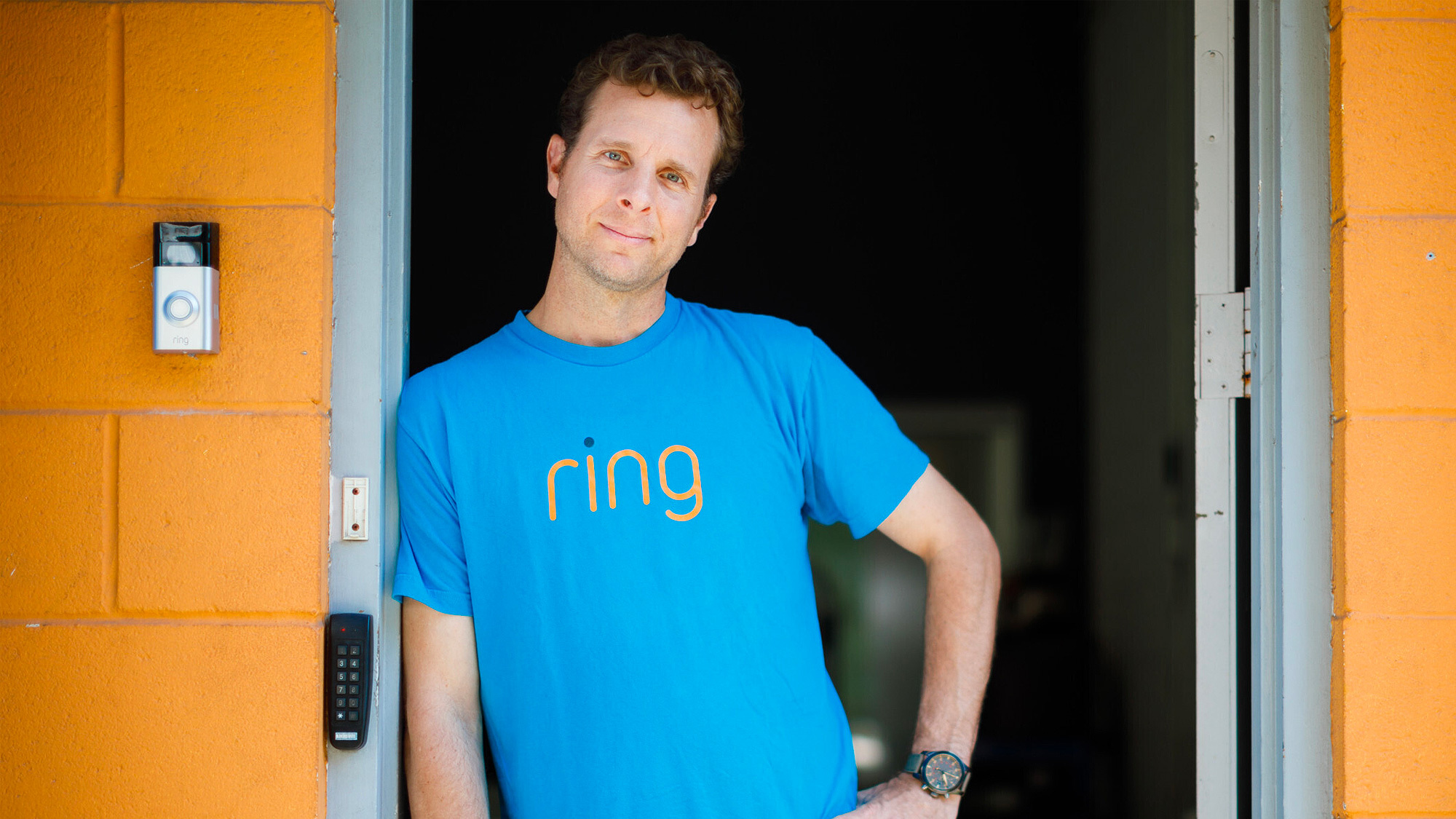
Jamie Siminoff assembled a small team in his garage in 2011. By December 2012, three engineers and a five-person company had announced DoorBot, a Wi-Fi doorbell intended to send video and instant notifications to a phone. The prototype came together in less than six months by leaning on a Wi-Fi board its manufacturer had already developed. That was the clever shortcut. Production was the expensive reality.
What failed first was the comforting arithmetic. Roughly $250,000 in crowdfunding sounded substantial until it met batteries, video, mobile apps, tooling, overseas manufacturing and customer support. DoorBot shipped in November 2013, but the early product was a difficult machine built by an underfunded team. Siminoff has since described that launch as botched. The category insight was right before the execution was ready.
Then came a more theatrical expense. With eight people and little runway, the company spent about $10,000 building a mock house front for Shark Tank. Siminoff wanted $700,000 and left without a completed deal. He wrote later that telling the team felt horrible. Yet when the episode aired in November 2013, orders and credibility followed. He valued the exposure in the millions.
“We thought the exposure would be great, but at the time we really wanted - or more like needed - the money.”Jamie Siminoff, reflecting on Shark Tank
That changed the mental model. Television had been treated as a financing event; it became distribution. DoorBot had been treated as a gadget; in 2014 it became Ring, a name wide enough for a security system and a community mission. The company did not merely polish the first box. It reframed what the box could lead to.
Sell the device once. Sell memory every month.
Ring's business has four motions. Hardware creates the installed base. The app makes checking it habitual. Cloud history and AI make old video useful. Monitoring turns alerts into a service. Retailers and Amazon supply distribution, while Alexa makes the cameras more useful on screens already inside the home. Each layer increases switching friction without requiring the customer to become a home-security expert.
The Ring compounding loop
This is why Ring fits between consumer electronics and security services. Its expertise spans industrial design, low-power wireless hardware, computer vision, mobile software, cloud video and monitoring operations. The newest direction makes the archive conversational. Smart Video Search lets a subscriber type something like “red bicycle in the driveway.” Video Descriptions summarize an event. Retinal Vision pairs improved image capture with AI tuning. Search Party compares a reported lost dog's image with potential matches on nearby participating outdoor cameras.
That range serves several customers without asking them to learn several systems. A renter can start with one battery doorbell and carry it to the next address. A homeowner can surround a detached house with wired lights and cameras. A shop owner can watch deliveries and several live feeds. A family caring for an older relative can use alerts as a gentle check-in rather than a dispatch signal. Ring's best use is not cinematic crime fighting. It is reducing the small uncertainty that repeats all day: Was the package delivered? Did the child get home? Was that movement a person, a pet or a branch?
Venture funding paid for that widening. Disclosed rounds totaled roughly $209 million before Amazon completed its acquisition in April 2018, a deal widely reported above $1 billion. Ring's standalone revenue is not disclosed inside Amazon, so current estimates should be treated as estimates, not a scoreboard. The observable model matters more: a low-friction hardware entry point feeds higher-margin recurring features.
Trust is not the legal page
A camera company can lose trust faster than a toaster company. In 2023, the Federal Trade Commission alleged that Ring gave employees and contractors overly broad access to customer video and failed to stop account attacks that affected about 55,000 US customers. Ring agreed to pay $5.8 million for refunds, delete certain data and derived work, and maintain a privacy and security program. That is the clearest answer to “what did it cost?” beyond the capital and acquisition figures: weak controls created a direct financial bill and a longer reputational one.
The neighborhood layer keeps reopening the question. Ring ended its old Request for Assistance tool in 2024, then returned in 2025 with Community Requests, where eligible public-safety agencies can publish a request and users choose whether to share. A planned integration with license-plate camera company Flock Safety never launched. After a 2026 Super Bowl advertisement for the separate lost-dog Search Party feature triggered a wider surveillance backlash, Ring and Flock canceled their plan. They said the integration required more time and resources than expected and that no Ring video had gone to Flock.
This is Ring's permanent tension. A network of cameras becomes more useful when it can identify a package, find a lost pet or help document an incident. The same network feels invasive when its boundaries are vague. Consent screens help, but they do not settle the social question for the passerby who never bought a camera. Better AI raises capability and obligation at the same speed.
What builders can copy
- Begin with one frequent, emotional moment. “Who is at my door?” is clearer than “build a smart-home platform.”
- Use hardware as the wedge, not the whole business. Design the service layer before the installed base becomes expensive to support.
- Turn rejection into distribution. Ring's television failure worked because the team had a purchasable product and a memorable demonstration ready.
- Name the larger behavior. Rebranding DoorBot as Ring made room for cameras, alarms and a network.
- Put trust on the product roadmap. Access controls, retention rules, audit trails and plain consent are user experience, not cleanup.
The playbook has conditions
Ring's approach works when the physical object captures recurring events, remote access is genuinely useful, installation is simple, and a paid archive solves a continuing problem. It also needs reliable broadband, notifications that are not maddening and enough gross margin to survive returns and support. The wedge must naturally lead to adjacent products. A connected novelty used twice a year will not carry a subscription, however handsome the app.
Ring fits when...
- You want a broad DIY security system.
- You already use Alexa or Amazon devices.
- Remote view and cloud history matter.
- You value easy expansion over local tinkering.
Look elsewhere when...
- Your internet connection is unreliable.
- You require local-only video storage.
- You dislike recurring feature fees.
- You are uncomfortable with cloud AI or community sharing.
Competitors exploit those limits. Eufy, Reolink and others emphasize local storage in parts of their lineups. Google Nest competes on its home ecosystem. Arlo sells a broad camera range. SimpliSafe, ADT, Vivint and Abode attack the alarm and monitoring job from different installation and service angles. Ring's advantage is that the whole stack feels like consumer electronics. Its disadvantage is that cloud dependence and Amazon's data reputation arrive in the same box.
The useful Ring lesson is not a fable about persistence. It is a sequence: choose an overlooked surface, make one anxious moment easier, earn distribution, attach recurring value, then expand into the surrounding job. The warning belongs in the same sentence. When the surrounding job involves watching people, governance grows with the network. Ring built a business inside the ding. Now every new feature has to answer who else might be listening.