A security camera begins as a purchase and, surprisingly often, matures into a utility bill. The lens is on your wall, the footage is of your driveway, and the alert is on your phone. Yet the useful history, richer detection or longer recording window may live behind a monthly plan. Reolink has spent 17 years making a different bargain: buy the hardware, choose where the video lives, and keep the core system useful without paying rent forever.
That is less romantic than artificial intelligence and more valuable. Reolink sells cameras for nearly every awkward condition a property can produce: Ethernet but weak Wi-Fi; Wi-Fi but no outlet; sun but no grid power; a field with only cellular service; a shop that needs continuous recording; a renter who wants two screws and an app. The catalog can feel like a hardware store run by surveillance engineers. That is the point.
The product is the aisle
Reolink sits between two familiar shelves. On one side are friendly cloud cameras from Ring, Arlo, Nest and Wyze: quick to install, tightly packaged and often designed around recurring services. On the other are installer-oriented systems from Lorex, Hikvision, Dahua or professional integrators: more durable and configurable, but daunting to ordinary buyers. Reolink brings many of the second shelf's attributes - PoE wiring, NVRs, 24/7 recording and local network streams - into a shopping experience aimed at the first shelf's customer.
Choose by constraint, not by camera jargon
The fixed cameras handle entrances and aisles. Pan-tilt models patrol wider areas. The Duo line stitches two lenses into a 180-degree panorama; TrackMix pairs a wide lens with a telephoto lens so a moving subject can stay visible and enlarged. Doorbells cover the stoop. Go models use 4G for farms and job sites. Home Hubs centralize compatible wireless cameras and encrypt local recordings, while NVRs serve heavier, continuous setups. A free app and desktop client tie the pieces together.
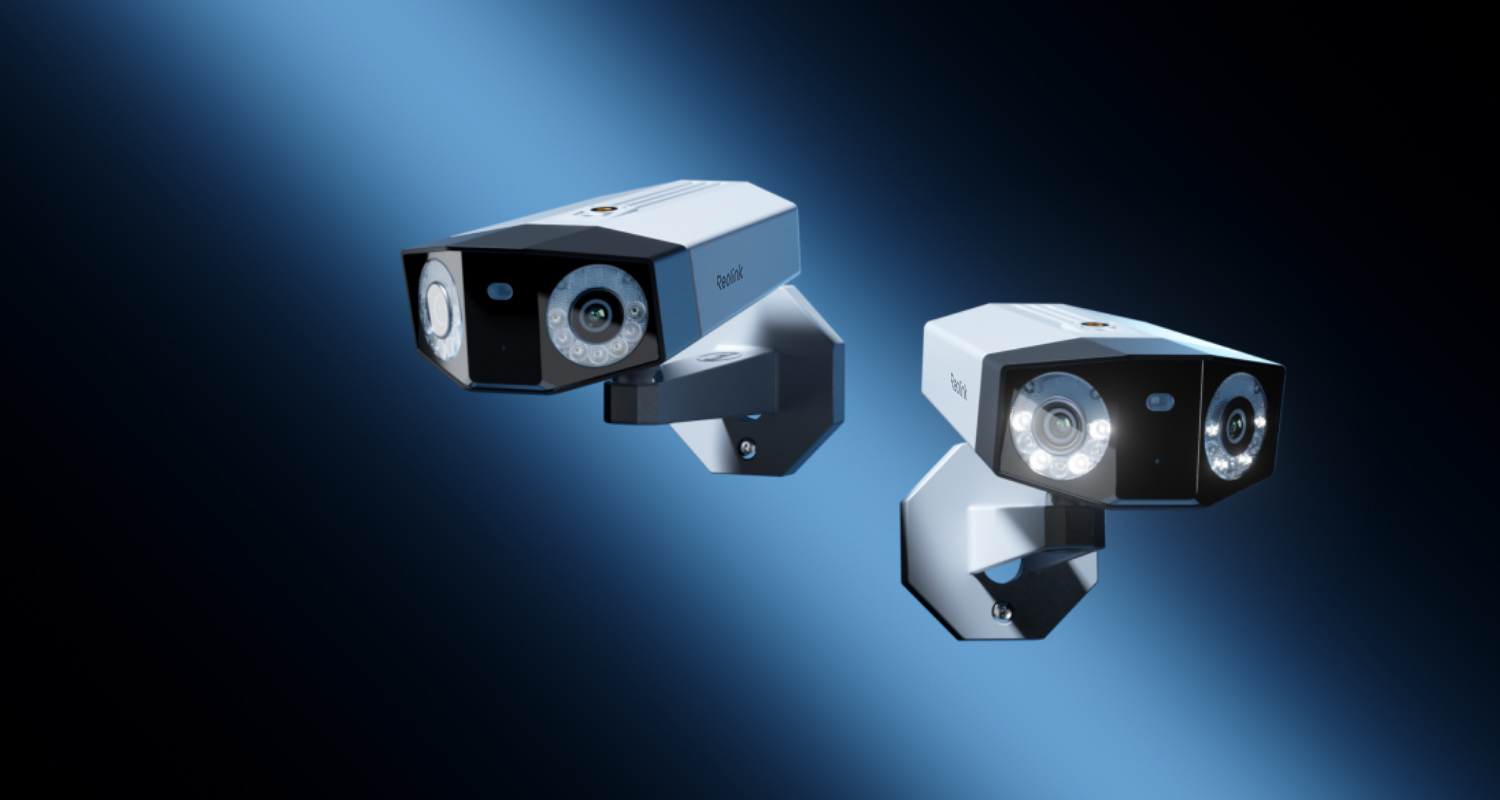
The breadth is not decorative. A battery camera conserves energy by waking for events, so it is a poor default for someone who needs uninterrupted footage. A PoE camera can run continuously, but somebody has to pull cable. Solar can reduce charging visits, not manufacture winter sunlight. LTE escapes the router but introduces cellular data. Reolink's catalog works best when the buyer starts with the physical problem instead of the megapixel number.
The $1 million proof
Reolink was founded in 2009 by an engineering team led by Colin Liu. The pivotal public experiment came in 2017, when it put the original Argus on Indiegogo. The pitch was concrete: a weatherproof 1080p camera with no power cord and no Ethernet cable. More than 6,000 backers pledged over $1 million in 40 days, beating the goal by more than 3,000 percent.
The cost was not only the camera. Hardware crowdfunding drags fulfillment, customs and global support into the room before the applause has stopped. An Indiegogo case study says Reolink navigated those hurdles, produced and shipped 13,400 units, and fulfilled preorders within two months. The campaign changed the company's confidence about the battery category: freedom from wiring was not a niche convenience. It was a global buying trigger.
“How much is the monthly fee?”The first question customers ask, according to a Reolink installer featured by the company
What failed first was not the premise. It was the assumption that one wire-free camera could cover every security job. Battery conservation limits continuous recording. Early products had narrower resolution, storage and integration options than today's range. Reolink's answer was to expand sideways: 4G in 2018, dual-lens families in 2020 and 2021, 4K battery cameras in 2023, and encrypted Home Hubs in 2024. The promise stayed steady while the power, connection and storage choices multiplied.
How the money works
Reolink is private and does not publish detailed financials. Its visible engine is hardware commerce. It sells direct from its regional websites, through Amazon and major retailers, and through installers and business partners. The first camera opens a basket that can later include more cameras, solar panels, microSD cards, hubs, NVRs, hard drives and cables. Optional cloud plans exist for supported models and regions, but the core local-storage promise keeps recurring revenue from becoming the admission ticket.
Current prices move with discounts, bundles and geography. The range tells the story better than one sticker: small cameras can live around the low hundreds of dollars, while multi-camera hub or NVR kits stretch into several hundred or more than $1,000. A Home Hub product page in 2026 listed the base hub near $150 before promotions; four-camera systems cost substantially more. The useful calculation is ownership, not checkout. Local storage costs more upfront than a free trial and can cost less after years without a plan.
What buyers keep
Local clips, core detection, LAN access, storage choice and the ability to build from one camera toward a larger system.
What buyers inherit
Compatibility checks, storage sizing, occasional cable work, firmware attention and more decisions than a cloud-first starter kit demands.
Local-first gets an audit
The sharpest test of a privacy claim is whether the product remains useful when the internet disappears. Reolink's Home Hub can create a local network for cameras, store recordings offline and encrypt the cards. In 2025, the company entered the Works with Home Assistant program at the Platinum tier. Most supported non-4G cameras can expose video feeds, AI alerts and controls inside the home network. The partnership turned local control from packaging language into something an outside ecosystem had to test.
There are boundaries. Home Hub compatibility varies by camera generation and identifier. Some battery cameras need a hub or NVR bridge for Home Assistant, and 4G models are excluded from that integration. Third-party protocol behavior can vary by model. Reolink publishes compatibility lists because it has to. A buyer mixing old and new devices should read them before buying, not after drilling.
Software is also where the broad-hardware strategy meets friction. Public reviews praise image quality, value and local storage, but complaints commonly mention alert tuning, model-specific quirks and uneven support experiences. A catalog this wide creates a permanent obligation: firmware and apps must make dozens of products feel like one system. The company can launch another lens more easily than it can erase every edge case.
The 2026 bet: put the AI in the house
At CES 2026, Reolink showed its OMVI triple-lens cameras and an AI Box built around ReoNeura features. The direction is clear: local object detection, situation summaries and natural-language video search without shipping every query to a distant server. Later launches paired Qualcomm processors with power-efficient cameras, including a second-generation battery doorbell with a square head-to-toe view and broader package, person, pet and vehicle detection.
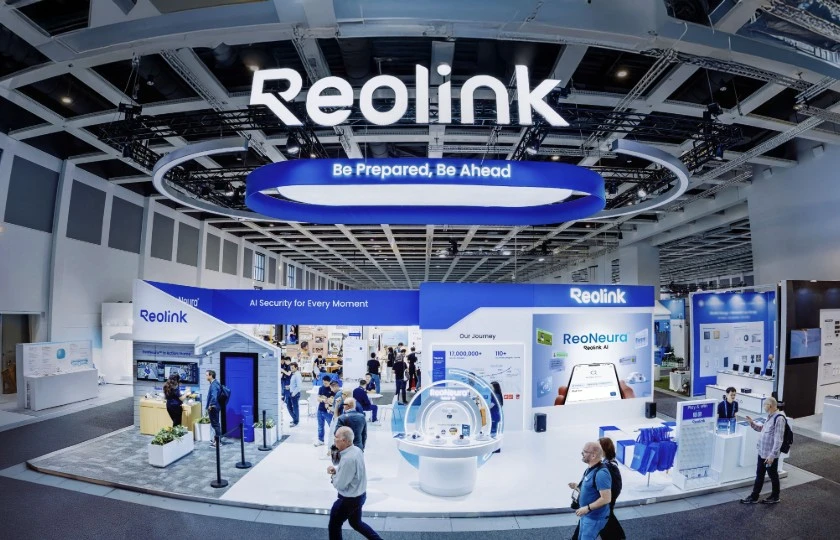
The bet is sensible and demanding. Generative search is useful when a system contains days of footage, but only if it finds the red truck and ignores the orange cat. Local processing can reduce latency and cloud exposure, but it shifts performance constraints into the box customers own. The feature will matter less for its demo sentence than for false negatives, indexing speed and support across older cameras.
Argus proves demand. More than $1 million pledged for a 100 percent wire-free camera.
Dual lenses arrive. Duo and TrackMix make wider coverage a recognizable Reolink signature.
Storage gets a center. Home Hub brings encrypted local recording to mixed wireless setups.
The shelf gets physical. Reolink reports placement in more than 3,000 retail stores.
AI moves local. OMVI, ReoNeura and the AI Box push search and analysis toward the home network.
What to steal from Reolink
Reolink's playbook is more portable than its circuit boards. It picked a recurring customer irritation - paying to use owned hardware - and made the absence of that irritation part of the product. It validated a specific use case before scaling inventory. Then it expanded along real constraints rather than inventing random features. Each new power source or connection method opened a new physical location while preserving the same promise.
The copyable playbook
- Sell the missing bill. Removing an annoyance can be clearer than adding a feature.
- Pre-sell the constraint. Argus promised no wires, not a vague revolution in vision.
- Expand sideways. Build variants around where customers cannot get power, Wi-Fi or coverage.
- Make ownership compound. A first camera should make the second device and storage layer more useful.
- Publish the seams. Compatibility tables are not glamorous, but they preserve trust in a modular system.
The approach does not work everywhere. A household that wants one effortless default may prefer a narrower cloud ecosystem. A large enterprise needing certified support, centralized policy and guaranteed response times may choose a commercial platform and installer. A site where losing a single second is unacceptable should not begin with a battery camera. And a buyer unwilling to manage storage, firmware or a few acronyms will experience Reolink's freedom as homework.
For everyone else, the company offers a pragmatic middle: cameras serious enough to run locally, approachable enough to buy without a site survey, and varied enough to follow a property from the front door to the far fence. Reolink did not remove every cost from surveillance. It made the costs visible, moved more of them upfront, and let the customer decide where the video should live. In a subscription economy, that is a product decision with unusual staying power.