At San Emigdio Ranch in California, a water check could mean nine hours behind the wheel. The journey had a perfectly sensible purpose: make sure the cattle had something to drink. Its peculiar economics came from the possibility that, after all that driving, there would be nothing to do. The tank would be full. The pump would be working. A person and a pickup had spent the day transporting reassurance.
- Satellite-connected sensors report water conditions to a phone.
- Ranchers can monitor tanks and troughs, track rainfall and control compatible pumps.
- The payoff depends on how much an inspection trip costs - and how reliably someone acts on alerts.
Ranchbot Monitoring Solutions has built a business around that uneventful arrival. Its customers manage livestock and water across places where the next tank may be a long way from the house, and further still from a useful cellular signal. The company sells field hardware and a software service that make the condition of distant infrastructure visible.
Nine hours to discover a tank is full
In Ranchbot’s published San Emigdio case study, manager Seth Scribner describes the arithmetic. Water checks and pump monitoring had cost about $67,000 annually in labor and vehicle use. After adopting remote monitoring, the reported figure fell to $38,000. The difference was approximately $29,000 a year. These are one customer’s figures in a company case study, rather than a forecast for every ranch.
Scribner had initially been skeptical about trusting technology with water in a hot, arid environment. Years of readings matching conditions on the ground changed his view. That is the consequential change: a rancher must trust the information enough to alter the routine. Otherwise, the sensor becomes another thing to check before doing the same old drive.
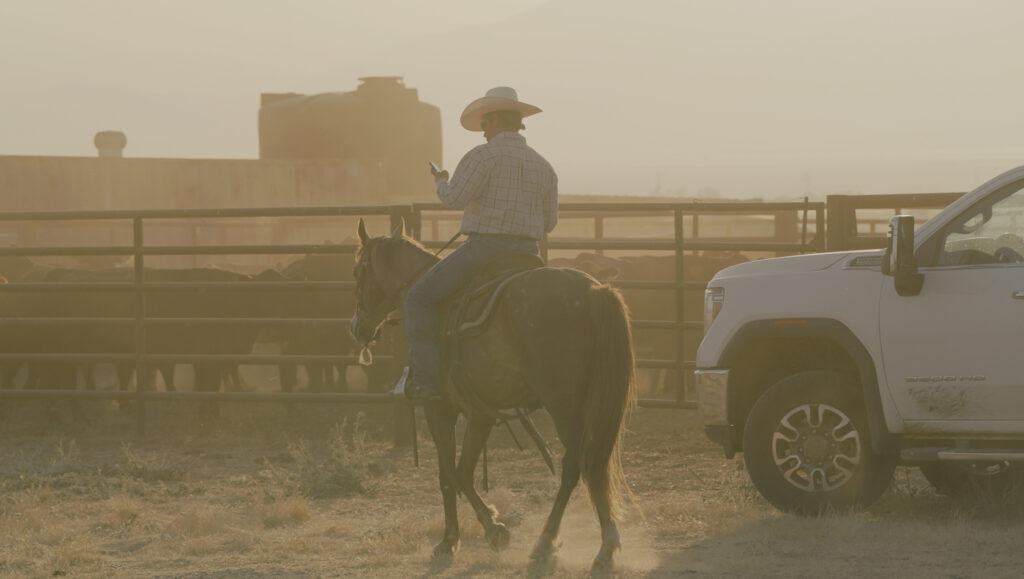
The tank gets a voice
The standard Ranchbot Water Monitor is a solar-powered satellite hub. It can connect up to five wired sensors and ten wireless sensors, sending information into MyRanchbot. The platform supplies a map of monitored sites, trends, custom alerts and permissions for team members. A falling level becomes something a manager can investigate before the next scheduled round.
For a standalone tank, Ranchbot Lite takes a smaller approach: one sensor, a battery and satellite connectivity. The advertised battery life is up to four years. MyRanchbot is accessible through a web dashboard on a phone or computer. Text and email alerts carry the useful interruption: this particular water point needs attention.
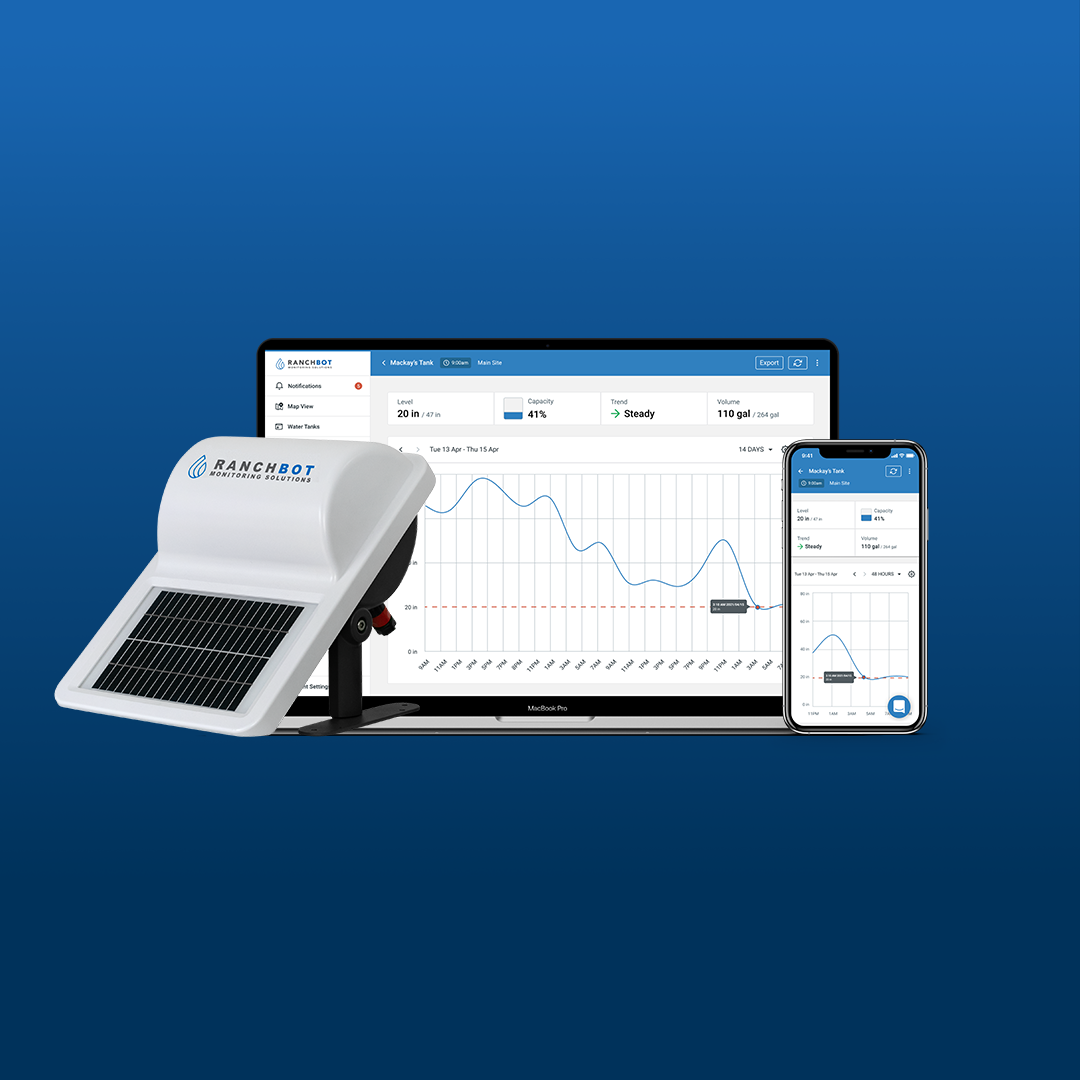
The distinction between storage and drinking water matters. A full storage tank does not, by itself, prove that the trough receiving it is full. Ranchbot offers Xtend Trough, a wireless add-on advertised to reach a hub up to three miles away, and Trough Direct, which communicates directly by satellite. The latter serves hard-to-reach troughs without line of sight to a Ranchbot Monitor. Both are specified for depths of five feet or less.
Other devices answer different questions. A tipping-bucket rain gauge records rainfall and exports it for analysis. Flow and pressure sensors can reveal unusual consumption, leaks or trouble in a line. Pump Control lets an operator start and stop compatible pumps remotely, or automate them according to tank levels. Diesel, solar and mains-powered equipment feature in the product’s compatibility description.
A drought, a coffee, and 13,000 miles
The business began in Australia. In a 2023 interview, Andrew Coppin dated the venture he started with software developer Craig Hendricks to 2016, during a major drought. Coppin had spent decades in finance. His agricultural upbringing supplied a reason to return to a problem whose consequences were considerably more tangible than a market quotation.
A later interview describes the founders meeting at a pitch night, then over coffee. Before expanding into America, Coppin said the team covered about 13,000 miles visiting ranchers, cattlemen’s associations, universities and regulators. The questions concerned suitability: would technology developed for Australian conditions help operators facing American distances, drought and rising costs? He dated the U.S. commercial launch to February 1, 2023.
The connectivity work was central. Viasat documents Ranchbot using its IoT Nano service for two-way satellite communications at Arizona’s Bar T Bar Ranch. There, more than 1,200 cattle were spread across roughly 300,000 acres. A remote monitoring device is of limited comfort if it needs a cellular signal that the water tank cannot obtain.
Buy the avoided journey
Ranchbot charges for hardware and a recurring Service and Access Plan. Its published software terms specify annual payment per monitor. For a buyer, the useful calculation includes the complete installation, recurring fees, maintenance and the trips still required. A sensor beside the house and a sensor at the end of a punishing road have very different opportunities to earn their keep.
Gallagher also sells water-tank monitoring systems. Buyers should compare the actual property’s connectivity, the number of water points, whether pump control is needed and total ongoing cost. Ranchbot’s appeal lies in combining several measurements and controls within one water-management system. Satellite access alone is not an exclusive advantage.
“We’re still making trips, but much less frequency.”Seth Scribner / Ranchbot customer testimonial
Someone still has to mend the pipe. Ranchbot’s service terms also describe interruptions from obstructed sky, storms and technical faults. They recommend checking the dashboard at least twice daily and inspecting tanks manually when current information is unavailable. The practical lesson is to assign an alert recipient, a response and a fallback before changing inspection schedules.
One ranch, fewer screens
In October 2025, Ranchbot and CattleMax announced an integration placing water-level and rainfall information in CattleMax’s pasture map. Rainfall can automatically populate records. It is a modest-sounding convenience with a sensible purpose: put new information inside a routine the rancher already uses.
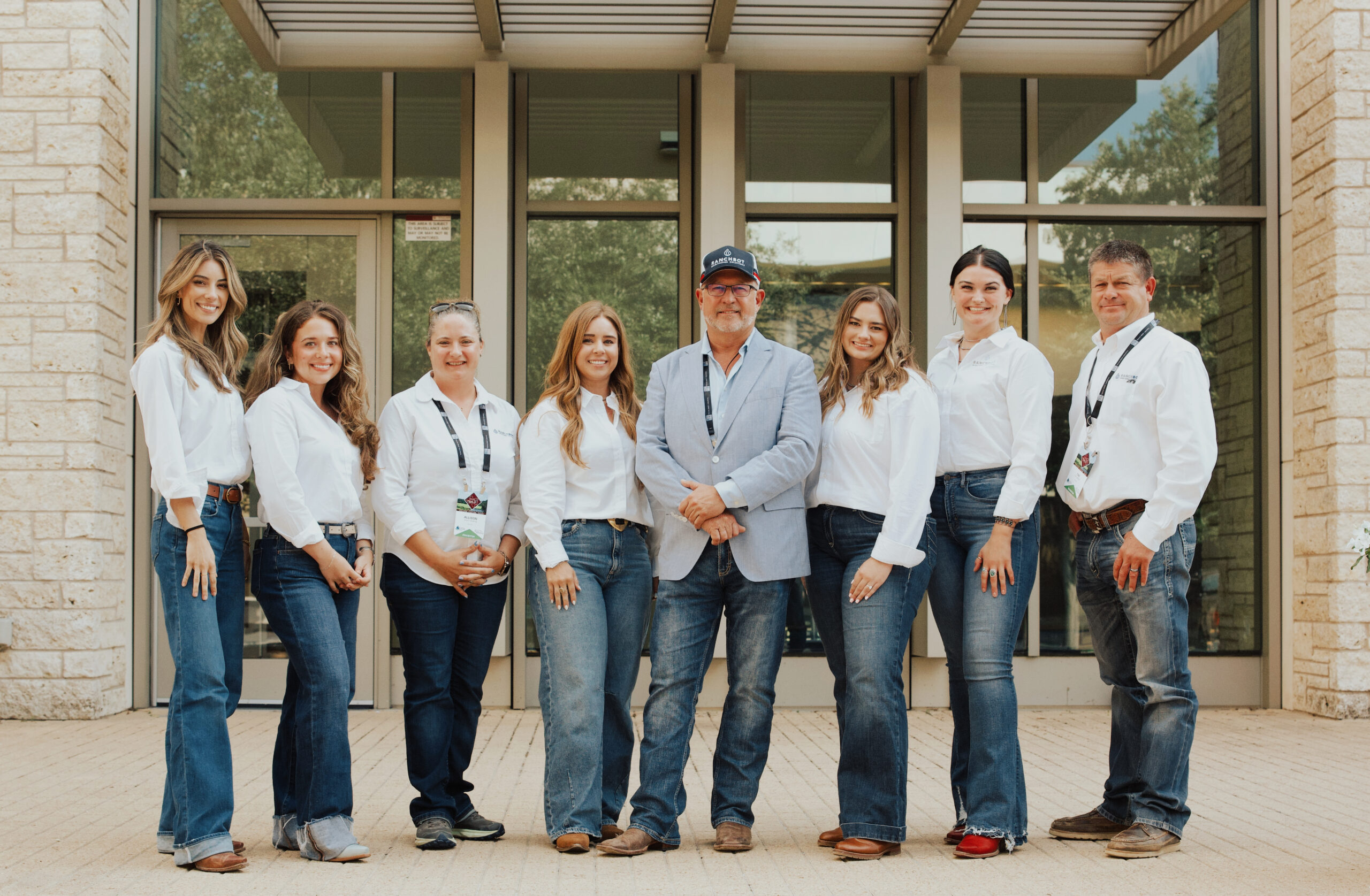
In August 2026, the group announced over US$15 million in Series B financing and a new U.S. parent headquartered in Fort Worth. It reported more than 12,000 customers across North America, Australia and other markets. The money is intended for more staff, product development and partnerships. The larger ambition will be judged by a small, recurring decision: whether the rancher needs to get in the truck today.
Follow the water
Explore Ranchbot, its products and how-to video library. Watch the monitor installation demo or visit the YouTube channel.
Read the Andrew Coppin interview, the CattleMax connection guide and the 2026 financing announcement.