At the beginning, Desert Door had an awkward arithmetic problem. According to co-founder Brent Looby, it took roughly four sotol plants to make one bottle. Later, he said, the process produced more than four bottles from one plant. Behind the handsome blue ceramic bottle was a less photogenic achievement: getting more drink out of the desert.
That reversal helps explain this Texas distillery better than a sunset does. Desert Door made a business out of an unfamiliar ingredient, an unfamiliar category and a familiar human weakness: curiosity about what might be in the next glass. In May 2026, Austin Business Journal reported that the company had closed. The bottle’s story survives; the business story demands a second look.
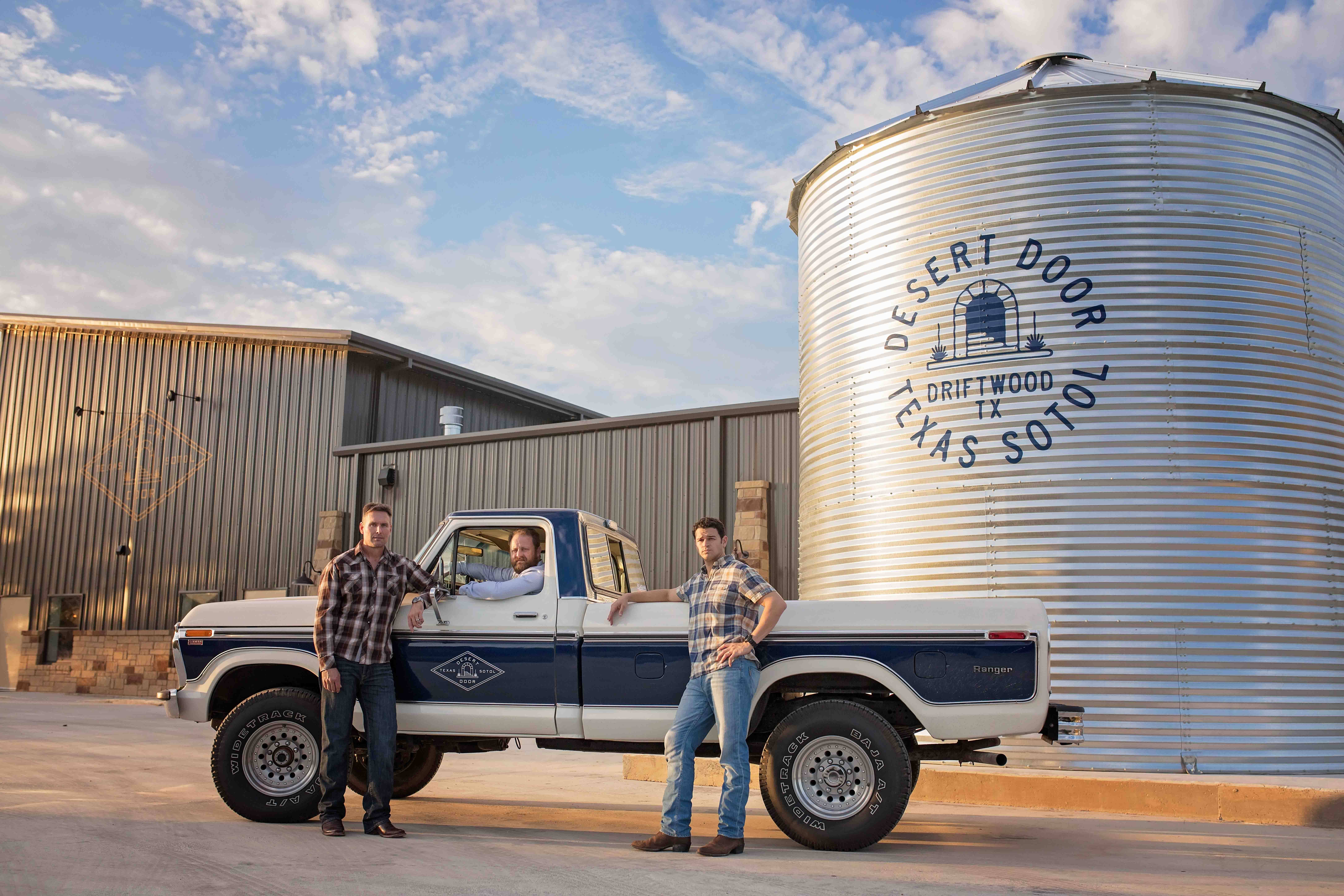
- Three military veterans turned a University of Texas assignment into a distillery.
- Wild-harvested Texas sotol supplied a distinctive alternative to agave spirits.
- Original, Oak-Aged and Pollinator gave the plant three different cocktail jobs.
- A national expansion announcement in 2025 preceded reported closure in 2026.
01 Homework with a drinking problem
The founders were Ryan Campbell, Judson Kauffman and Looby, military veterans studying at the University of Texas’s McCombs School of Business. Their New Venture Creation course required a hypothetical company. Kauffman brought a connection to sotol and family stories of West Texas moonshine. A classroom gave the idea a deadline.
Looby recalled their intentions with refreshing economy: “We just wanted to get a grade, not start a business.” An investor’s interest made the assignment harder to put away. The team spoke with West Texas landowners about plant access and Austin retailers, restaurateurs and bar owners about selling the result. They tested supply and demand before either could become an expensive surprise.
“We were full of assumptions that hadn’t been vetted yet.”
JUDSON KAUFFMAN · MCCOMBS ALUMNI FEATURE
They placed third in the fall 2016 Texas Venture Labs Investment Competition, collecting $2,000 and investor introductions. McCombs reported that the capital they subsequently raised covered the distillery and 18 months of operating costs. Desert Door opened in 2017. Funding records list a $3.5 million seed round that October and a $3 million Series A in January 2019. A modest prize had opened a substantially larger tab.
02 The blue bottle needs an introduction
Sotol names both the plant and the spirit. Desert Door used Dasylirion texanum, wild-harvested in Texas. It resembles agave, but belongs to a different genus. Sotol has a history extending well beyond this company, especially in northern Mexico. Desert Door’s contribution was a Texas interpretation with its own production choices. The distinction matters when a young brand borrows an old story.
Its process involved cooking the plant hearts, extracting sugars, fermenting and distilling. Reporting describes steam cooking, which helps explain its relatively unsmoky profile. Harvesting and sugar extraction required experimentation. That is where the founders’ expertise developed: in translating a wild ingredient into a repeatable bottled product.
In a 2025 distilling podcast, Looby discussed the difficulties of building a supply chain around a wild plant and the choices involved in extracting fermentable sugars. The romance begins on a ranch; production has to cope with what arrives from it. A botanical identity becomes a commercial advantage only when the next batch can do the job customers expected from the last one.
- 01Harvest
the hearts - 02Cook &
extract - 03Ferment
the sugars - 04Distill &
bottle
For Oak-Aged, the route takes a two-year detour through American white oak.
For customers, however, the question was simpler: what do I do with it? The unaged Original offered an entry through familiar citrus cocktails. Oak-Aged, currently described as spending two years in charred virgin American white oak, brought vanilla, caramel and oak notes. Pollinator infused the base spirit with native botanicals, including mesquite, grapefruit and honeysuckle. Its floral, herbaceous character invited a gin comparison.
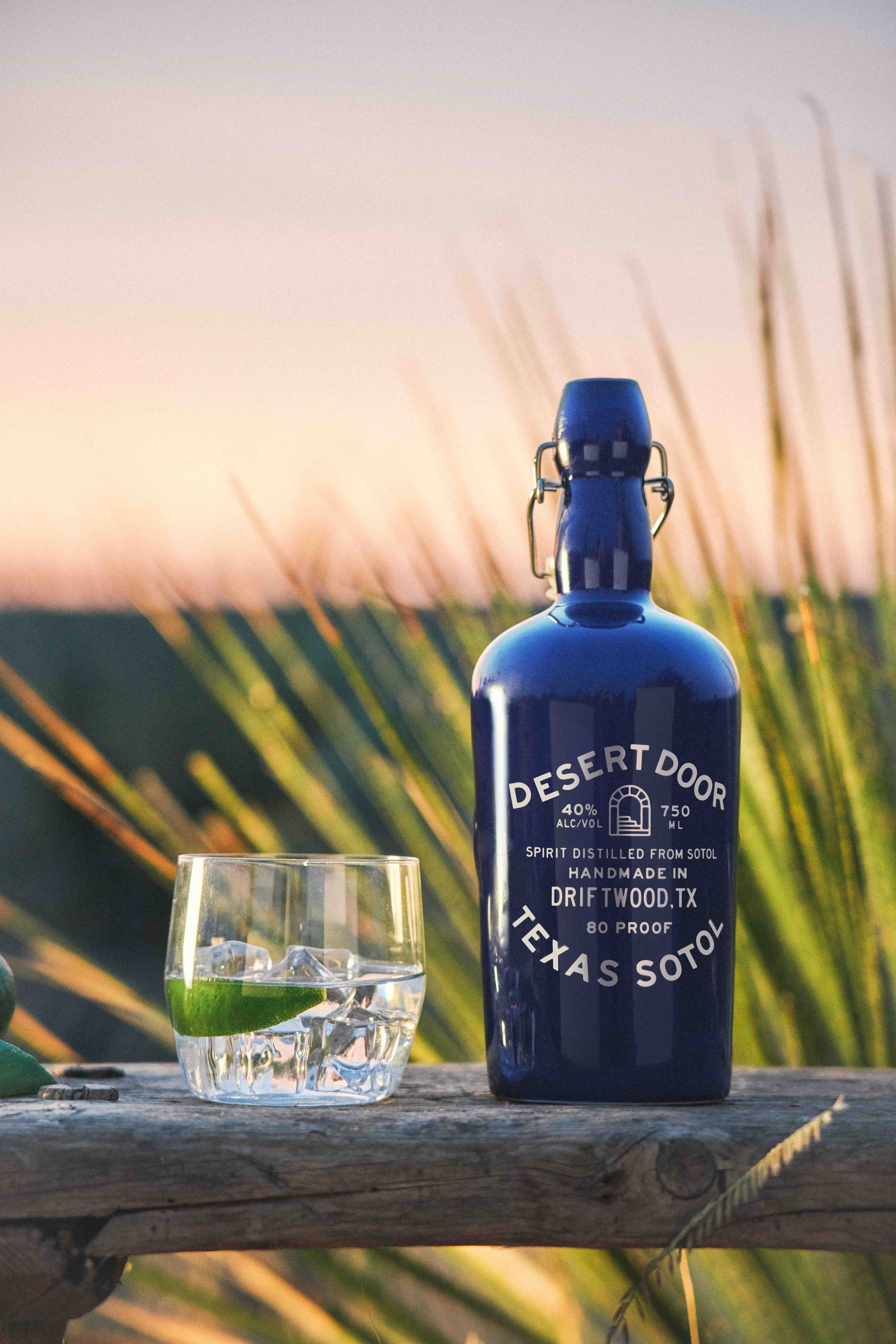
The company’s recipes made those distinctions practical: Original in a Paloma, Oak-Aged in a Sotol’d Fashioned, Pollinator in a Bee’s Knees. You could learn the category while making a drink you already understood. Website prices list Original at $44.99 and the other two at $54.99 each. Those are listed prices; availability is a separate matter.
Its audience included adventurous adult drinkers, home cocktail makers and the bars and retailers serving them. Within sotol, alternatives include Hacienda de Chihuahua and La Higuera. Across the wider drinks cabinet, tequila and mezcal compete for similar occasions. Desert Door’s Texas origin and production method supplied a reason to try something different.
03 Boots, bees and the cost of getting bigger
The tasting room made education part of the sale. Tours, historically advertised at $25 for roughly 40 minutes, combined process with tasting. Cocktails, bottle purchases, merchandise and private events added revenue around the liquid. Wholesale distribution, meanwhile, put bottles into other people’s shops and bars. The business had to work both as a destination and as a product on somebody else’s shelf.
Its equipment also found another use during the pandemic. In 2020, Desert Door made hand sanitizer and donated 70 bottles to the University of Texas Police Department. A distillery’s practical assets could answer a need that had little to do with a cocktail menu.
A 2025 partnership with Tecovas was unusually well matched: Original entered the boot retailer’s in-store bar program where legal. The setting already spoke Texas. On conservation, Pollinator’s product page specifies a $2 donation per bottle to support land stewardship and native bees. The related nonprofit, Wild Spirit Wild Places, focuses on Texas landscapes, water and habitat. A named amount gives the conservation promise something concrete to examine.
per-bottle donation
distribution target
04 The map got bigger. The doors closed.
In July 2025, Desert Door announced an alignment with Republic National Distributing Company and a target of 46 states plus Washington, D.C. by year-end. The ambition was clear. In May 2026, closure reporting supplied a different ending. The expansion announcement does not establish that the target was achieved, and neither event proves what caused the closure.
The useful lesson is in the work you can actually observe: speak to suppliers and buyers, improve extraction, and show customers a familiar use for an unfamiliar thing. Those methods depend on reliable supply, workable margins and cash to carry inventory. A place on the distribution map still needs a repeat order. Desert Door’s founders taught drinkers how to approach a strange plant. Keeping the company alive required another kind of conversion.