energy-management
(47)
KBC finds the money hiding in a refinery’s energy bill
The Yokogawa-owned company pairs process simulation with engineering advice to cut waste in energy and chemicals. Its most revealing lesson: even a good digital twin needs someone responsible for acting on it.

Freespace and the expensive fiction of a full office
The calendar says the meeting room is taken. The sensor says otherwise. Freespace turns that disagreement into decisions about desks, leases and the cost of keeping empty space comfortable.

EO Charging Built the Plug, the Brain and the Pit Crew - Then the Grid Shifted Beneath It
The British fleet-charging specialist learned that the valuable bit is not the socket. It is knowing which van must leave at dawn, how much power the depot can spare and who answers when a charger sulks at 2 a.m. Its trip from a Suffolk pig shed to Pod and EDF is a sharp lesson in building - and financing - hard climate infrastructure.
The 46-Year-Old Software Company Teaching Utility Bills to Talk
EnergyCAP began with an engineer who could spot waste but could not get clean data. Four decades, one Enron detour and billions of meter readings later, it is turning the least glamorous document in business into a control panel for cost and carbon.

How GDI Turned a Broom Into a C$2.5 Billion Building Machine - and What Operators Can Copy
GDI spent a century moving from janitorial work into the machinery, data and energy systems behind a building. Its playbook is unflashy, acquisition-heavy and surprisingly useful: own more of the work, make one person accountable and know when to sell the pieces that no longer fit.

CarbonCents Is Betting Facilities Chiefs Want Lower Bills Before Loftier Carbon Promises
The Clemson-born startup found a practical way into the climate-software market: make scattered building data useful to the people paying the utility bills. Now it is testing whether one dashboard can stretch from boiler rooms to boardrooms.

Xeal’s Contrarian Bet: The Best EV Charger Is the One That Ignores the Internet
After its first connected chargers stranded drivers and drew hate mail, Xeal spent two years moving the transaction off the cloud. The result is a real-estate-first charging business built for the place Wi-Fi goes to die: the parking garage.
The Home-Theater Company That Built Its Best Room Inside a Bank Vault
A former GM operating-systems engineer turned an old Boca Raton bank into a smart-home laboratory - vault theater included - and now sells the finished picture before the first cable is run.
Leviton Turned a Light Socket Into a 120-Year Hardware Empire - Here’s the Expansion Playbook
The family-owned manufacturer began with a part for gas lamps. Its real trick was learning when to abandon the product category - without abandoning the customer, the channel, or the wall.
Terawatt’s $1.3 Billion Bet: Fleets Don’t Need More Chargers - They Need Somewhere Reliable to Plug In
Electric trucks are arriving faster than megawatts. Terawatt’s answer is a network of powered depots that turns years of permits, trenching and utility negotiations into one line on a fleet operator’s monthly bill.

Switch Automation Learned the Hard Part of Smart Buildings Is the Part Nobody Sees
The Denver proptech company connects old controls, new sensors and portfolio software in one operational layer. Its useful lesson is wonderfully unglamorous: before a building can become intelligent, someone has to make its data trustworthy.

The Standards Group That Made 4,500 Smart-Home Gadgets Actually Talk to Each Other
It doesn't sell a single gadget. It sells a promise - that the smart lock, the motion sensor and the hub in your hallway will all speak the same language, no matter whose name is on the box.

The $100 Box That Turns 400,000 Homes Into a Power Plant
A former commodities trader noticed homeowners were flying blind on their own electricity. So he sold them a $100 box - and started wiring 400,000 basements into a grid-scale power plant.
The Company That Sells You Peace of Mind, One Thermostat at a Time
Honeywell spun it off in 2018 as an afterthought. Six years and three acquisitions later, Resideo is a $6.76 billion home-safety business splitting itself in two - and betting the boring stuff on your wall is worth more apart than together.

The Korean Startup Trying to Shrink the Grid's Heaviest Box
Crocus wants to replace the hundred-year-old iron transformer with a silicon one that thinks. Its bet: the same box that charges electric cars can also keep an AI data center from browning out.

Blue Pillar Made Old Machines Talk - Then Generac Bought the Conversation
Hospitals, utilities and microgrids were full of useful machines that could not share data. Blue Pillar found a practical business in connecting the awkward old stuff - often in days, sometimes for a few thousand dollars - and became part of Generac in 2022.
Maplewell Wants Your Building to Act Like a Battery - Before the Grid Sends the Bill
The Boulder startup is teaching batteries, refrigerators and microgrids to anticipate the expensive hour. Its pitch is simple: make demand flexible before building more supply.

Canopy Power Wants to Turn Every Diesel Island Into Its Own Power Plant
The Singapore engineering company has built a business around the places conventional solar developers tend to avoid - remote islands, awkward logistics and power systems where failure is not an option.

The Building Knows What’s Wrong. CIM Makes Sure Someone Fixes It.
Most smart-building software stops at the alert. CIM’s PEAK platform follows the problem from noisy sensor data to diagnosis, assignment and proof of repair - giving property teams a practical route to lower bills, fewer breakdowns and better-performing buildings.

The Humble Power Meter Is Learning to Think
For 130 years, Landis+Gyr has counted electricity. Its next act is to turn the meter on your wall into a sensor, a computer and a traffic cop for an increasingly unruly grid.

The Tiny Box Behind Every Solar Panel Is Enphase's Big Bet
Enphase turned the least glamorous part of rooftop solar into a platform. Now its panel-level microinverters anchor a connected system for making, storing, using, and selling household power.
NRG Wants to Run the Power Plant - and Your Thermostat
NRG spent years becoming a retailer you might meet on an electricity bill. Now it is joining power plants, smart homes and flexible demand into one system - a bet that the winner in the next energy cycle will understand both sides of the meter.
Schneider Electric
The 190-year-old industrial group has become the control layer for an electric economy - linking breakers, factories, buildings and AI data centers to the software that decides how power should move.
Axross
Axross is a Singapore-based, Y Combinator W22 climate-tech company that builds AI-driven HVAC control systems for industrial facilities. By layering machine-learning optimization, IoT sensing, and building-management-system integration on top of existing cooling infrastructure, Axross helps manufacturers in energy-intensive sectors like pharmaceuticals, semiconductors, and precision manufacturing cut HVAC energy use by up to 30%, lower Scope 2 emissions, and hold production environments precisely stable - without ripping out the equipment they already own.
INTEREL
INTEREL is a Dubai-based smart building technology company that builds the hardware, operating system and IoT infrastructure hotels and multifamily properties use to control HVAC, lighting, shades and guest services from a single connected platform. Its 'Hotel of Things' ecosystem pairs a portfolio of smart thermostats and room controllers with INTEREL OS and the connectBsmart connectivity framework, letting properties automate energy use, integrate door locks, voice assistants and property-management systems, and cut water and power consumption. Founded in 2010, INTEREL has installed roughly 500,000 devices across more than 45 countries and now operates within the Siemens Xcelerator ecosystem.

Quantela Inc.
Quantela is a smart-city technology company that helps cities and communities digitize urban infrastructure through an AI- and IoT-powered data platform. Founded in 2015, it evolved from a dashboard tool into a full urban infrastructure platform spanning smart lighting, traffic, public safety, digital advertising and citizen services. Quantela is known for pioneering an 'outcomes-based' business model, funding projects up front in exchange for a share of the resulting revenue or savings, and operates across the Americas, EMEA, India and Asia-Pacific.

SensorFlow
SensorFlow is a Singapore-based proptech company that uses wireless IoT sensors and AI to help hotels monitor, analyze and automate their energy use - primarily air-conditioning. Its retrofit-ready hardware installs in minutes with no upfront cost and typically cuts HVAC energy consumption by around 30%, letting properties lower operating costs and carbon emissions while keeping guest rooms comfortable. Founded in 2016 and backed by investors including Openspace Ventures and Gaw Capital, the company serves hospitality brands across Asia-Pacific and beyond.

Gravity
Gravity (formerly Gravity Climate) is a San Francisco-based enterprise software company that combines carbon accounting and energy management in a single platform built for industrial businesses and their supply chains. Founded in 2022 by Saleh ElHattab, the company automates the collection of utility and emissions data, generates audit-ready Scope 1, 2, and 3 disclosures, and runs a marketplace that helps customers identify, finance, and implement energy-efficiency projects that cut both costs and emissions. Backed by more than $20M in funding, Gravity works with companies like Autodesk, WM, Geotab, Xometry, and MiddleGround Capital.

Ivy Energy
Ivy Energy is a San Diego cleantech company whose cloud software, Virtual Grid, automates the billing and management of onsite solar, battery storage, and EV charging for multi-tenant properties. It solves a stubborn accounting problem - fairly splitting the value of a shared rooftop solar array among many tenants - and turns that onsite energy into recurring, predictable net operating income for property owners. Founded in 2019 by Dover Janis, the company raised an $18M Series A led by SolarEdge in 2024 and serves multifamily and commercial real estate portfolios across multiple U.S. markets.
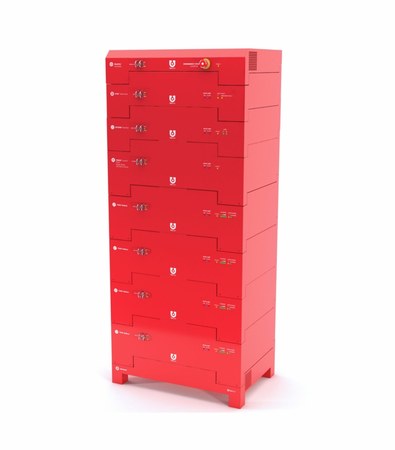
Leitnium (Formerly YouSolar)
Leitnium, formerly YouSolar, is a Santa Clara-based clean-energy hardware company building the PowerBloc, a modular solar-plus-battery nanogrid that runs on a constant 400-volt DC architecture. Founded in 2010 by physicist Dr. Arnold Leitner, the company sells a plug-and-play private power plant that integrates solar panels, lithium-ion batteries, and optional grid or generator inputs into one intelligent, scalable system. The pitch is simple: give a home or small business its own always-on grid, so the lights never flicker even when the utility goes dark.