A refinery’s energy bill is a collection of decisions: which boiler runs, where steam goes, when electricity is worth buying. KBC has built a business around making those decisions better. In one Asia Pacific project, the company reported a 1.5% reduction in energy costs. Then the refinery clarified responsibilities in its operating workflow and saved another 0.3%. The computer had useful suggestions. The organization needed a way to carry them out.
That small second number explains much of KBC, the British engineering and software business owned by Yokogawa. Its customers operate refineries, chemical plants and other complicated industrial assets. KBC sells tools that represent those assets mathematically, alongside people who understand how to improve their performance. Its commercial territory is the distance between a plausible calculation and a measurable result.
A better morning meeting, with thermodynamics
The Asia Pacific assignment began with an examination of improvement opportunities. KBC and the customer narrowed the early work to four utility projects. An online model recommended equipment settings; engineers and operators received training. The refinery brought the recommendations into its daily utility meeting and assigned accountability for the steps involved. This was a project involving software, equipment choices and working habits.
Energy-cost reduction
with real-time optimization
Additional savings after
clarifying accountability
The attraction is easy to understand. Industrial equipment is expensive, and its relationships are inconveniently interconnected. A local improvement can change demand elsewhere. A useful optimizer must account for the surrounding system before recommending a move. For a manager, that changes the question from whether a machine looks efficient to whether the whole site is operating economically.
The software knows where the molecules go
Petro-SIM is KBC’s process simulator. Engineers use it to represent individual units or connect them into a broader facility model, then investigate feedstocks, operating settings and production choices. Its refinery reactor models account for matters such as catalyst behavior and changing feed quality. A digital twin links that representation to operating data, helping the model remain relevant after the original engineering study.
Visual MESA Energy Management approaches the plant through its utilities. It models energy supply and demand, supports scheduling, and evaluates cost and emissions. Its applications include monitoring, greenhouse-gas management and optimization. Advisory operation presents recommendations for people to consider; closed-loop operation integrates recommendations with the control system. That distinction matters to a buyer deciding how much operational authority to give the software.
- 01 / ObserveBring operating data into the model.
- 02 / EvaluateTest process and utility alternatives.
- 03 / ActReview recommendations or use approved control integration.
- 04 / CheckCompare the result with the expected benefit.
The rest of the portfolio fills specific engineering needs. Multiflash deals with fluid properties and phase behavior. Maximus supports production modeling and flow assurance. Acuity supplies cloud applications for monitoring and digital twins. Consulting services help customers identify opportunities, evaluate projects and sustain changes. The expertise spans process engineering, energy systems and the practical work of keeping industrial operations effective.
The £180 million connection to the control room
Krikor Krikorian, John Brice and Peter Close founded KBC in 1979. The business began in yield and energy consulting, added simulation software, and launched Petro-SIM in 2004. Its history predates the fashionable language now attached to digital twins. What changed was the ability to keep models connected to the plant and reuse them across more decisions.
Yokogawa’s purchase became effective in April 2016. Its offer valued KBC’s equity at approximately £180.3 million, with shareholders receiving 210 pence a share. That exceeded an AspenTech proposal of 185 pence. KBC’s board backed the Yokogawa transaction. The episode puts a concrete price on the strategic attraction of combining process knowledge with an industrial technology business.
Yokogawa explained the fit through its instruments and control systems: KBC added consulting and software that could reach executives as well as engineers. Together, the businesses could address decisions from management to field operations. The purchase was financed through debt. It was an acquisition of an established company, rather than a startup financing milestone.
The competitive comparison remains useful. AspenTech’s HYSYS also offers process simulation, AI capabilities and tools for energy operations. Buyers therefore need to examine the models, applications and delivery support behind each proposal. KBC’s particular proposition combines its consulting practice, specialist simulation portfolio and access to Yokogawa’s automation capabilities. Whether that combination is valuable depends on the work a customer needs done.
At Mataripe, the changes reached beyond the screen
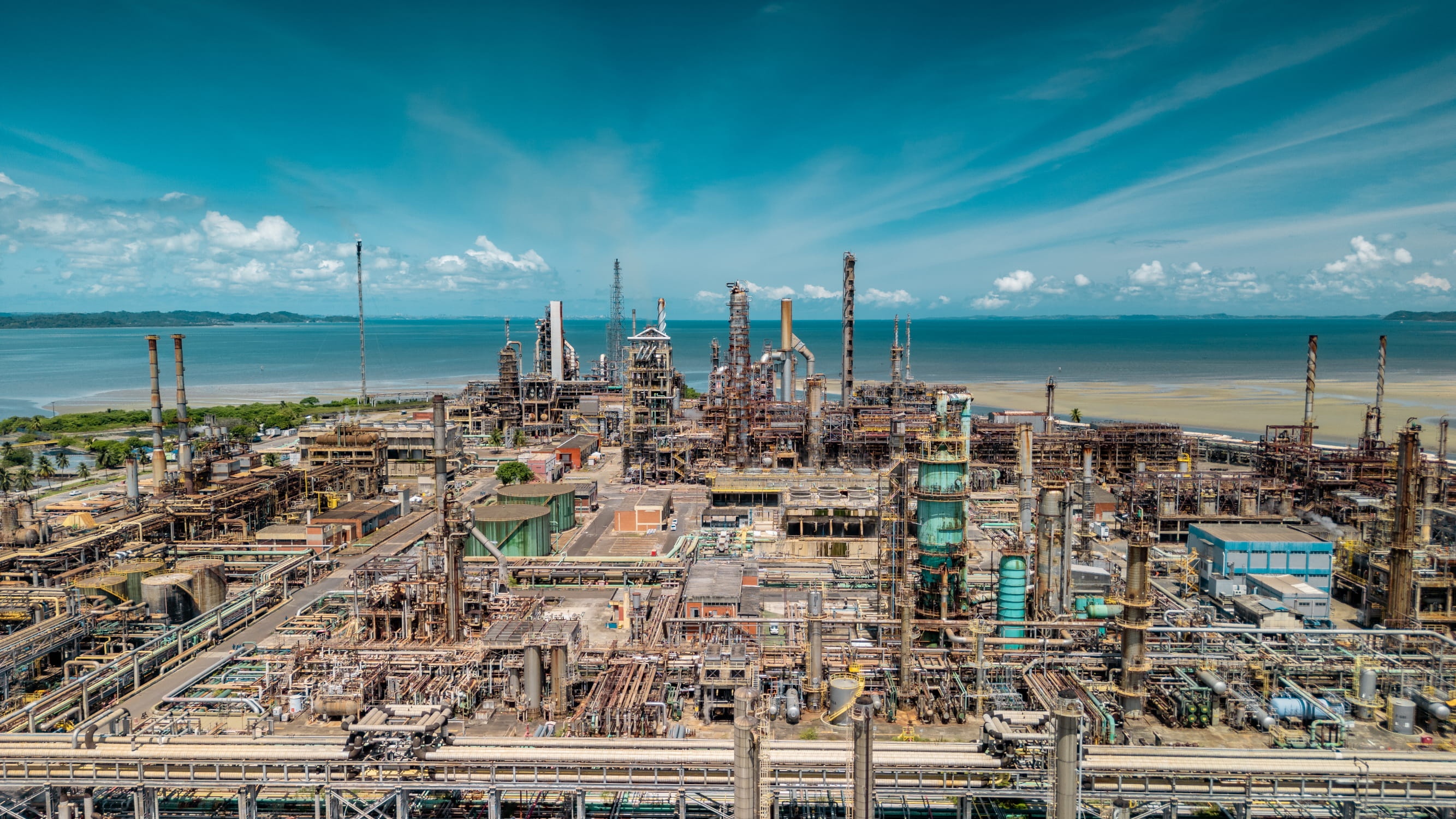
Acelen’s Mataripe refinery in Brazil offers a named example of KBC’s work. A jointly authored 2025 account describes a program involving plant models, planning changes, energy optimization and maintenance. The authors reported a 10% improvement in an energy-efficiency benchmark between October 2022 and March 2023, driven by opportunities requiring little or no capital expenditure.
Specific changes included a revised compressor-control strategy to address hydrogen flaring and an overhaul of planning models. Maintenance work acquired a gatekeeper role to define scope and priorities. These are useful details because they show where the effort went: into operating logic, economic assumptions and decisions about which jobs deserved resources.
Acelen’s own 2025 sustainability report records recognition for its Profit Improvement Program. It also describes a much broader modernization effort. The distinction matters when reading industrial success stories: a site’s overall performance reflects multiple investments and teams. A software installation sits inside that larger operating history.
Sometimes accounting is the bottleneck
One European refinery processed crude for two owners. Its accounting limitations required separate campaigns and, where possible, dedicated tanks. That imposed a physical constraint on an operation that could benefit from blending. KBC’s Visual MESA Production Accounting supplied reconciliation and composition tracking, helping the operator account for ownership while mixing crude.
The story widens the definition of optimization. A refinery can possess capable equipment yet still be held back by the information needed to use it commercially. Production accounting belongs in that conversation because the attractive operating choice must also be traceable. Someone eventually has to establish whose material became which product.
A model can go stale before the plant does
In 2020, KBC described a recurring industry problem: simulation models get abandoned, duplicated or left behind as projects move into operation. Its response was a philosophy it called “One Model, Many Uses.” The intention was to keep engineering work useful through design, operation, maintenance and supply-chain decisions, rather than repeatedly rebuilding isolated versions.
Customer experience shows why upkeep deserves attention. Sidpec, the Egyptian petrochemical producer, reported working with KBC in March 2025 to improve its utility model across the operating conditions of three production plants. The changes aimed to reduce discrepancies and make the representation more reliable. The lesson is practical: a model needs to keep earning trust as the operation changes.
That sets conditions for success. As an engineering judgment, incomplete measurements, outdated assumptions or missing constraints can undermine a recommendation. A plant also needs people authorized to assess and implement changes. Buying the software cannot settle those questions by itself. Model validation and operating ownership belong in the project scope from the start.
Put a price on the percentage
KBC’s commercial model combines software, cloud services and consulting. Product pages invite buyers to request a quote. The relevant buying exercise is to scope the model, data connections, implementation, training and continuing support, then compare that commitment with the opportunity at the site. A license price alone would leave much of the project out of the calculation.
For Visual MESA, KBC advertises average project paybacks of six to twelve months. Treat that as a vendor claim to test against the proposed installation. An illustrative calculation shows why a modest percentage can attract attention: cutting a $100 million annual energy bill by 1.5% produces $1.5 million in gross annual savings, before project and support costs.
at an assumed 1.5%
Results also depend on operating conditions. In a separate European petrochemical case, KBC reported roughly 1.7% lower energy costs during normal operation and savings of up to 7% during abnormal conditions. Those figures describe different circumstances. They should prompt a buyer to ask which operating baseline, prices and constraints sit behind an expected return.
The people still have jobs to do
KBC’s stated culture emphasizes collaboration, integrity and creating value. Its careers page makes a plain commitment about how colleagues should work together. That is an employer’s statement, but it fits work requiring consultants, operators and engineers to inspect assumptions together. An uncomfortable result needs to be discussable before it can become useful.
“We attack the problem,
KBC / STATED VALUE: RESPECT
never the person.”

There is a method here that other businesses can copy. Pick a consequential decision. Establish the current result. Test a better option against real constraints. Name the person who can act, and check what happened afterward. The Asia Pacific case makes that final organizational work visible; it gives the reader something more useful than an instruction to buy technology.
KBC’s newer releases expand the calculations available. Its September 1, 2026 announcement introduced Petro-SIM 7.7 with AI/ML-enabled hybrid modeling. Visual MESA Energy Management System 7.3 arrived in November 2025 with improvements to optimization and scheduling. The products keep moving, while the test for customers stays concrete: does the recommendation improve a decision they must make?
For energy transition work, KBC connects simulation with emissions and utility analysis to examine alternatives before committing capital. Lower energy cost and lower carbon emissions can coincide, but their relationship depends on fuel, process and operating choices. That is a problem worth calculating carefully. At the end of the exercise, someone still has to decide which boiler to run.