energy-management
(19)
Erika Brookes Has Spent 30 Years Learning How to Move Fast Without Losing the People
The EnergyCAP CMO learned her craft through dial-up, social media, SaaS and AI. Her parallel education came one mile at a time, on Atlanta’s roads and inside the community that keeps them busy.

Nadav Gur Has Spent 25 Years Making Invisible Systems Behave
Before apps were obvious, he built a travel assistant. Before conversational search was fashionable, he spun one out of SRI. Now Nadav Gur is applying the same systems instinct to the awkward economics of shared clean energy.

Tim Howard Is Teaching Buildings to Tell the Truth
After three decades in software, the Clemson facilities operator turned a basement experiment into CarbonCents - a company that makes power, water and occupancy data useful before the next utility bill arrives.

Daniel Lim Is Teaching Electricity to Pay Attention
The Crocus co-founder began with a stubbornly practical question: why collect oceans of energy data if nobody uses them to change what happens next? A decade later, his answer stretches from factory meters to EV chargers and software-controlled transformers.

Matthew Irvin Is Teaching the Grid to Use Time
The Maplewell Energy co-founder spent his career around power plants and utility constraints. Now he is betting that smarter timing - from refrigerated drinks to distributed batteries - can make the electric system more flexible.

Jon Kornik Is Teaching the Grid to Ask Homes for Help
The Plentify co-founder spent a career financing clean energy. Then he found a cheaper grid resource hiding in plain sight: the household appliances already waiting to be told when to switch on.

Connor Rouan Is Turning the Ceiling Into an Energy Dashboard
The SiteWorx CEO learned the business from installation sites upward. Now he is betting that the most useful climate technology may be the kind a facility manager can see, measure and switch off.

Shonodeep Modak
A chemical engineer learned to sell the value behind the machinery. Now Shonodeep Modak is applying the same customer-first discipline to AI, energy management and the changing architecture of a global marketing team.

Steve Huang
Steve Huang is the founder and CEO of KiWi New Energy, a Taiwan-born, San Mateo-based startup building what he calls an operating system for global renewable energy. A serial green entrepreneur with more than 15 years across the semiconductor and solar value chain, Huang went from NVIDIA and public silicon-wafer ventures to a near-total collapse when Chinese rivals undercut his micro-inverter business, then rebuilt around an AI-driven energy datacenter that matches clean supply with retail and small-business demand in real time.

Nick Grewal
Nick Grewal is the founder, chairman and CEO of ePropelled, a Laconia, New Hampshire company building smart-propulsion and energy-management systems for drones, marine craft, and light electric vehicles. He founded ePropelled in 2018 after selling his previous startup Nashoba Networks to Cisco Systems for roughly $100 million in 1996 and spending two decades as an angel investor in more than 40 high-tech companies. He was inducted into the 2025 Boston Smart Business Dealmakers Hall of Fame.

Saleh ElHattab
Saleh ElHattab is the founder and CEO of Gravity, a San Francisco-based carbon accounting and energy management platform that helps industrial businesses measure emissions, cut energy costs, and automate sustainability disclosures. A former product leader at Samsara and Salesforce IoT, and a former Eclipse Ventures venture partner, he raised a $13M Series A in January 2025 led by Ansa Capital, bringing Gravity's total funding to more than $20M with customers including WM, Autodesk, and MiddleGround Capital.

Jeff Kahn
Jeff Kahn is the co-founder and CEO of Rise Science, the company behind the RISE energy-management app. A Northwestern-trained engineer who turned his own student exhaustion into a research program, Kahn co-published early work on how technology can improve sleep behavior and ran what the company calls the largest study of sleep's impact on real-world job performance across the NFL and Fortune 500 sales teams. He and co-founder Leon Sasson were named to the Forbes 30 Under 30 list, and RISE has surpassed 1 million downloads.

Ryan Li
Ryan Li is the co-founder and CEO of Revert Technologies, a climate-tech company building AI-powered smart power adapters that hunt down 'phantom load' - the electricity devices waste while switched off. A chemical engineer turned energy operator, Li drilled deep-sea wells for Shell, designed green hydrogen plants, and ran Alibaba's US SMB business before building hardware in Maine that he describes as 'the easiest energy decision you'll ever make.' His company measures its own success in one unit: tons of CO2 removed.

Katie Siegel
Katie Siegel is the co-founder and CEO of Flipturn, the New York software company building the control center for electric fleet and charger operations. An MIT-trained engineer who was among the first dozen builders at Samsara before its IPO and co-founded Impira (acquired by Figma), she now points her fleet-software expertise at the least glamorous, most consequential problem in electrification: keeping commercial EV chargers actually working. Flipturn has raised about $26.5M, including an $11M Series A led by CRV, and counts the City of Seattle, Purolator, Republic Services, and Swift Transportation among its customers.

Varun Jain
Varun Jain is a Founding General Partner at SE Ventures, the $1.1B AUM corporate venture capital fund backed by Schneider Electric, where he has spent over a decade investing in AI-led enterprise software startups transforming industry, mobility, and the built environment. Before SE Ventures, he led Qualcomm Ventures' global early-stage practice, backing over 80 companies including Zoom, Cruise Automation, and Matterport. A Kellogg MBA and McCormick Scholar, Jain was named one of GCV's Top 50 Emerging Leaders in both 2021 and 2022.

Zach Robin
Zach Robin is the CEO of Recurve, a San Francisco-based clean energy software company building the leading demand-side platform for utilities, aggregators, and implementers. A computer scientist turned energy entrepreneur, Zach has spent two decades at the intersection of software and grid modernization — from scaling product at EnerNOC through its Enel acquisition, to co-founding Hatch Data and growing it into North America's top real estate decarbonization platform (acquired by Measurabl), to now leading Recurve's FLEX platform, which manages 54 million meters nationwide and powers performance-based clean energy programs across the country.

Manik Suri
Manik Suri is the Founder & CEO of GlacierGrid (formerly Therma), a San Francisco-based climate tech company that uses AI, IoT sensors, and intelligent controls to cut energy waste from refrigeration and cooling systems - responsible for nearly 10% of global emissions. A Harvard and Cambridge alumnus who once worked at D.E. Shaw and the White House National Economic Council, Suri pivoted from policy and finance to build tech that keeps food cold, businesses profitable, and the planet a degree cooler. GlacierGrid counts McDonald's, 7-Eleven, Domino's, and Marriott among its clients, has raised over $29 million in funding, and was named one of TIME's America's Top GreenTech Companies for 2025.
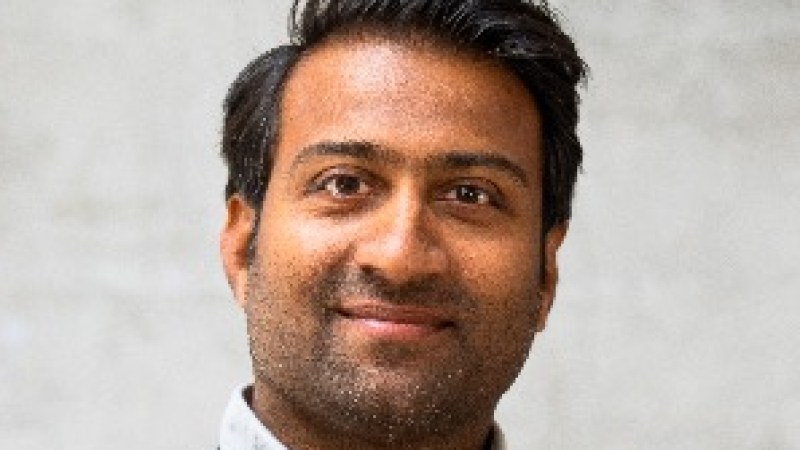
Arch Rao
Arch Rao is the Founder and CEO of SPAN, a San Francisco-based clean energy hardware company that reinvented the home electrical panel. A Stanford-trained mechanical engineer and former Tesla Energy leader who helped launch Powerwall, Powerpack, and SolarCity products, Rao founded SPAN in 2018 with a singular mission: rapidly decarbonize American homes by making the century-old electrical panel smart. SPAN's intelligent panels enable circuit-level control, real-time energy monitoring, solar and battery integration, and grid demand response - turning a neglected utility box into the command center for home electrification. With over $522M in total funding and backing from Wellington Management, Fifth Wall, Robert Downey Jr.'s FootPrint Coalition, and Amazon's Alexa Fund, SPAN is building the grid-edge infrastructure layer for the coming decades of home electrification.

Mark Chung
Mark Chung is the co-founder and CEO of Verdigris Technologies, a Mountain View-based AI company that provides circuit-level electrical intelligence for mission-critical data centers and commercial buildings. A Stanford-trained electrical engineer who spent 15 years designing chips at AMD, PA Semi (Apple), and NetLogic (Broadcom), Chung founded Verdigris in 2011 after a $560 electricity bill sparked an obsession with making buildings as transparent as spreadsheets. Today, Verdigris monitors 2+ gigawatts of peak demand across 20 million square feet of facilities for clients like T-Mobile, Verizon, NVIDIA, and Google, using 8kHz waveform sensors that detect equipment failures up to 21 days before they cause outages.