The useful clue in Nadav Gur's career is a Palm device. In 2000, when a mobile application was still a small rectangle of software carried by business travelers and optimists, he founded MobiMate. The company would become WorldMate, a travel assistant that gathered itineraries, alerts, bookings and practical destination information into one pocket-sized place. It began before the App Store, crossed the BlackBerry years, and reached iOS, Android and Windows Phone. By the time Carlson Wagonlit Travel acquired it in 2012, WorldMate said its software had been used by 10 million travelers.
That sounds like a story about being early. It is more revealing as a story about being patient with mess. Travel is a procession of systems that were never designed to cooperate: airline messages, hotel inventories, time zones, calendars, car rentals and the small panic caused by a changed gate. WorldMate's job was to absorb the disorder and return a clean next action. The user saw a trip. The software saw the plumbing.
A career in the awkward middle
Gur has kept returning to the junction where sophisticated infrastructure meets a person who would prefer not to study it. After WorldMate, he joined SRI Ventures as an entrepreneur-in-residence. SRI had developed the research behind Siri. Gur assembled another application of natural-language understanding and spun it out in 2011 as Desti, a travel-search company.
Desti let someone search in the loose, particular way people actually think: a quiet hotel suitable for a business trip, an activity that fits a family, a restaurant whose atmosphere matches the occasion. The system read descriptions and reviews, understood context and explained why a result fit. This was before typing a paragraph into a conversational box became routine.
The interesting part was not simply that the machine could understand. Gur later wrote about the interface work required to help people express a useful question. A blank search box promised freedom but gave little guidance. Menus offered guidance but constrained the thought. The team experimented with ways to reveal what the system understood while letting the query stay natural. Intelligence, in other words, still needed manners.
“The use of natural language technology to turn textual content into searchable, actionable knowledge is changing vertical search.”Nadav Gur, on Desti in 2014
Nokia's HERE mapping business acquired Desti in 2014 and folded its technology into search and places. The deal was Gur's second founder exit. On paper, WorldMate and Desti belonged to travel. In practice, both were translators. One translated scattered reservations into an itinerary. The other translated human intent into structured discovery.
Electrons have schedules too
The next chapter moved from travelers to vehicles. After years advising startups and leading AI work at German Autolabs, Gur co-founded Port Power in 2022. Its subject was commercial fleet charging, a business full of shiny hardware and stubborn constraints. Vans return at different times. Some leave before dawn. A building has finite electrical capacity. Utility upgrades can be expensive and slow. Solar produces when it produces. Batteries must decide when to hold power and when to release it.
Port Power's response was to treat a depot as a coordinated system rather than a row of independent chargers. Its software combines vehicle schedules, energy availability and site limits. Gur has argued for a charger in every parking spot, paired with management smart enough to avoid the costly assumption that every vehicle demands maximum power at once.
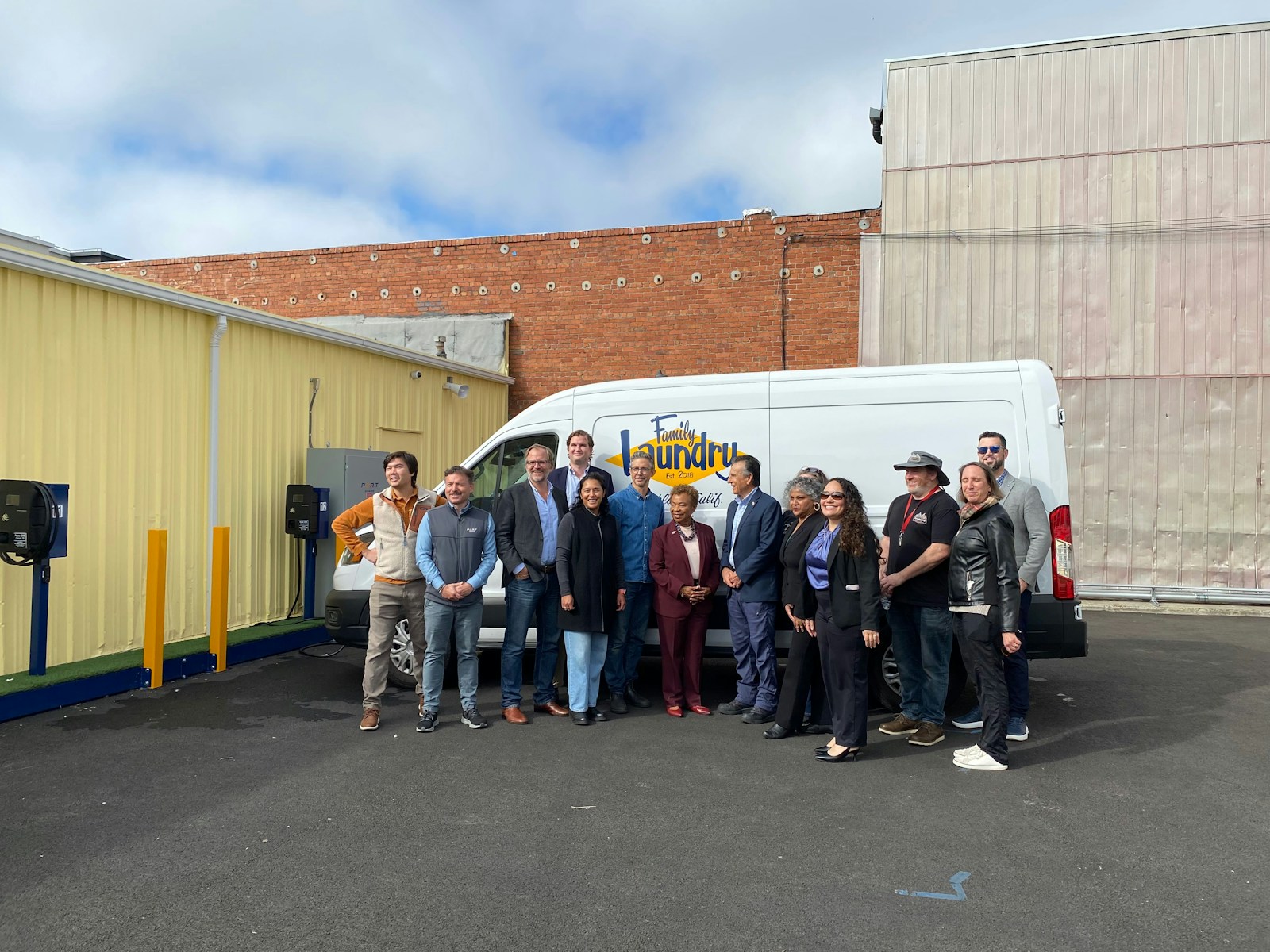
That idea became concrete at Family Laundry in Oakland. Opened in 2025, the site combined solar panels, battery storage and 17 charging ports for an electric delivery fleet. The business projected that energy cost per mile could fall from about 40 cents to as little as 5 cents. The facility also showed the social geometry of infrastructure: a local company, city officials, air-quality funding, a utility and a technology provider all needed to occupy the same sentence.
The roof sends an invoice
In April 2026, Gur became CEO of Ivy Energy. The San Diego company works on another deceptively administrative problem: how a property owner turns onsite solar, batteries and EV charging into a dependable operating asset across a multi-tenant building.
A single-family solar installation has tidy incentives. The homeowner buys the equipment, uses the electricity and receives the savings. Put the same array on an apartment building and the plot thickens. Dozens or hundreds of residents may have separate meters. Their consumption changes by the hour. Electricity tariffs vary. Tenants arrive and leave. Storage adds another decision about when energy is worth most. A property manager must calculate charges, explain savings, reconcile utility data and keep the result compliant.
Ivy's platform sits in that middle. It tracks generation and consumption, models tariffs, allocates shared power, automates tenant billing and connects the output to property-management systems. Its current direction goes beyond making a bill. Adaptive Billing, introduced in 2026, is designed to keep revenue workflows functioning when meters, tenants or data feeds change. Gur describes the broader destination as energy asset management infrastructure.
“What you count, you can act on.”Nadav Gur, on energy data and real estate
The language matters. Climate software often speaks in virtue. Ivy speaks to owners in the dialect of net operating income. Gur's appointment announcement emphasized scaling the platform nationally, working more deeply with real-estate leaders and energy platforms, and opening more asset classes. The aspiration is commercial and environmental at once: make local energy legible enough that owners can invest, residents can see savings and the building can behave more intelligently.
The whole system, quickly
Gur's formal education fits the pattern: computer science at the Hebrew University of Jerusalem, then management science at Tel Aviv University. His public biographies add an early systems assignment, managing software work connected to an Israeli defense project. Later came product, fundraising, acquisitions, advising, voice interfaces, charging infrastructure and the peer work of mentoring founders. Since 2019, he has chaired an invitation-only CEO forum through the Israeli networking organization INTRO. In 2025, he also became a lead mentor at StartX.
A recommendation from a former HERE colleague describes a product leader whose view extends into the business, team and organization. Gur's own shorter version is punchier: his strength is getting the whole system, including technology, users, business and politics, quickly. His Medium bio trims the current mission to four words: “I am busy electrifying.” It is a pleasingly physical line from somebody whose products are largely invisible.
That breadth also changes what counts as a product decision. A tariff is a product decision because it shapes what a resident pays. A utility interconnection is a product decision because it determines when a depot can open. A property-management integration is a product decision because even perfect calculations become useless if somebody must retype them. Gur's companies have tended to operate where the org chart would prefer a clean boundary and reality refuses to provide one. The engineer has to notice commerce. The salesperson has to understand infrastructure. The executive has to care whether the final screen explains itself.
This makes his move into energy feel less like a reinvention than a change of material. Travel software moved information around an itinerary. Desti moved meaning through a search index. Port Power moves electricity through a parking lot. Ivy moves value between an energy asset, a building owner and the people beneath the roof. Each requires a model of what is happening now, a prediction about what should happen next and an interface that earns permission to act.
There are quirks around the edges. He lists Piloting Palm as a favorite business book, admiring its care for users, product detail and dogfooding. His favored fiction is Stephen King's Dark Tower series. Asked for the most creative thing he had done, he replied that it was a state secret. Asked what he might do if money were irrelevant, he floated politics or education. The answers suggest somebody entertained by systems even when they are made of people.
The consistent lesson is less romantic. Technologies do not become markets just because the underlying science works. They become markets when the interfaces, incentives and operations agree. Mobile computers needed itineraries that assembled themselves. AI search needed to show people how to ask. Electric fleets need charging that respects routes and wires. Shared solar needs bills that residents trust and owners can operate.
Gur has spent a quarter-century in those handoffs. His new job places him in perhaps the broadest one yet, where software must negotiate among weather, hardware, regulation, real estate and the monthly habits of a household. The solar panel gets the photograph. The value appears only when the system behind it behaves.