By the tenth bidding war, Jean-Michael Diei had acquired the sort of market education nobody requests and everybody remembers. It was 2021. He was fresh out of Carnegie Mellon, trying to buy property while cash buyers treated new listings like starting pistols. The good deals appeared and vanished in hours. Diei had no trust fund and no privileged line to a broker. He did have coding skills, a machine-learning education, and an increasingly expensive dislike of being late.
So he built an advantage. His algorithms watched for listings that matched his criteria and helped him decide which ones deserved immediate attention. The idea was modest and selfish in the useful way that early products often are: make one person's recurring frustration go away. It worked well enough to pose a larger question. If software could help one buyer move through a noisy market faster, what could it do for a commercial acquisition team buried under far more documents, data, and decisions?
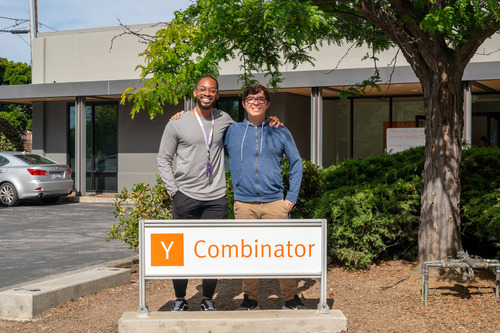
That question became PropRise, the San Francisco company Diei co-founded with software engineer Matthew Krager in 2023. The pair entered Y Combinator's Summer 2023 batch. They began among the overlooked corners of commercial real estate, including mobile-home parks and self-storage, where useful information could still arrive late, incomplete, or disguised as a spreadsheet last loved during the Bush administration.
“After losing my 10th bidding war, I knew there had to be a better approach.”Jean-Michael Diei
A family curriculum in code and property
The connection between software and real estate had been forming long before that tenth loss. Diei has described his parents as West African immigrants who came to the United States in the 1990s to study computer science. They built careers in technology and bought single-family rental homes on the side. Around the family dinner table, conversations returned to making money, starting businesses, and investing in property. Technology was a profession. Real estate was a route to ownership. The young Diei absorbed both vocabularies.
At Purdue University, where he studied computer science, his interests were already unusually applied. He helped build a chess AI using transposition tables, genetic algorithms, and optimized graph search. In Gaurav Chopra's lab, he worked on adapting convolutional neural networks to molecular graphs so they could learn fingerprints for chemical reactions. He served as president of Purdue's ACM Special Interest Group on Artificial Intelligence and received recognition for academic achievement from the university's Black Caucus of Faculty and Staff in both 2016 and 2017.
Carnegie Mellon sharpened that pattern. From 2019 to 2020, Diei focused on machine learning and computer vision. One team project used transfer learning from natural images to improve segmentation on ultrasound datasets, reporting a 48 percent performance increase. The subject matter changed from molecules to images, but the habit remained: find an unruly body of information, represent it usefully, then teach a model to expose structure.
The apprenticeship of useful machines
His work history reads like an apprenticeship in making machine learning behave outside a classroom. There were software-engineering internships at Microsoft, data-science stints at Lam Research, perception work at autonomous-trucking company Embark Trucks, and a machine-learning engineering role at Stripe. Each setting demanded that models meet a real workflow, where an elegant output is merely the beginning and reliability pays the rent.
Commercial real estate supplied a particularly stubborn workflow. A broker email may open onto an offering memorandum, rent roll, unit-mix report, operating statements, occupancy reports, and a management summary. Formats disagree. Numbers need reconciliation. Comparable properties must be collected. Assumptions travel into an Excel model that an investment committee already trusts. Before an analyst can decide whether the deal is promising, several hours may disappear into moving facts from one place to another.
The long walk from broker email to conviction
PropRise now attacks that drag from two directions. Beacon automates site selection for developers. Primer extracts financial information from deal packages and turns it into structured, model-ready data. The company's current description stretches from sourcing through underwriting and due diligence. It says the two products serve more than 50 customers, including Public Storage. The ambition is to become an operating system for commercial real estate dealmaking, but the pitch remains grounded in the first irritation: reach an informed decision before the opportunity moves on.
Automate the steps, protect the thoughts
Diei's most interesting position is also his least breathless one. He does not describe AI as a substitute for the acquisition team. He divides the work more carefully. Pulling documents, typing numbers into a model, collecting competitor rates, and checking one file against another are steps. Deciding whether the upside is credible, whether a market feels right, or whether to submit a letter of intent requires thought.
He is equally clear about relationships. After enough cold calls, Diei wrote, you learn where automation ends. Software can process documents and pull comps. It cannot make a wary owner trust the buyer on the other end of the line. Reputation, patience, and the ability to read a room remain stubbornly human. His preferred bargain is therefore selective: give machines the administrative burden so people can spend more time on judgment and trust.
Give the machine
Document extraction, reconciliation, comp collection, repeatable model inputs, and links back to the relevant page.
Keep for people
Conviction, negotiation, seller trust, market judgment, and the decision to risk capital.
“What you can't automate is getting someone who calls himself ‘Patriot’ on LinkedIn to actually trust you enough to sell.”Jean-Michael Diei
That restraint becomes important when the numbers matter. Diei has emphasized an architecture in which extracted figures point back to the document and page where they appeared, missing fields are flagged rather than estimated, and an analyst reviews the output before it enters the model. The aim is less theatrical than asking a black box for a verdict. It is closer to giving the analyst a very fast colleague who leaves tidy footnotes.
From more data to more yeses
PropRise's early public identity centered on self-storage. It tracked facilities, watched rent comps, analyzed demographics, read zoning signals, and helped developers search beyond the obvious markets. In interviews, Diei has spoken about city-council minutes and planning documents as useful advance signals. The point was not simply to collect more data. It was to spot the parcel or submarket that deserved a closer look while there was still time to act.
The company has since widened its frame. Self-storage remains a proving ground, but Primer addresses the common financial-document work inside institutional acquisitions, and PropRise says it is expanding across asset classes. Diei's phrase for the outcome is “more yeses, faster.” A fast no has value too. Every weak deal screened early returns an analyst's attention to the pile.
There is a pleasant symmetry here. The founder began as the under-resourced buyer who could not see and evaluate opportunities quickly enough. His customers now include teams whose problem is abundance: too many broker emails, too many differently formatted files, too little time before the committee meets. In both cases, the scarce resource is not data. It is attention at the moment when attention can still change an outcome.
The data project that made Christmas
Diei's affection for patterns is not confined to work. For Christmas one year, after noticing that physical gifts to his parents tended to disappear into drawers, he exported his family's group chat. The file contained 3,877 messages across 12 months. He ran an analysis of texts, reactions, and response times, then built a “Diei Family Wrapped,” borrowing the annual-recap grammar of Spotify.
The first version was dreadful by his own account. His girlfriend nearly fell asleep. So he added music, quizzes, and a retro character-stat screen. The result became a 30-minute family experience, complete with revelations about who responded slowly, who earned the most mentions, and how often love appeared as the group's prevailing reaction. It is a charmingly diagnostic founder anecdote: collect the data, ship the rough version, watch the user, admit boredom, rebuild the interface.
It also reveals something his professional story can obscure. Beneath the vocabulary of underwriting and extraction is a playful maker, someone willing to aim the same machinery at a family joke and keep revising until the room laughs. The technical craft travels because curiosity does.
What the tenth loss bought
Founders often retell failure as destiny, sanding away the confusion that made it useful. Diei's origin story retains its irritation. He wanted a property. Other buyers moved faster. He wrote software because the market would not wait for him to become better connected. PropRise emerged only after the private fix exposed a broader industrial habit: smart people spending expensive hours preparing information before they can use their intelligence.
The company still has a long platform ambition, but its founder's sharper insight is about allocation. Machines should be greedy for repetition and humble about judgment. People should be relieved of clerical endurance and left with the social, contextual, and financial choices that make a deal a deal. For commercial real estate, an industry fond of both handshakes and spreadsheets, that is less a revolution than a sensible seating chart.
Ten lost bids did not guarantee a company. They gave Diei a problem he knew without a slide deck. His education supplied the tools, his career supplied the discipline, and his family's parallel faith in technology and property supplied the grammar. The rest began with a practical question worth stealing: which part of this frustration can code remove by tomorrow morning?