The modern utility bill is a small masterpiece of institutional confusion. One campus can receive electricity, gas, water, sewer and steam invoices from dozens of vendors, in incompatible formats, for meters named years before the current staff arrived. A leak hides in one account. A demand charge spikes in another. Finance wants an accrual. Sustainability wants emissions. Facilities wants to know which chiller stayed on all weekend. Everyone gets the same answer: the spreadsheet is being updated.
EnergyCAP has spent 46 years arguing that the bill is not paperwork. It is a data source. The Boalsburg, Pennsylvania company sells a cloud system that captures utility invoices, checks them for errors, ties them to meters and buildings, allocates costs, benchmarks facilities and measures whether efficiency projects worked. Add smart-meter feeds and the view moves from last month's total to the shape of yesterday's load. Add emissions factors and those same records become a carbon ledger. Add Bill Pay and the workflow reaches the bank.
The customers are the organizations for which utility complexity has become its own department: universities, school districts, city and state governments, hospitals, manufacturers, retailers, hotels and commercial campuses. EnergyCAP says 26,000 energy and utility professionals trust the platform. These are not people choosing a smart thermostat. They may be reconciling thousands of meters, recharging campus departments or explaining an eight-figure utility budget.
First came the engineer. Then came Enron.
Steve Heinz was a mechanical engineer and energy manager when he ran into the constraint that still defines the company. He could see ways to save money, water and energy, but the information needed to prove it was scattered or missing. In 1980, as personal computers were only beginning to enter offices, Heinz founded OmniComp and began developing FASER Energy Accounting. The commercial product arrived in 1982, built to verify bills, track use and measure savings.
By the mid-1990s, FASER was used by retail chains, governments, universities, school districts and property managers. Enron bought OmniComp and the software in 1996. It looked like an exit into a much larger energy empire. Five years later, the empire collapsed. Heinz acquired the energy-information assets and started Good Steward Software, later renamed EnergyCAP.
That detour matters because it reveals what was durable. The corporate parent failed first; the utility-data problem did not. EnergyCAP moved onto the web, added standardized electronic billing, weather normalization, benchmarking and accounting interfaces, then automated bill capture. Its scar tissue became a kind of product discipline: utility work is full of strange rate structures, missing invoices, renamed meters and exceptions that a handsome dashboard does not fix.
The real product is a chain of custody
EnergyCAP calls itself an energy and utility management platform, but its distinction is easier to see as a chain of custody. A bill arrives as paper, PDF, portal download, EDI file or spreadsheet. Bill Capture turns it into structured data. Utility Management checks dates, use, demand and cost for duplicates, gaps and unusual changes. The approved record can flow to accounts payable, a general ledger or an internal chargeback. Only then do reports, budgets and benchmarks inherit a number that finance recognizes.
That foundation separates EnergyCAP from two neighboring categories. A building-management system controls equipment; EnergyCAP connects the financial and operational records across a portfolio. A carbon-accounting tool may begin with emissions disclosure; EnergyCAP begins with the bills an organization already approves and pays. Competitors such as IBM Envizi, Schneider Electric Resource Advisor, Siemens Building X, Atrius and specialist utility platforms overlap in pieces. The humbler alternative remains a stack of spreadsheets, an ERP export and heroic institutional memory.
The 2022 acquisition of Dublin-based Wattics, now Smart Analytics, filled a crucial gap. Monthly bills are accurate but late. Interval feeds from smart meters and sensors can expose an overnight load, demand spike or broken schedule while there is still time to act. The system is hardware-agnostic and uses heat maps, alerts and machine-learning models to compare actual consumption with expected behavior. CarbonHub, launched in 2023, applies emission factors to utility and other activity data for Scope 1, 2 and 3 reporting. Bill Pay followed in 2025.
Benchmarking is where accounting starts behaving like engineering. EnergyCAP can compare similar facilities by area and energy-use intensity, send building data to ENERGY STAR Portfolio Manager and adjust savings baselines for weather. That last step is less decorative than it sounds. A mild winter can make an efficiency project look brilliant; a brutal summer can make good work appear useless. Normalization asks the fairer question: what would this building have consumed under comparable conditions? In 2023, EnergyCAP benchmarked more than 16,000 properties in Portfolio Manager, a scale that helped earn the company an EPA Partner of the Year award in 2024.
The pitch changes when the refund arrives
Enterprise energy software is difficult to sell with abstractions, so EnergyCAP's useful stories begin with embarrassingly concrete failures. At George Mason University, historical meter data helped demonstrate sewer overcharges and produced a $400,000 utility check. The annual energy report that once took three days could be generated in 30 minutes. At UC San Diego, the software helped catch a $1 million billing error and automate a utility billing and recharge process that had consumed much of a month. Indiana University reported three catches worth more than $416,000 across seven months.
What changes minds is rarely the phrase “energy data platform.” It is the first duplicate bill stopped before payment, the water leak that becomes visible, or the internal invoice nobody has to recalculate. The failure that appears first is usually not an inefficient boiler. It is the data workflow around the boiler: a handwritten reading, a missing account, a charge assigned to the wrong department. Once that record is dependable, conservation becomes measurable rather than ceremonial.
Pricing follows the complexity. EnergyCAP sells an annual cloud subscription based mainly on meters, not seats, with unlimited users. Feature tiers, managed bill services and one-time implementation can add cost. The company asks commercial buyers to request a quote. A public government schedule provides scale: its 2023 list set a base Utility Management license at $8,949.62 a year for up to 250 meters, $17,899.24 for 501 to 1,000 and $47,380.35 for 3,501 to 5,000. Interval data, chargebacks, accounting interfaces and accruals were separate line items.
The meter-based model tells buyers what EnergyCAP values. Charging by user could encourage finance, facilities and sustainability to keep separate copies; unlimited seats make a common record easier to share. Charging by meter makes revenue rise with the portfolio's physical complexity. It also explains why the easiest return calculation belongs to larger estates. A recovered error across 1,000 accounts, hours removed from monthly entry, or one avoided late fee repeated across hundreds of sites can cover software in a way that a single tidy building cannot. The relevant denominator is not the subscription alone, but the cost of the disorder it replaces.
Annual 2023 GSA base-license price for up to 250 meters. Commercial pricing is custom; services and implementation can be additional.
Now the bill answers back
In June 2026, EnergyCAP launched Watts Chat, a generative interface for asking plain-language questions about trusted utility, meter and building data. A user can request a trend, investigate a change or generate a report without hunting through menus. The sequencing is the interesting part. EnergyCAP did not begin with a general chatbot and search for energy use cases. It spent decades building the ledger beneath it.
That offers the most copyable lesson in the company's story. Start with the expensive recurring document. Give every asset a stable identity. Preserve the audit trail. Connect the system that operates the building to the system that pays the bill. Normalize for weather before claiming a win. Then add automation, carbon calculations and natural-language analysis. AI is the last interface, not the first act.
Fix collection and ownership before buying a more persuasive dashboard.
Separate avoided use, recovered errors, labor time and project savings.
Monthly data confirms the past; interval data helps change the present.
Do not force enterprise software onto a simple portfolio with no enterprise problem.
There are conditions under which the model will not sing. A single building with a few straightforward invoices may be better served by the utility portal and ENERGY STAR Portfolio Manager. A team unwilling to reconcile meter names, account ownership and historical gaps will merely centralize its confusion. Organizations that require on-premises hosting must look elsewhere because EnergyCAP is cloud-only. And software cannot fix waste nobody has authority or budget to address.
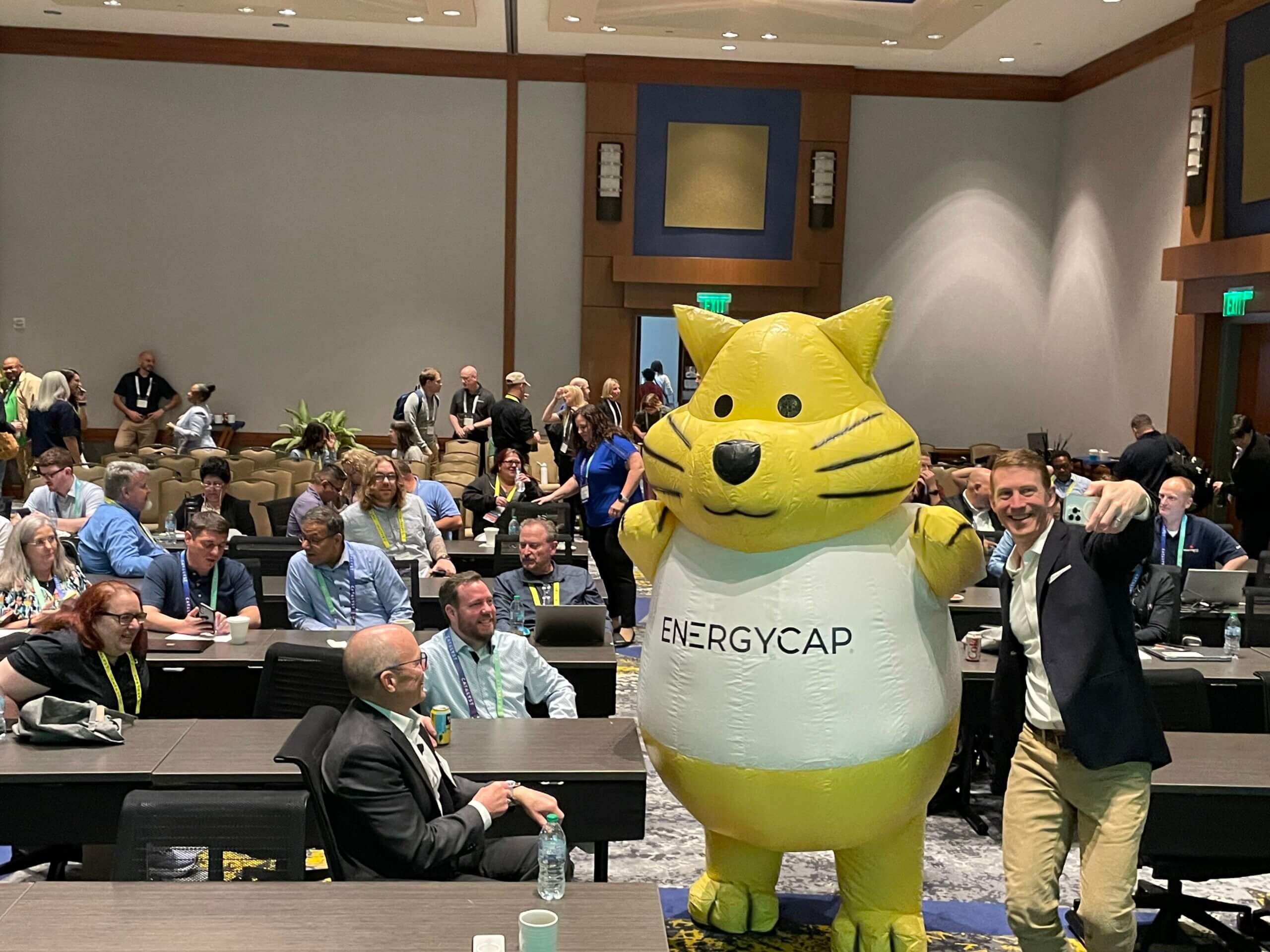
For complex portfolios, though, the attraction is refreshingly unromantic. EnergyCAP makes a claim about institutional competence: know what came in, what was used, what was paid, who owes what and whether the promised savings survived the weather. The yellow conference mascot is optional. The clean meter record is not.