carbon-accounting
(27)
Updapt Wants to Put ESG’s Paperwork to Work
Everstone uses Updapt to monitor more than 185 sustainability KPIs. The software company’s bigger bet is that the same data can help businesses decide what to change next.

EVORA Put a Climate Accountant Inside the Building
Its first software supplier folded before the contract ink dried. EVORA answered by spending millions on SIERA, buying the pipes that feed it, and turning sustainability paperwork into an investment tool.

ESG Book Wants to Turn the Sustainability Questionnaire Into a Shared Ledger
The old ESG market sold answers in black boxes. ESG Book is betting that banks and companies would rather see the workings - and fill out the form only once.
Scope3 Found the Waste in Your Ad Budget. Now It Wants AI Agents to Spend It.
The ad-tech veterans behind Scope3 built a carbon meter for the internet's advertising pipes. Four years and $45 million later, they are turning that map into an AI marketplace - with real budgets, open standards and a hard question about who gets to make the buy.
The 46-Year-Old Software Company Teaching Utility Bills to Talk
EnergyCAP began with an engineer who could spot waste but could not get clean data. Four decades, one Enron detour and billions of meter readings later, it is turning the least glamorous document in business into a control panel for cost and carbon.
Novata Wants to Turn Private-Market Sustainability Data Into Something Investors Can Actually Use
Private companies were asked to prove their climate and social claims with tools built for accounting by email. Novata’s bet is that one shared data layer - backed by benchmarks, carbon math and human advisers - can turn that annual scramble into useful business intelligence.

Jitesh Shetty Is Turning Sustainability's Paper Chase Into Software
The Qwiklabs co-founder once mapped influence inside Enron's email archive. Now he is applying the same appetite for structured evidence to corporate climate claims - and asking companies to trade spreadsheet theatre for audit-ready data.

Murat Sönmez Is Building the Memory Sustainability Forgot
After decades making data move faster, Murat Sönmez is asking a harder question: can a company remember where every sustainability number came from? Pulsora is his answer - part software platform, part audit trail, and increasingly an operating system for decisions.

Celine King Took a Detour Into Trucking - and Found a Data Problem on Wheels
She trained for the lab, learned the language of business, and landed in freight. Now GreenIRR is turning vehicle-level data into a practical case for cleaner, more efficient trucking.
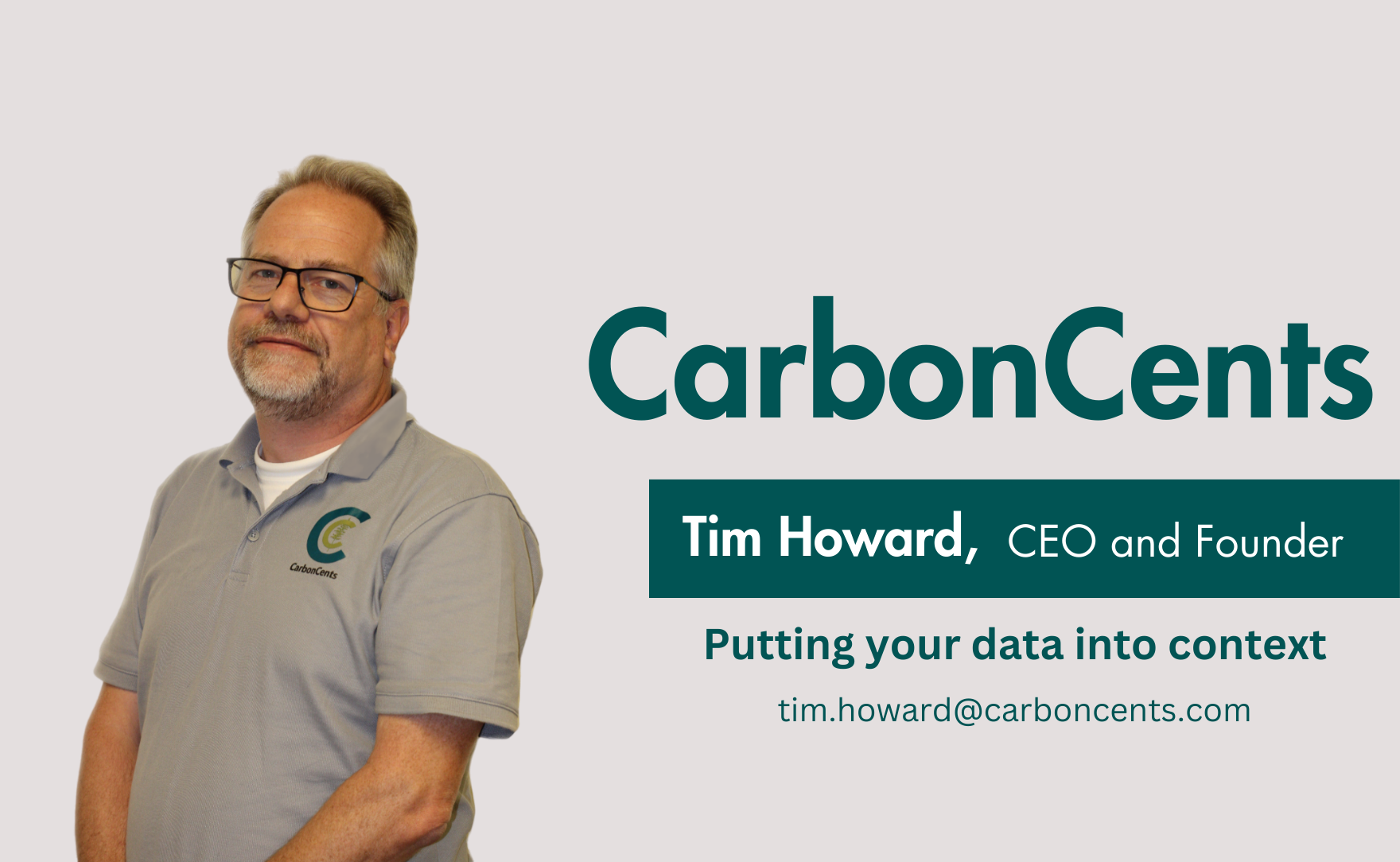
Tim Howard Is Teaching Buildings to Tell the Truth
After three decades in software, the Clemson facilities operator turned a basement experiment into CarbonCents - a company that makes power, water and occupancy data useful before the next utility bill arrives.

CarbonCents Is Betting Facilities Chiefs Want Lower Bills Before Loftier Carbon Promises
The Clemson-born startup found a practical way into the climate-software market: make scattered building data useful to the people paying the utility bills. Now it is testing whether one dashboard can stretch from boiler rooms to boardrooms.
The 30-Hour Spreadsheet That Built a Climate Startup
Trucking is the biggest carbon line item in almost every supply chain - and until recently, most carriers reported it by hand. Celine King built software to do it in seconds, and sold it to an industry that hates change.

The New York Fund That Bet on Robots Before the Robots Could Walk
Parkway keeps a short list of bets and a long memory of building companies. That combination led a New York firm of about 15 people to the front of the humanoid-robot and quantum-computing races.
Sphera
Sphera sells the software behind decisions most people never see: whether a factory job is safe, a chemical is compliant, a supplier is fragile, or a product's carbon claim can survive an audit. Its bet is that those answers become more useful when they live in one system.

Alexis Normand
Alexis Normand spent years turning personal data into useful signals. At Greenly, he is applying the same instinct to corporate carbon - making an invisible liability legible enough to manage.

Avarni
Nobody put 'mandatory climate disclosure' in your finance team's job description. Avarni makes carbon accounting the least painful thing on your FY26 plate. It's expert-guided, software-powered, and done in weeks. Audit-ready, or we keep working.

Pathzero
Pathzero is a Sydney-based climate-tech company that builds a unified software platform for financial institutions to measure, share and disclose carbon emissions across public and private markets. Its data-sharing network connects asset owners with more than 500 fund managers, giving investors direct-from-source, audit-ready emissions data where information has historically been hardest to obtain - private markets. Founded in 2020 inside the Antler incubator, Pathzero has grown into what it describes as the world's largest private-markets carbon emissions data network.
REDEX
REDEX is a Singapore-based climate-tech company that runs Asia's leading marketplace and management platform for Renewable Energy Certificates (RECs). Its digital ecosystem covers the full REC lifecycle - asset registration, production verification, marketplace trading and retirement - helping renewable generators monetize their output and helping corporates cut Scope 2 emissions and meet ESG targets. Backed by a $10M Series A led by Aramco Ventures, REDEX combines a blockchain-enabled public ledger, an I-REC-integrated trading system and corporate tools to make cross-border green-energy claims transparent and verifiable.

Gravity
Gravity (formerly Gravity Climate) is a San Francisco-based enterprise software company that combines carbon accounting and energy management in a single platform built for industrial businesses and their supply chains. Founded in 2022 by Saleh ElHattab, the company automates the collection of utility and emissions data, generates audit-ready Scope 1, 2, and 3 disclosures, and runs a marketplace that helps customers identify, finance, and implement energy-efficiency projects that cut both costs and emissions. Backed by more than $20M in funding, Gravity works with companies like Autodesk, WM, Geotab, Xometry, and MiddleGround Capital.

Greenly
Greenly is a French climate-tech company building carbon-accounting software that helps businesses of all sizes measure, report and reduce their greenhouse-gas emissions. Founded in Paris in 2019, its all-in-one sustainability suite automatically pulls data from financial transactions, utility bills, cloud usage and supply chains to calculate emissions across Scopes 1, 2 and 3, then pairs the data with human climate experts. Greenly serves roughly 3,500 clients across 25 countries and has raised about $78.6 million, including a $52 million Series B led by Fidelity International Strategic Ventures in 2024.

Credibl
Credibl is a San Francisco-based, AI-powered ESG and sustainability data management platform that helps companies, banks and investors measure, manage, validate and report environmental, social and governance data. Founded by Qwiklabs founder and ex-Googler Jitesh Shetty, it applies large language models and machine learning to consolidate fragmented sustainability data, detect anomalies and produce audit-ready, one-click disclosures across frameworks like CSRD, BRSR, TCFD, SASB, ISSB and CDP.

Pulsora
Pulsora is an AI-powered sustainability management platform built for enterprises and investors to collect, measure, and report ESG and carbon data on a single governed system. Founded in 2021 by Silicon Valley veterans Murat Sonmez and Inderjeet Singh (originally as PulsESG), the San Mateo company combines carbon accounting, framework reporting (CSRD, CDP, EDCI), and agentic AI workflows to turn scattered sustainability data into audit-ready disclosures. It serves 500+ companies across 63 countries and raised a $20M Series A in 2023 led by Galvanize Climate Solutions.

Saleh ElHattab
Saleh ElHattab is the founder and CEO of Gravity, a San Francisco-based carbon accounting and energy management platform that helps industrial businesses measure emissions, cut energy costs, and automate sustainability disclosures. A former product leader at Samsara and Salesforce IoT, and a former Eclipse Ventures venture partner, he raised a $13M Series A in January 2025 led by Ansa Capital, bringing Gravity's total funding to more than $20M with customers including WM, Autodesk, and MiddleGround Capital.

Tangible
Tangible is a San Francisco climate-tech company that turns static construction drawings and 3D models into live materials data. Its AI-powered platform reads Revit models and PDF drawings to give preconstruction teams structured quantities, cost, and EPD-backed embodied carbon in one place - so developers, contractors, and architects can see the carbon and cost impact of a design and cut both before a building is ever poured. Founded in 2021 by Anneli Tostar and Nicole Granath, Tangible has raised roughly $8.8M and counts builders like Skanska, Prologis, and Hensel Phelps among its users.

Terraton
Terraton is a San Francisco climate-tech company that turns agricultural waste into biochar - a stable, carbon-rich material that locks away CO2 for centuries. It packages financing, hardware, and software into a 'biochar business in a box' so agribusinesses in emerging markets can launch carbon-removal facilities, while corporate buyers get verified, high-durability carbon credits delivered at scale. Backed by an $11.5M seed round co-led by Lowercarbon Capital and Gigascale Capital, Terraton already runs facilities in Ghana and Kenya.
Planet FWD
Planet FWD is a San Francisco climate management platform that helps consumer brands measure, reduce and neutralize their carbon footprint. Founded in 2019 by Zume co-founder Julia Collins, the company pairs an AI-powered life-cycle assessment engine and a database built on 16+ years of research with Scope 1, 2 and 3 corporate inventories aligned to the GHG Protocol and the Science Based Targets initiative. The result: brands like Patagonia Provisions, Kashi, Just Salad and Numi Organic Tea can put an auditable carbon number on the products people actually buy - and get a roadmap to shrink it, on average by about 35% per product.

Project Canary
Project Canary is a Denver-based climate-tech public-benefit corporation that turns methane and emissions data into operational intelligence for energy companies. It pairs high-fidelity continuous monitoring hardware (the EPA-approved Canary X sensor) with a cloud platform (SENSE) and independent well-level ESG ratings (TrustWell), helping oil & gas producers and natural gas utilities detect leaks, cut emissions, meet regulations, and prove the climate attributes of their gas.