The New York Fund That Bet on Robots Before the Robots Could Walk
Parkway keeps a short list of bets and a long memory of building companies. That combination led a New York firm of about 15 people to the front of the humanoid-robot and quantum-computing races.
Most venture funds are built to spread risk. Write many small checks, wait, and let one or two winners carry the rest. Parkway Venture Capital runs almost the opposite operation. From an office on Madison Avenue, a team of roughly 15 people picks a short list of deep-technology companies, takes a large position, and stays close for about five years. When that list works, it works loudly: in 2025 Parkway led the financing that valued the humanoid-robotics company Figure AI at a reported $39 billion.
The firm's own summary of what it funds fits in five words - artificial intelligence, simulation, quantum technology, ubiquitous data and complex engineering. Those are not the categories most funds crowd into. They are slower, harder, and heavier on physics and hardware than the average software round. Parkway treats that as the point.
01 - WHAT PARKWAY DOESA fund built to help, not just to fund
Parkway is an early-stage venture firm, but the more useful description is that it is an operator's firm. Its two founders spent years building and selling a technology company before they raised outside capital to invest. That history shapes the model. Rather than back dozens of startups and hope, Parkway typically leads a Series A, takes a board seat, and works alongside the founders through the messy middle - hiring, product decisions, the next raise.
In their own telling, the partners describe themselves as "highly selective, very active" investors who would rather help a few companies deeply than diversify across many. The trade-off is deliberate: fewer bets, more ownership, more time per company. It is a strategy that only makes sense if you believe you can actually move the odds - which is exactly the claim two former founders are positioned to make.
02 - THE FOUNDERSAn inventor and a dealmaker who partnered for 20 years
Parkway was founded in 2019 by Jesse Coors-Blankenship and Gregg Hill, who had already worked together for about two decades. Coors-Blankenship is the technical half. He built Frustum, a company whose software used a new form of AI to automatically generate optimized designs for physical parts - generative design, before the phrase was fashionable. He grew it over five years and sold it to the industrial-software company PTC in 2018, reportedly returning early investors around nine times their money. He trained as an architect at USC, took a master's at Columbia, and taught there.
Hill is the capital and operations half. A serial entrepreneur, he has deployed more than a billion dollars across venture and real estate, and was one of Frustum's earliest and most active investors and a board member. When Frustum sold, the two decided to turn a working partnership into a fund. The firm's bench has since grown to include managing partners with backgrounds at Goldman Sachs, Morgan Stanley and BlackRock, plus a COO who was previously CIO of Unity Technologies.
The pairing matters because it maps onto the kind of company Parkway backs. A frontier-technology startup usually has two failure risks running at once: the technology might not work, and the business might not form around it. Coors-Blankenship has lived the first problem and Hill the second. That is a narrower, more specific offer to a founder than "we have capital and a network" - and it is the reason a firm this small can win competitive rounds against much larger names.
03 - THE PORTFOLIOA hard-sci-fi syllabus
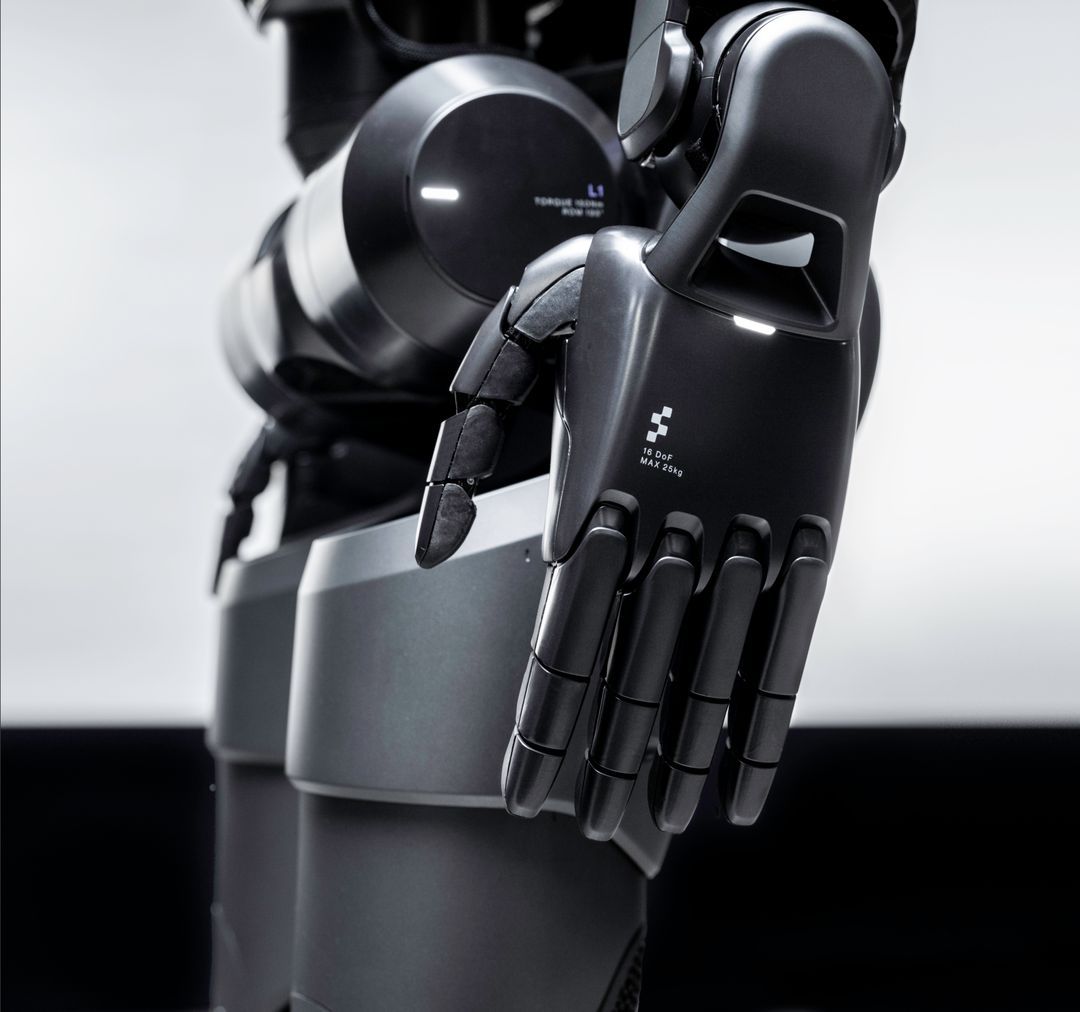
Read Parkway's holdings in a row and the pattern is clear. Figure AI builds humanoid robots aimed at industrial labor. SandboxAQ, spun out of Alphabet, trains large models on real-world physics for drug discovery, security and navigation. xAI develops Grok. Pasqal manufactures neutral-atom quantum computers. TAE Technologies is chasing hydrogen-boron fusion. Around them sit Persefoni (carbon accounting), OXOS Medical (portable, low-dose X-ray), TestFit (real-estate feasibility software), Gemba (VR enterprise training) and Wambi (healthcare team recognition).
These are not scattered bets. They are variations on one wager: that AI is moving off the screen and into the physical world - factories, hospitals, power plants, laboratories - and that the companies wiring that shift will be worth a great deal. Notably, the list also includes exits from an earlier era - Lyft, Mobileye, DiDi and others - the kind of track record that gives a young firm the standing to lead rounds beside far bigger investors.
Illustrative - relative weighting of publicly named holdings, not fund allocation.

04 - THE FIGURE AI ROUNDWhen a small fund leads a very big number
The clearest evidence of Parkway's model is the Figure AI Series C. In 2025 the round closed at more than $1 billion, at a reported $39 billion valuation, with Brookfield Asset Management among the investors. Parkway did not merely join - it led. For a firm of Parkway's size, leading a financing of that scale is the concentration strategy paying off in public: get in early, build conviction, hold the relationship, and be the one at the front when the round the whole market wants comes together.
05 - HOW IT DIFFERSConviction as the product
In frontier technology, money is not the scarce resource - conviction is. Plenty of investors will fund a robot or a quantum computer once the graphs point up. Fewer will lead the round when the machine barely works and the market is theoretical. Parkway sells that early conviction, backed by founders who have shipped hard technology themselves and can help a company de-risk rather than simply valuing it.
That is the difference from a larger, index-style fund. Parkway is not trying to own a slice of everything. It is trying to be the most useful investor on a small number of cap tables. The firm's founders have described a near-100% success rate on that concentrated portfolio - a figure that reads less like luck than like a discipline of refusing checks they cannot help.
06 - BUSINESS MODEL & MARKETWhere a fund like this sits
Mechanically, Parkway works like any venture firm: it raises capital from limited partners, earns management fees, and keeps a share of the profits when investments are realized. Public records point to roughly $60 million in reported firm capital, with a concentrated portfolio of about a dozen active companies, several of them now unicorns. Exits to date include Frustum (to PTC) and OnScale (a reported 4.5x).
In the market, Parkway sits with the deep-tech and frontier investors - names like Founders Fund, Lux Capital, DCVC and Eclipse - that lead early rounds in hardware-heavy AI, robotics and quantum. Its edge in that crowd is not size. It is the operator background of its partners and a willingness to concentrate, which lets a small firm punch into rounds far larger than its headcount would suggest.

07 - EXPERTISE & CULTUREThe operator's edge
Culture at a 15-person fund is mostly a set of habits, and Parkway's habits follow from the concentration strategy. Because it holds few positions, it can afford to go deep on each one - which means the partners spend time inside portfolio companies rather than screening a wide funnel. The stated preference is for founders who show a "strong, capable founding team" and a collaborative mindset, because a hands-on investor and a founder who does not want help is a bad five-year marriage.
The expertise is technical as much as financial. Coors-Blankenship holds patents and built AI software that redesigns physical objects; the advisory bench includes a former Frustum CTO with a robotics PhD from Cornell and operators who have run engineering at PTC and Unity. For a company trying to convince the market that a robot or a fusion reactor is real, an investor who can read the engineering is a different kind of partner than one who can only read the term sheet. There is also a lighter thread running through the firm - a sports network that reaches from junior tennis academies to the ATP tour, a reminder that these are people who backed each other long before there was a fund.
08 - WHAT YOU CAN DO WITH ITWho Parkway is actually for
Parkway is not a product you sign up for. But it is useful to two groups. For founders building genuinely hard technology - the kind where the physics is unsettled and the timelines are long - Parkway offers early, concentrated capital plus partners who have built and sold a technology company themselves. For limited partners, it offers exposure to frontier categories through a firm that leads rather than follows. If you want a diversified index of software startups, this is the wrong fund. If you want a large, active position in a few deep-tech bets, this is the argument.