Before a sustainability report becomes a handsome PDF, it tends to live a less dignified life. It is a meter reading in one office, a supplier form in another, a forgotten invoice, a spreadsheet cell with a unit nobody recognizes and a number whose owner has changed jobs. The report may speak in polished sentences. The evidence beneath it often mutters.
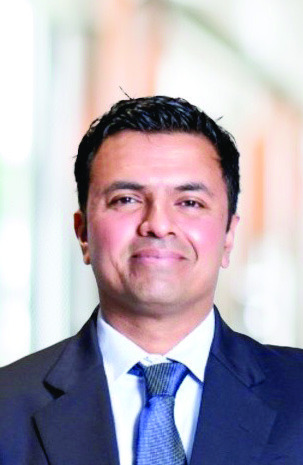
Jitesh Shetty has built his latest company in that awkward gap. Credibl, the San Francisco-based software business he co-founded and leads, works on sustainability data management, carbon accounting, climate risk, reporting and supply-chain traceability. Its premise is practical: if companies are going to make environmental and social claims, the underlying information should be collected, checked and prepared for an audit. Corporate conscience, in other words, requires decent bookkeeping.
This is not the career turn it first appears to be. Shetty is a computer scientist who has spent two decades making complicated systems more legible. In 2005, while at the University of Southern California, he and Jafar Adibi published research on using graph entropy to identify important nodes in the Enron email network. The work asked how influence and information flow could be detected inside a large, noisy archive. The scenery has changed since then. The appetite for extracting a trustworthy signal has not.
The useful obsession
Shetty earned a master's degree in computer science at USC. Public recommendations from his earlier engineering career mention work at Symantec and Yahoo, and describe someone focused on difficult programming problems, reliable delivery and early communication when obstacles appeared. These are modest virtues until a company is late, a dataset is dirty or a customer is nervous. Then they become the whole plot.
His entrepreneurial chapter included Qwiklabs, the hands-on cloud learning platform he co-founded in Boston. Google acquired it in 2016. Qwiklabs became part of the road by which developers and operators learned Google Cloud, and the exit gave Shetty something every repeat founder treasures: proof that a technically demanding product can find a large institutional home.
By 2018, the next problem had arrived. Credibl was formed around sustainability technology, initially after research into manufacturing in India. Shetty has said that growing up in India shaped his desire to own a business. With Credibl, geography and software met a problem that was becoming global. Companies faced growing demands from investors, regulators and customers, but their sustainability information remained scattered across facilities, suppliers and formats.
The connective tissue is evidence. Qwiklabs replaced passive instruction with direct practice inside cloud environments. Credibl tries to replace manual sustainability reporting with operational data workflows. One taught people by letting them touch the system. The other asks companies to show their work.
“ESG Bookkeeping is a new way of Sustainability.”Jitesh Shetty
The glamour of clean inputs
ESG has accumulated an alphabet cabinet: GRI, TCFD, SASB, ISSB, CDP, BRSR, CSRD and PCAF. Each framework answers a real need. Together they can make a sustainability manager feel as if the filing system has declared independence. Credibl's platform supports multiple frameworks while trying to keep the underlying data in one governed flow.
meters, invoices, suppliers
owners, units, anomalies
standards and disclosures
report, reduce, invest
The company uses AI for tasks such as reviewing data, benchmarking peers and querying sustainability information in natural language. It also works on product and supply-chain traceability. Shetty has described a network of more than 15,000 large and smaller suppliers and a traceability system tracking a billion finished units in production. The numbers are large, but the underlying activity is granular: establish where something came from, who handled it and whether the record can be trusted.
His preferred language is revealing. He talks about audit readiness, automation, clarity and resilience. These are backstage words. Nobody puts “fewer reconciliation headaches” on a climate march placard, but the phrase may accurately describe how a sustainability program survives contact with a finance department.
In May 2025, Credibl and Deloitte India announced a strategic alliance. The arrangement paired Deloitte's sustainability and climate-risk advisory work with Credibl's software for data collection, reporting and traceability. Shetty framed the need in terms of real-time insight and increasingly complex, multi-jurisdictional requirements. The alliance also signaled a broader transition. Sustainability software was no longer merely a dashboard adjacent to the business. It was moving closer to the machinery of reporting, assurance and enterprise systems.
Ask the buyer why
There is a human habit underneath the product machinery. Whenever Credibl closes a large account, Shetty asks the customer why the company won. In a reflective Friday conversation in a Belgian boardroom, he posed the question to two sustainability leaders who had evaluated seven vendors. Both emphasized customer service, agility, follow-through and an understanding of their problems.
Shetty wrote that more than 90 percent of customers give Credibl a similar answer, alongside the platform's AI capabilities. His response was to hold a strategy session about preserving and strengthening the trait. The detail is useful because it resists the usual software vanity. A buyer can admire an algorithm and still sign because somebody returned the call, understood the workflow and did what they promised.
“Our AI platforms are designed for this new era and are built to deliver clarity, speed and resilience.”Jitesh Shetty, on the Deloitte India alliance
Former colleagues' descriptions fit the same pattern. One recalled a sincere engineer who handled deliverables carefully and surfaced roadblocks before they became surprises. Another remembered a passionate problem-solver in Yahoo's application platform group. Credibl's stated customer-service advantage seems less like a sales technique than an engineering temperament expanded to company scale.
Silence in the operating system
Shetty's public persona contains one especially pleasing contradiction. He runs a company devoted to making data speak, yet once a week he practices silence. He described the habit on a 2023 podcast as a way to stay present. The episode also captured a gentler test he applies to founding: the work should produce a feeling of happiness. If it does not, he suggested, the system inside you may be asking for a different idea or problem.
That is unexpectedly tender advice from a founder working amid regulation, assurance and enterprise procurement. It also makes operational sense. A startup can survive a fashionable thesis for a quarter. It cannot survive years of founder indifference. Shetty is a three-time founder and an investor in 17 technology businesses by his own account. He has seen enough companies to distinguish an attractive market from a problem a person can bear to wake up with.
His ambitions for Credibl are stated in measurable terms. The company wants to become the leading end-to-end ESG data-management platform in India and the Asia-Pacific region, multiply its client base by ten, track one billion tonnes of carbon dioxide equivalent across customers and their value chains, and maintain 95 percent client satisfaction. It also runs Seekho, a sustainability-learning initiative, extending the teaching thread that ran through Qwiklabs.
The targets combine scale with trust. The first can be counted in customers, suppliers and tonnes. The second is slower and more fragile. It depends on data provenance, service, implementation and whether a report still makes sense when an auditor asks where cell F47 came from.
A founder's second act, with receipts
The tempting version of Shetty's story is a neat sequence: researcher, engineer, founder, exit, climate entrepreneur. Careers are rarely that tidy. His is more interesting as a recurrence. Again and again, he enters systems where knowledge is abundant but awkwardly arranged. An email network conceals influence. A cloud platform demands experiential learning. A supply chain obscures its environmental cost. His work makes the relationships visible enough to act upon.
That approach is well matched to sustainability's current phase. Public commitments came first. Now arrive the databases, controls and uncomfortable questions. Which emissions belong to whom? Can the supplier number be verified? Does the metric map cleanly to another framework? Is the company reducing anything, or merely improving its prose?
Shetty's answer is software supported by people who stay close to the customer. It is a less cinematic theory of change than a breakthrough battery or a field of turbines. Yet the green economy will also be built by systems that keep count, find the missing evidence and make exaggeration harder.
The boy who grew up in India wanting to own a business became a researcher of hidden networks, then helped build a cloud classroom that Google bought. His next classroom is the company itself. Every invoice, supplier record and emissions factor is homework. The planet will not grade on presentation.