The air-handling units were heating and cooling at the same time. Limbach, an American building-services company, discovered this particular act of mechanical self-sabotage while using Facilio. It is a splendidly literal example of money going up in warm air, then being chilled at further expense. The equipment was working. The arrangement was ridiculous.
- Facilio connects building data to maintenance work across entire portfolios.
- Its customers buy visibility into equipment, vendors, energy, and compliance.
- The newer Atom suite adds AI agents that dispatch requests, check invoices, and assemble operational insights.
That distinction explains the company better than the phrase “smart building.” A property can contain sensors, sophisticated controls, and perfectly diligent technicians while still behaving foolishly. The people and machines each know something. Nobody necessarily knows what all those somethings mean together. Facilio sells software for that missing conversation.
The air handler that fought itself
In Facilio’s account of the Limbach project, the starting problems were familiar: limited historical information, no remote view of utility use, awkward technician scheduling, and Excel-heavy processes. Facilio’s Connected Buildings platform brought four sites, 1.3 million square feet, and 813 assets into a shared view. Buildings, floors, and spaces were mapped to their HVAC equipment and sensors.
The team compared actual readings with building-automation schedules and applied more than 300 fault-detection rules. Simultaneous heating and cooling became visible; operating schedules could be corrected. Facilio says the first reports arrived within 45 days. The useful achievement was finding a specific wasteful behavior that someone could change.
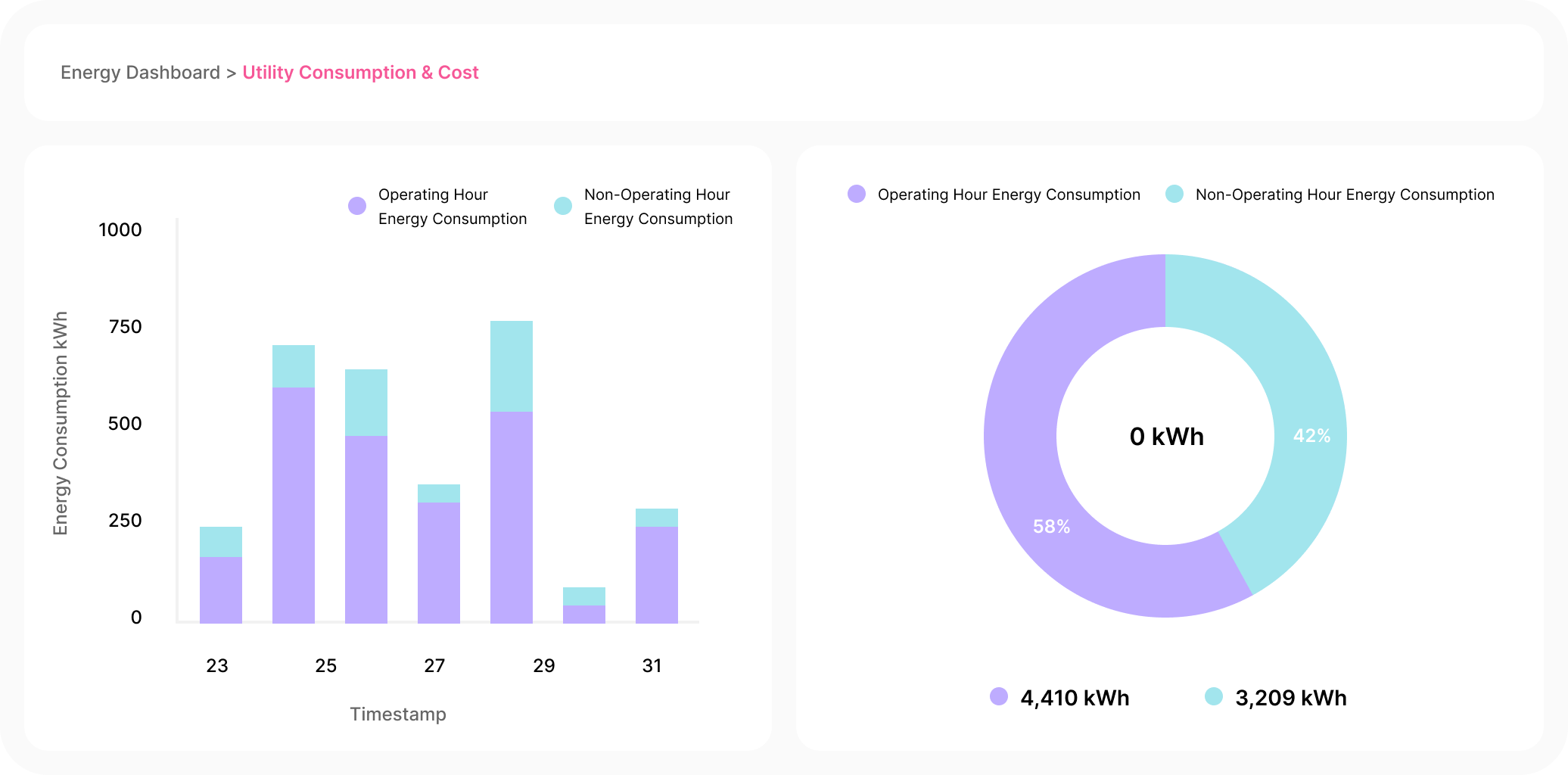
The lesson is wonderfully portable. Put the equipment in context, establish what normal operation should look like, and give an abnormal reading an owner. Then check whether the intervention worked. A dashboard without that last step can become an expensive spectator sport.
Four founders, one missing conversation
Facilio began in 2017 with Prabhu Ramachandran, Rajavel Subramanian, Yogendra Babu, and Krishnamoorthi Rangasamy. Their background was enterprise software and IoT. Ramachandran had worked at Zoho; his experience with telecom operations helped shape a question: why should buildings be so difficult to supervise remotely when other industries had learned to do it?

Technical experience did not automatically produce willing buyers. In a January 2026 interview, Ramachandran said, “Changing perceptions was harder than building technology.” Facilities management had been treated as a cost center. Selling software meant showing what better maintenance, energy performance, and service delivery were worth.
“Changing perceptions was harder than building technology.”Prabhu Ramachandran · January 2026
His reflection on the pandemic describes customers accelerating digital projects and concentrating on the bottom line. Facilio adjusted to those priorities. He identifies ICD Brookfield Place’s 2020 opening in Dubai, with Facilio as its connected operations platform, as a turning point. Brookfield Growth later participated in the company’s $35 million Series B, led by Dragoneer in February 2022. A customer relationship had acquired a financial vote of confidence.
The company’s own careers page describes a preference for ownership and experimentation, flexible hours, and self-approved leave. Those are recruiting claims, but they fit a business where a software team must understand a maintenance team’s working day. The product has to make sense to the person carrying the tools as well as the person approving the budget.

The ticket, the thermostat, the till
Connected CMMS is the maintenance foundation. The initials stand for computerized maintenance management system: work orders, preventive schedules, assets, inspections, inventory, and vendor coordination. Tenant and stakeholder portals bring requests into the same operational record. For a technician, the practical benefit is knowing what needs doing and retaining the history of what was done.
Connected Buildings adds utility monitoring, energy analytics, fault detection, and remote optimization. Connected Refrigeration, launched in April 2023, applies the approach to refrigeration systems across stores, including supervisory controls and leak-related workflows. These products address different jobs, but their value comes from joining equipment behavior to operational action.
- 01Equipment signal
- 02Fault analysis
- 03Assigned work
- 04Checked result
The buyers include commercial property operators, facilities service providers, retailers, hospitals, and educational institutions. Public customer names include Investa, British Land, ICD Brookfield, and Dubai World Trade Centre. A partnership with Tutenlabs extends Facilio into US retail operations; Belimo lists it as a building-IoT partner. Equipment expertise and software distribution meet in the same boiler room.
One unnamed Midwest supermarket customer illustrates the administrative half of the proposition. Facilio’s case study describes more than 25 grocery and production facilities, roughly 140 monthly utility bills, and a three-month implementation. Maintenance, refrigeration records, vendor management, and utility analysis were brought together. Saving someone from reconciling that pile every month is a credible product benefit all by itself.
A subscription with a setup bill
Facilio’s published Connected CMMS commercial model charges annual subscriptions by named user. Administrators, maintenance users, and portal users have different rates across Standard, Essential, and Enterprise tiers. Volume discounts apply to maintenance and portal seats. The financial structure follows the people using the system and the scope of their work.
Implementation costs extra, calculated as a percentage of annual contract value. That covers configuration, migration, training, and project management. Integrations may bring development charges and recurring fees. Contracts are typically quoted for three years. Buyers should price the complete deployment, then compare it with the work and waste they expect to remove. The supermarket’s three-month rollout is also a useful reminder to budget organizational attention alongside money.
The dashboard gets an assignment
In February 2026, Facilio announced Atom, an AI agent suite targeting helpdesk dispatch, compliance automation, and finance controls. Its newer proposition goes beyond collecting information: handle service intake, verify invoices, and help teams ask operational questions. The mundane tasks are the point. An invoice waiting for somebody to cross-check it is a small bottleneck repeated many times.
Facilio sits among maintenance and facilities platforms such as UpKeep, MRI Evolution, and ServiceChannel. Its competitive pitch emphasizes connecting operational data and execution across a portfolio. Intriguingly, it also markets Atom alongside an existing UpKeep system. That is an integration proposition, dependent on accessible data, rather than a requirement to migrate every record.
The conditions matter. As a practical inference, reliable asset records, usable system connections, and people responsible for acting on faults are prerequisites for meaningful gains. A small site with simple maintenance needs may find a narrower tool sufficient. Facilio’s argument becomes persuasive when the handoffs themselves are costly - when the machinery keeps running, the tickets keep closing, and nobody notices that the building is fighting itself.