Somewhere in a commercial building, an energy audit is sitting in a folder. It knows that the lighting is inefficient, the heating system is old, and the next owner may inherit a regulatory problem. Somewhere else, an asset manager is preparing a budget. The two documents may never meet. Cambio was built for that awkward silence between diagnosis and decision.
The short version
- Cambio gathers utility bills, audits, drawings and property data, then ranks building upgrades by expected return, payback and emissions impact.
- Its customers are institutional owners and managers, including Nuveen Real Estate and Principal Real Estate.
- In a Nuveen affordable housing case study, Cambio identified 896 viable retrofit projects across 129 properties; the projected annual energy savings total $9.2 million.
- The business sells enterprise software and raised an $18 million Series A in January 2026.
A portfolio is a thousand small mysteries
The trouble with a large property portfolio is that the facts do not arrive as a portfolio. One building sends a utility invoice. Another has an energy audit in a PDF. A third has equipment records in a property management system; its tenant, inconveniently, owns the meter data. The owner still has to decide what to spend, what to report, and what will happen to the asset at sale.
Cambio’s platform ingests those scattered records through utility connections, document reading and existing data systems. It checks quality, builds a picture of each asset, and identifies potential upgrades. Its recommendations are sorted by financial measures such as return and payback as well as emissions. The result is meant to serve an asset manager deciding on capital expenditure, a property manager collecting evidence, and a sustainability lead facing a reporting deadline.
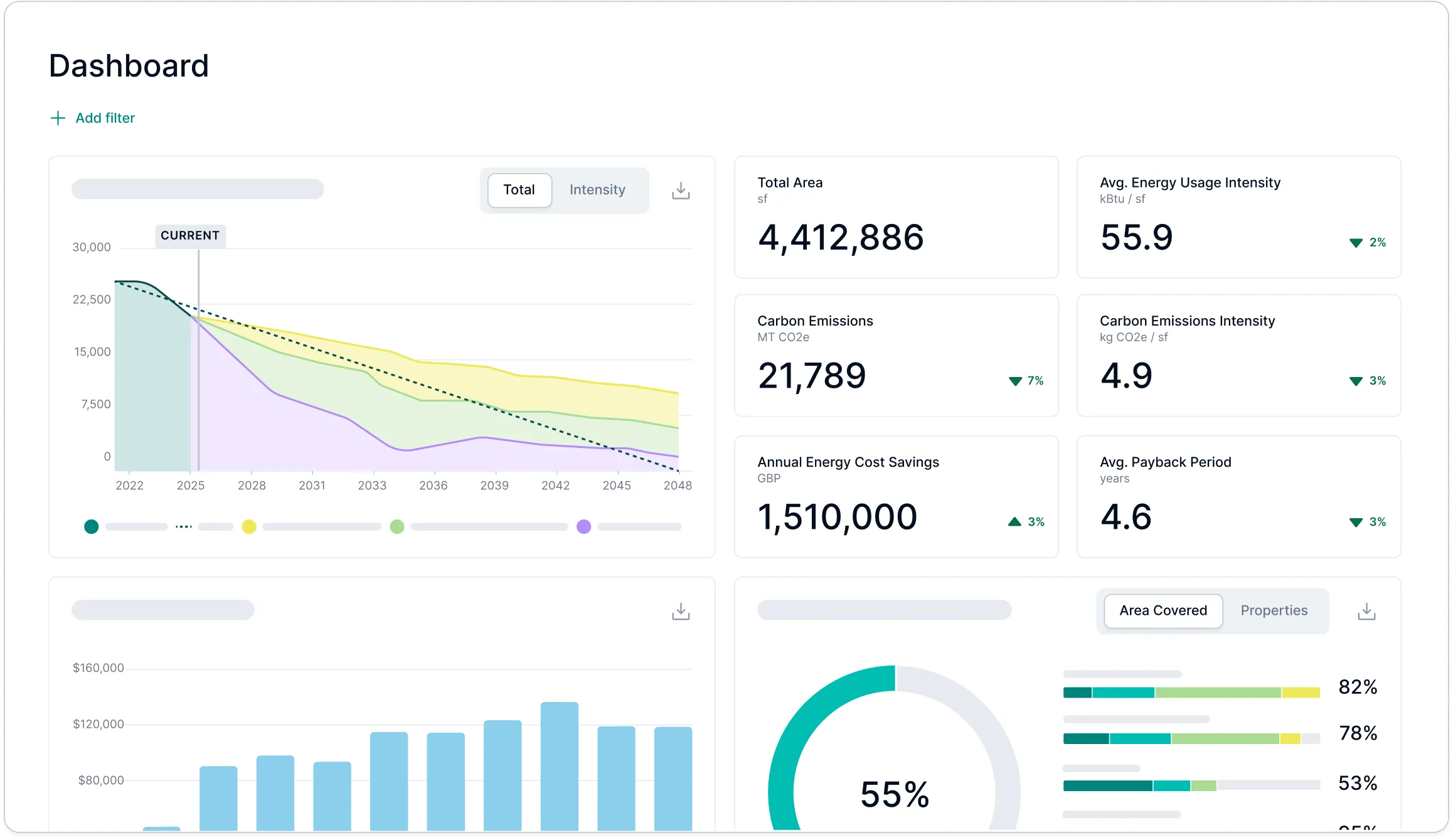
That combination matters. Reporting software can tell a fund how much energy it used; an engineering study can propose an upgrade; an investment memo can argue whether to pay for it. Cambio is trying to keep those three conversations attached to the same underlying records. On its asset management page, the company says figures can be traced back to source systems and documents, a prosaic feature that becomes rather glamorous when a committee asks where a number came from.
The arithmetic behind the promise
Nuveen Real Estate offers a useful test of the idea. In a published account of its affordable housing work, Cambio says it assessed 129 properties and found 896 viable retrofit projects. The opportunities add up to an estimated $9.2 million in annual energy cost savings and 42,985 tonnes of avoided carbon dioxide equivalent each year. Those are modeled opportunities, not booked savings. The distinction is the entire point of responsible capital planning: a prospect is worth investigating precisely because it has not yet been purchased.
The proposed jobs range from lighting and controls to HVAC and building envelope improvements. Cambio describes quick payback items, often under three years, alongside larger projects requiring more capital and longer planning. For affordable housing, the calculation has an extra human dimension: lower energy use can reduce pressure on residents’ bills. It can also spare owners from treating every new rule as an emergency renovation order.
A list of 896 possibilities is not an execution plan by itself. Each building still needs engineering judgment, bids, financing and people willing to work around tenants. Cambio’s software claims the earlier, often neglected step: making the list specific enough that a local team can ask for those bids. In its Nuveen account, it says the analysis supplies specifications, cost estimates and expected outcomes to support that handoff.
“Our investor-centric lens is what sets us apart.”Stephanie Grayson, co-founder, at the Series A announcement
Two investors tired of the scavenger hunt
The company was founded in 2022 by Leia de Guzman and Stephanie Grayson while they were studying at Stanford. Their résumés explain the product’s accent. De Guzman worked on global real estate investments at Oxford Properties Group and OMERS; Grayson had worked at Goldman Sachs, KKR and JPMorgan. They had seen the same ritual from the inside: gather property data, reconcile invoices, update spreadsheets, and then try to make a decision large enough to deserve better evidence.

This is Cambio’s main distinction in a crowded market of dashboards and consultants. The product starts with the investor’s question - which property, which project, which return? - rather than ending at a carbon total. Its investment workflow even promises a capital expenditure audit from a deal’s data room and an appendix for an investment committee memo. Its property management workflow handles the less theatrical tasks: chasing tenant utility data, tracking deadlines and coordinating with engineers.
Cambio also offers a free EnergyStar backup product called Vault, with a benchmarking exposure audit. It is an unusually practical doorway into enterprise software: a property owner can begin with a data preservation problem and discover the wider planning problem behind it. The full platform is enterprise SaaS; Cambio does not list a public subscription price.
The report is a beginning, not an ending
Consider GRESB, the widely used real estate sustainability assessment. For many teams, submission season means assembling utility data from landlords and tenants and proving what belongs to which building. Cambio became an official GRESB partner in April 2026. Its workflow includes utility APIs, optical reading of bills, meter tagging, tenant outreach and an AI voice agent for follow-up. Once the data is in, it can support both the annual submission and a longer view of what to repair.
The company reports that its platform covers 2 billion square feet and 12,201 buildings in 35 countries. Its named customers include Nuveen, Principal, BGO, LaSalle, Oxford Properties, Madison International Realty and Beacon Capital Partners. That scale helps explain the $18 million Series A led by Maverick Ventures in January 2026. The company said the money would support expansion after a public launch; Crunchbase News reported a $100 million valuation at the time.
Still, the elegant chart is only as useful as the building record beneath it. Missing tenant data, uncertain equipment condition and local installation costs can all change a projected return. Cambio’s own workflow acknowledges the problem with validation, data gap alerts and project tracking. A recommendation is an invitation to investigate, not a substitute for a contractor’s quote. The model works best when an owner has a sizable portfolio, a repeatable data collection process and someone empowered to turn rankings into budgets. A small owner with one building may get more value from a direct energy audit and a trusted engineer.
The lesson travels beyond real estate. Find the decision people already struggle to make. Trace the evidence that feeds it. Put the evidence in one place, show the assumptions, and rank the options in the language of the person holding the budget. Cambio’s clever move is to let climate and finance share a spreadsheet - then ask whether the spreadsheet can finally retire.