Consider the apartment key. It is small, familiar and remarkably good at creating work. Somebody must keep it, copy it, hand it over, retrieve it and, when trust or tenancy expires, arrange for the lock to change. Multiply that modest nuisance across a rental portfolio and the key begins to look less like a piece of metal than a tiny administrative department.
SmartRent’s proposition begins there. Connect the lock to software and access becomes something a property team can assign, monitor and withdraw. Connect the thermostat and a vacant apartment can follow an energy-saving schedule. Add a leak sensor and a problem under the sink can announce itself before a resident discovers the puddle. The appeal is delightfully unromantic: fewer errands.
- SmartRent sells hardware, installation services and recurring software to rental housing operators.
- Residents get controls; property teams get permissions, alerts and workflows.
- Its installed base reached 929,487 units in June 2026, while its annual revenue had fallen for two consecutive years.
- The practical lesson: measure the work removed, then decide which devices deserve a place in the building.
The door is the beginning
For a resident, SmartRent can be an app that controls a compatible lock, thermostat or light. For the owner, it is a way to coordinate many homes through a cloud dashboard. Those are different purchases hiding inside the same product. The resident wants a convenient Tuesday evening. The owner wants a Tuesday evening that does not require an employee to drive across town.
The distinction explains the company’s place in the market. SmartRent is an enterprise supplier to rental housing, including multifamily communities, single-family rental portfolios and build-to-rent developments. Owners and operators buy the system; residents and site teams live with it. Its website lists customers including UDR, Essex and Equity Residential. The buying decision belongs to the people responsible for the building, rather than each individual household.
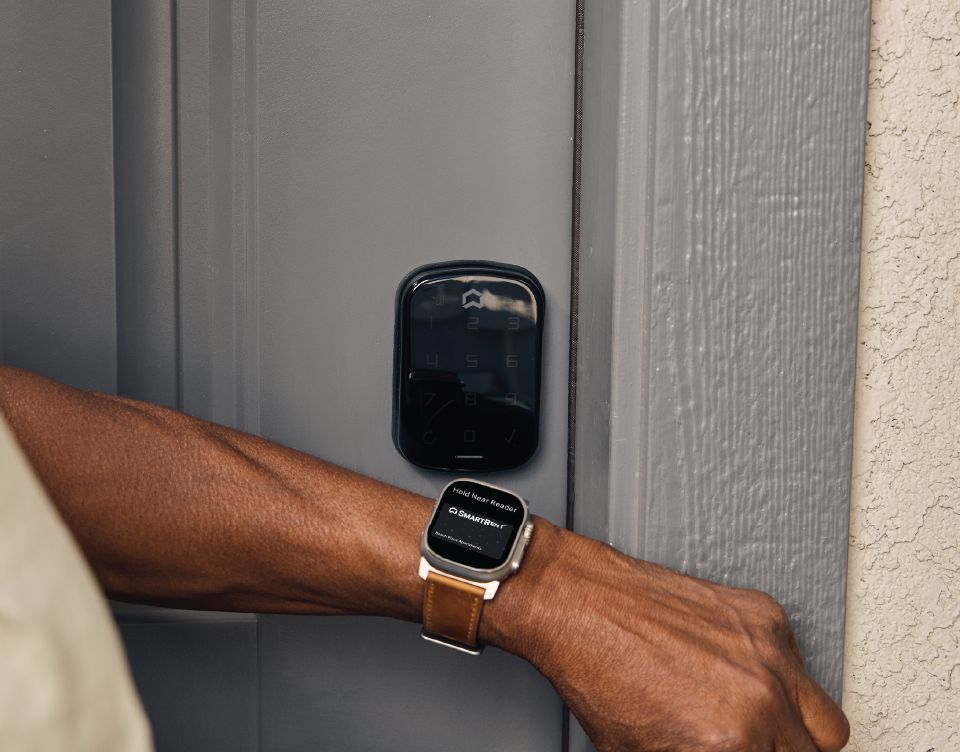
That arrangement changes what matters. A gadget can impress one person with a clever feature. A portfolio system has to survive move-ins, move-outs, maintenance visits and staff changes. SmartRent’s apartment product supports guest and vendor access, activity logs and automatic removal of resident access upon move-out. It offers both retrofit and new installation options, with training and technical support.
Alloy Deadbolt+, launched in December 2024 at a Starwood Capital Group property, adds resident keys in Apple Wallet. At enabled properties, supported iPhones and Apple Watches can unlock a door with a tap. Express Mode removes the need to unlock the device first. A splendidly modern convenience, though the more consequential feature for an operator may be the ability to stop issuing physical keys.
A landlord’s problem, translated into code
Lucas Haldeman founded SmartRent in 2017 after working in multifamily operations. The company’s account of its origins describes a familiar predicament: property teams working hard inside processes that kept producing more work. The founding team included Demetrios Barnes, Mitch Karren and Isaiah DeRose-Wilson. Its expertise joined property operations to software and connected hardware.
Self-Guided Tours shows how that combination works. A prospect can tour without downloading an app or having an employee accompany them. The system verifies identification and location, supplies an access code for the appointment and invalidates it afterward. It can then prompt an application, feedback or contact with the leasing office. By 2024, SmartRent reported one million completed self-guided tours.
- 01Verify identity
and location - 02Issue temporary
door access - 03Let the prospect
take the tour - 04Expire code
and follow up
The useful innovation is the sequence. Opening a door is one event; safely admitting a stranger to a vacant apartment is a process. SmartRent packages the surrounding steps so a leasing team can offer more flexible showing hours and simultaneous appointments. Whether that produces a signed lease still depends on the apartment, the price and the prospect.
Integration carries similar weight. SmartRent connects with systems such as Yardi, Entrata and RealPage. A rental operator already has software recording who lives where. Making another system agree with it is essential if access is to follow tenancy. Ryan Perez of Capital Square Living puts the requirement plainly in a company-published testimonial:
“Full integration is critical for us because we demand data integrity.”Ryan Perez · Capital Square Living
SmartRent faces alternatives. PointCentral, an Alarm.com company, also offers rental-property access, energy management and touring. Quext sells overlapping smart-community technology. These capabilities are competitive territory. SmartRent’s proposition is the combination of connected apartments, community access and operating workflows, with deployment and support attached. Its breadth is a reason to evaluate it, rather than proof that every buyer needs the whole suite.
The $135 million maintenance queue
In March 2022, SmartRent bought SightPlan for approximately $135 million in cash. The acquisition brought tools for maintenance workflows, resident communication, inspections, audits and automated answering. It extended the company’s reach from connected devices into the less photogenic machinery of property management.
The logic is easy to follow. A sensor identifies a possible problem. A work-management system helps a team handle the response. An inspection records the condition afterward. Connecting these jobs can reduce handoffs, provided the software fits how the property actually operates. Owning the alarm and the queue does not, by itself, make anybody arrive sooner.
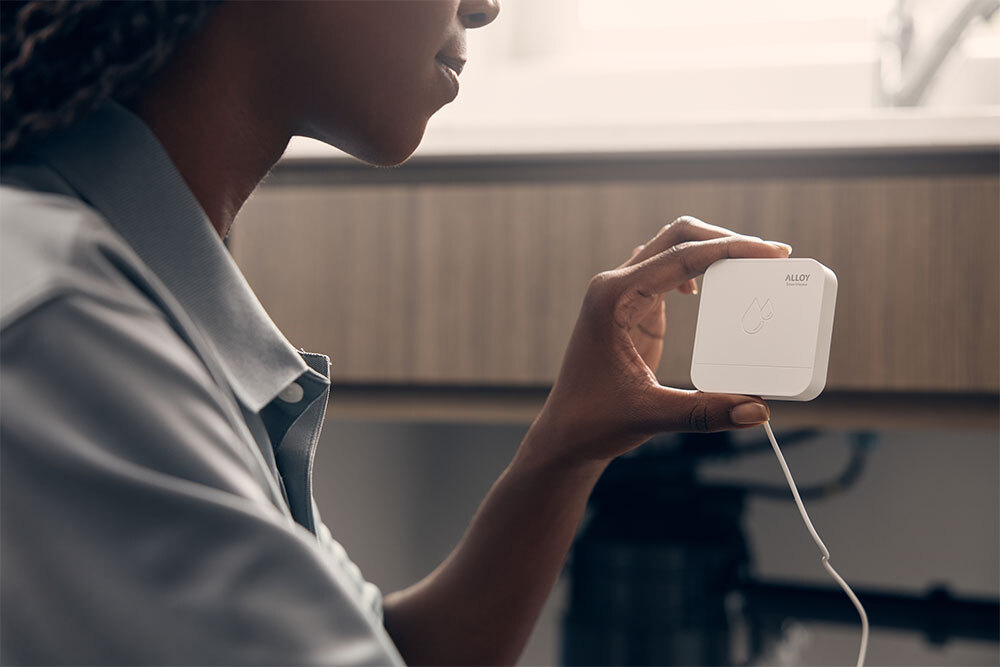
The broader catalogue includes access control, asset protection, Community WiFi, parking and package-room management. These are useful adjacent problems for a property operator, but they also make purchasing more complicated. A buyer must distinguish the systems needed today from the features that merely look attractive in a demonstration.
There is a small technical curiosity beneath the property pitch. SmartRent maintains public GitHub repositories, including Grizzly, an Elixir library for Z-Wave. The apartment app is the visible tip of a business that also has to make devices communicate. The plumbing, it turns out, has its own plumbing.
The hardware hangover
Building that business required capital. A $32 million Series B in 2019 was followed by a $60 million Series C led by Spark Capital in 2020. The 2021 combination with Fifth Wall Acquisition Corp. I delivered approximately $450 million in net cash proceeds, including a private placement. SmartRent began trading on the NYSE as SMRT.
Its revenue comes from three places: hardware, professional services and hosted services. The last category includes software subscriptions and hub amortization, which should not be mistaken for fresh subscription sales. A shipped device, an installed apartment and a paying software relationship describe different stages of the business.
The growth story met physical constraints early. In 2021, SmartRent reduced its revenue expectations because of supply-chain restraints affecting its Fusion Hub and Alloy Access. By 2024, the obstacle included customers delaying capital spending. Haldeman stepped down that July, and the company suspended its annual outlook while scaling back its channel partner programme.
The later adjustment was more explicit. SmartRent’s 2025 results describe moving away from bulk hardware transactions that did not match customer implementation schedules. Hardware revenue fell 30% that year, while SaaS revenue rose about 12%. Annual revenue declined 13%. The company reported a $60.6 million net loss, including a $24.9 million goodwill impairment. More connected apartments had not automatically delivered a healthier income statement.
Frank Martell became CEO in June 2025. By the fourth quarter, SmartRent reported positive adjusted EBITDA of $0.2 million, following cost reductions. That measure excludes expenses included in net income; the quarter still had a net loss. The distinction matters when assessing a turnaround whose improvement is real but whose destination remains ahead.
The June 2026 quarter supplied further evidence: total revenue grew 4% to $39.8 million, annual recurring revenue reached $64.5 million and SaaS gross margin was 75.3%. Reported monthly SaaS revenue per unit averaged $5.84. These figures suggest improving subscription economics. They also explain why the company cares about each installation continuing to earn after the installer leaves.
A better experiment than buying every gadget
For an operator, the sensible starting point is a short inventory of expensive repetitions. Count rekeys and lockouts. Measure energy use in vacant units. Record the tours that staff cannot accommodate and the time between a maintenance alert and a response. Then choose a pilot that tests one or two of those problems.
The budget should cover hardware, installation, subscriptions and staff time. SmartRent’s reported per-unit averages describe its revenue mix; they are not a customer rate card or a ready-made retrofit quote. Savings should be compared with the full project cost, and with the simpler alternative of fixing the existing process.
A poorly maintained resident roster can make automated permissions troublesome. A sensor in the wrong place can miss the leak. An alert without a designated responder can become another unread notification. These are operating conditions, and they help explain the company’s stated value of listening before solving: the workflow must be understood before it can be automated.
SmartRent’s most persuasive idea is also its least theatrical. Find the ordinary task repeated across hundreds of homes, and make it easier to complete correctly. A resident sees a door opening. Somewhere behind that door, a property manager hopes one more little job has disappeared.