Reported · Singapore & Austin, TX
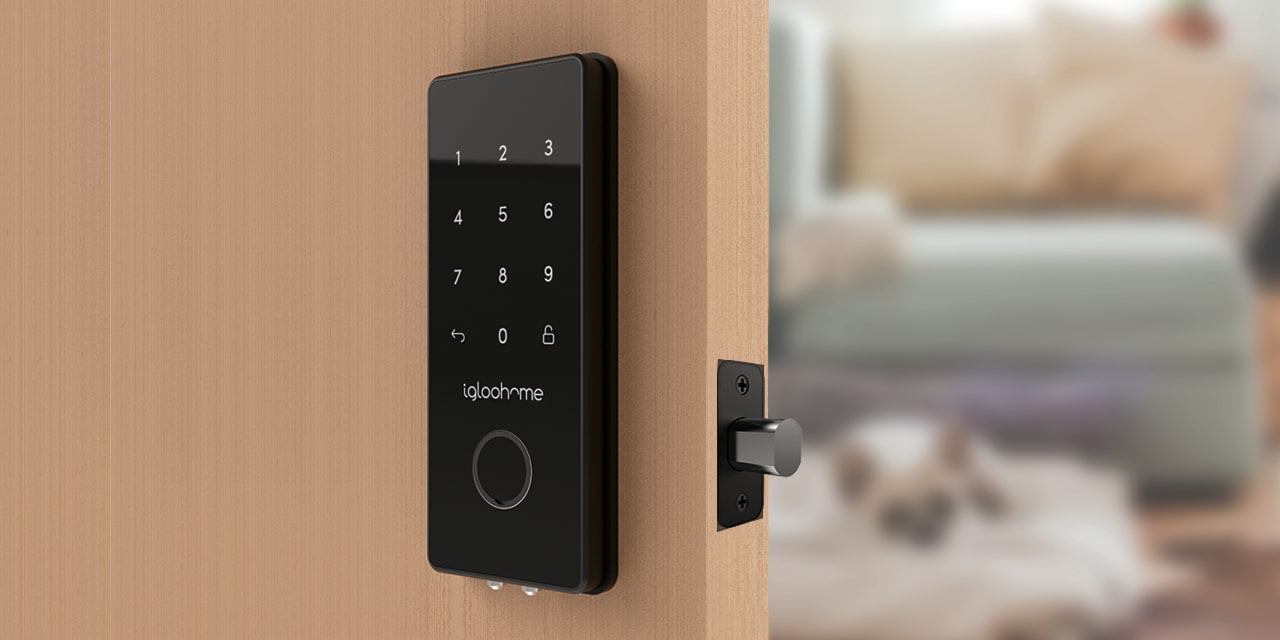
It is 1 a.m. in a city you have never visited, and you are standing in front of a rental apartment you have already paid for. There is no host. There is no lockbox under a fake rock. There is a keypad, a six-digit code that arrived in your booking confirmation, and a door that opens. No one met you. No one had to. That small, unremarkable moment is the entire point of igloo.
igloo - the consumer-facing brand most people know as igloohome, and the company legally registered as igloocompany Pte Ltd - makes the locks, padlocks and software behind that quiet check-in. The pitch is almost suspiciously simple: a world without keys. The execution is where it gets interesting.
We envision a future of a world without keys.- Anthony Chow, CEO & Co-founder, igloo
01 / THE PROBLEMThe key was always the weakest part
Physical keys are a four-thousand-year-old technology that we have somehow agreed to keep using. They get copied. They get lost. They have to be handed, in person, from one human to another - which is fine until the other human lands at 1 a.m., or you are three time zones away, or you manage forty apartments and cannot personally meet everyone.
The founders did not arrive at this as a thought experiment. Anthony Chow was an Airbnb host. The problem he wanted solved was his own: the awkward, recurring chore of coordinating key handovers with guests who never seemed to arrive at a convenient hour. The friction was not exotic. It was Tuesday.
As an Airbnb host, Anthony faced the frustration of physical key exchanges - especially when guests wanted to check in at odd hours.- on the origin of igloo
02 / THE BETTwo Singaporeans, one stubborn idea
In 2015, Chow co-founded the company in Singapore with Kelvin Ho and Sharon Goh. Chow brought a Stanford master's in big data and a self-described habit of tinkering; the team brought the conviction that access control did not have to mean enterprise-grade complexity or a sprawling WiFi installation.
Here is the bet that made igloo more than another connected gadget. Most smart locks of the era assumed a constant internet connection - a fragile assumption for a lock on a remote rental, a construction site, or a gate at the edge of cellular coverage. igloo's answer was an offline algorithm. Its patented algoPIN and algoPass technology lets a lock generate and validate a time-bound PIN code entirely on its own, with no signal at the door. The lock never has to phone home to know your code is real.
The lock never needs the internet to know your code is valid. That is the whole trick - and it is the part you can't see.- on igloo's algoPIN technology
It is a deeply unglamorous innovation, which is exactly why it worked. Customers do not buy cryptography. They buy a code that opens a door at 1 a.m. without WiFi.
03 / THE PRODUCTA lock, then a platform, then everything
The first product was a WiFi-enabled smart lock that let owners set custom PINs for guests over the internet. Then came the Bluetooth-enabled deadbolt, and - in a move that tells you how closely the company was reading its own customers - the world's first Airbnb-integrated keybox in 2016, for people who still needed to share a physical key but not a physical meeting.
From there the catalogue grew the way a good toolkit does: deadbolts, mortise locks, push-pull locks, padlocks, keyboxes, fobs and keypads, each unlockable by some combination of PIN, Bluetooth key, fingerprint, fob or mobile wallet. Then the company did the thing hardware startups always dream about and rarely manage - it built the software layer that turns a product into a platform.
Smart Locks
Deadbolts and mortise locks - including Deadbolt Go and Deadbolt 2S - opened by PIN, Bluetooth, fingerprint, fob or phone.
Smart Padlock
Weatherproof, battery-powered, PIN- and Bluetooth-enabled. Durability-tested in literal outer space.
Keybox
The world's first Airbnb-integrated lockbox - for when you still need to share a physical key, just not in person.
iglooworks
Enterprise access platform for property and facilities teams: multi-location credentials, alerts, audit trails.
iglooaccess
Cloud management and integration layer wiring igloo locks to 500+ partner platforms and APIs.
igloo App
The consumer remote: issue time-bound PINs and Bluetooth keys, read the activity log, repeat.
igloo stopped selling locks and started selling access. The hardware is just the part you can touch.- the strategic shift, in one line
Ten Years of Opening Doors
A milestone every year, give or take - and one that left the planet
04 / THE PROOFThe numbers behind the keychain
Vision statements are cheap. Doors opened are not. By 2024 igloo had shipped more than half a million devices and was issuing roughly 25 million access credentials a year, with around 8 million doors actually opened across its network annually. The company reached 80+ countries and, in a detail that says a lot about American retail, put its locks in 1,352 Lowe's stores.
igloo, by the Numbers
Scale of the access network · figures per company & press reports
Bars scaled for visual comparison, not to a single unit. Different metrics, same story: a lot of doors.
The money followed the doors. igloo has raised more than US$32M across multiple rounds from roughly 22 investors - a US$4M Series A in 2018, a US$15M round in 2019 that funded the launch of iglooworks, and a US$12M Series B1 in March 2022 - backed by names like Insignia Ventures Partners, Wavemaker Partners and SEEDS Capital, the investment arm of Enterprise Singapore.
What you can actually do with it
- Send a guest a time-bound PIN that expires when their stay does - no meeting, no spare key.
- Sync locks to Airbnb, Vrbo, Hostfully and hundreds of property-management systems.
- Manage access across many properties from one dashboard, with audit trails and alerts.
- Unlock by PIN, Bluetooth, fingerprint, fob or phone - even with no WiFi at the door.
- Retrofit existing doors instead of replacing the whole lock.
05 / THE MISSIONWhy send a padlock to space?
In 2023, igloo did something that sounds like a marketing stunt and mostly is: it sent a smart padlock to space to test its durability. But the gesture has a logic. If you are asking people to trust a battery-powered, offline algorithm with the front door of their home and the keys to their business, you need a story about how much abuse the thing can take. Orbit is a memorable upper bound.
If it survives space, your front door is not a serious problem.- the unspoken argument behind igloo's most theatrical test
The mission, stripped of the showmanship, is consistent with everything the company has built. Access should be something you grant and revoke like a permission, not something you hand over like a relic. The key was a single point of failure dressed up as security. igloo's wager is that software-defined, time-bound, offline-capable access is simply the better primitive - for a host, a facilities manager, or a construction firm with a hundred gates.
06 / TOMORROWThe part that matters next
At CES 2024, igloo leaned into where this is heading: AI-assisted access, Matter compatibility, ultra-wideband precision, edge-vision devices that issue QR-coded entry on the fly. The through-line from a frustrated Airbnb host in 2015 to an edge-AI access platform in 2024 is shorter than it looks. It was always about removing the human bottleneck from the act of letting someone in.
There is a healthy skepticism worth keeping here. Smart locks live or die on reliability, and a dead battery is a worse story than a lost key. Competitors - August, Yale, Schlage, Level, SALTO and others - are not standing still. igloo's revenue is still modest next to its ambition. None of that is hidden by sending a padlock to orbit.
The key was a single point of failure dressed up as security. igloo's bet is that access should behave like a permission instead.- the thesis, plainly
Back to 1 a.m. You are still standing in front of that rental door, and it still opens for a code instead of a person. What igloo changed is not visible - there is no gadget glowing on the wall, no host waiting up, no fake rock. The most interesting thing in the scene is the thing that is no longer there. The key is gone, and almost no one noticed. That, more than the trip to space, is the company's actual achievement.