genomics
(64)
Agilent sells the instrument. Then comes the real work.
The company that emerged from Hewlett-Packard built a business around the unglamorous parts of science: separating samples, keeping instruments running, and making results trustworthy.
SCC Soft Computer follows the specimen
A laboratory result is only useful if the right information travels with it. SCC Soft Computer has built its business around that deceptively difficult journey.
LetsGetChecked: The test is only the beginning.
A home test kit solved the appointment problem. Then LetsGetChecked started buying the pieces needed to turn a result into care.

Grupo Sabin learned to care at scale
Two biochemists built a laboratory in Brasília. A costly mistake, a patient approach to expansion, and R$90 million in automation explain how it became a national health business.
Truveta persuaded hospitals to share their memory
Hospitals record millions of lives and struggle to learn from them together. Truveta gave those hospitals a stake in the answer - and is now adding genetics to the medical record.
Lifebit wants to move medicine forward. The data stays put.
The hard part of genomic research is often getting permission to use what already exists. Lifebit sends the tools to the data, turning institutional boundaries into something a researcher can work across.

Breedr wants every cow to travel with its résumé
A better steak begins long before the butcher. Breedr connects cattle records, genetics and trading so the people raising an animal can learn what happened after it left their ranch.

Opentrons Labworks puts the boring work on autopilot
Discovery gets the applause. Pipetting gets the afternoon. Opentrons builds lab robots that take on the repetition, and its next wager is that AI will need a reliable pair of hands.

DNAnexus makes the lab bigger than the laptop
Sequencing became cheaper. Making sense of the results remained expensive. DNAnexus built a business in that gap, moving biomedical research into shared cloud workspaces - with all the promise, bills and permissions that entails.

TriNetX and the Patients Hiding in Plain Sight
A hospital can have the right patients and still miss the trial. TriNetX makes those patients count before anyone starts recruiting - and turns the same clinical records into a working research network.
Seven Bridges and the Genome That Stayed Put
The clever move in genomics was to stop moving the data. Seven Bridges built a business bringing researchers, workflows and rented computing power to the same place - and now carries that idea into Velsera.
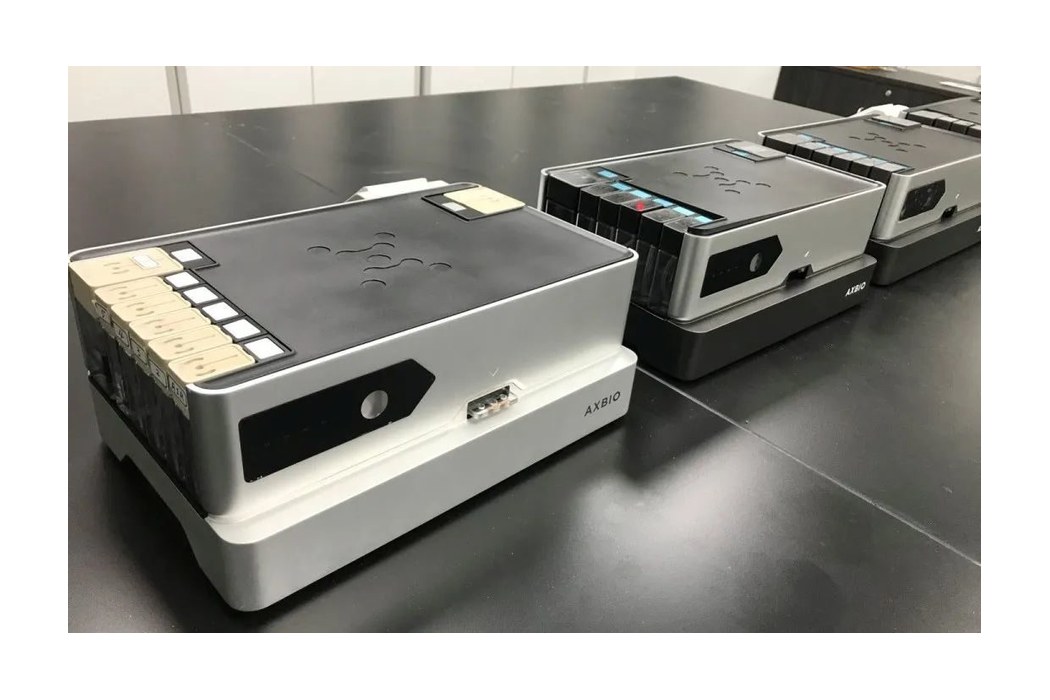
The Million Tiny Doors Inside Axbio’s Machine
A physicist and a materials scientist put biology on a chip. Ten years later, Axbio is asking whether the economics of DNA reading can start to look like the economics of computing.
The Chip Factory That Learned to Read Tissue
Centrillion borrowed the tools of a semiconductor fab to make biology legible - then discovered that the most useful product might be the manufacturing system behind the chip.

The Marketing Problem That Begins When the Science Is Too Good
Samba Scientific hires people who can read the paper, question the claim and still build the campaign. The wager is simple: in biotech, fluency is not decoration - it is the shortest route from a complicated product to a credible lead.
GeneOnline Turned Biotech News Into a Map for Finding the Next Deal
The bilingual publisher spent years explaining Asian biotech to the world. Then it packaged the map behind the reporting into BIODND - an AI-assisted database built for the people hunting companies, capital and partners.
Bioscribe knows what to say between breakthroughs
Biotech companies can spend years waiting for their next big announcement. Bioscribe has built a communications business around the science, people, and progress in between.

Area Science Park puts a laboratory in the startup cheque
In Trieste, a public research organisation pairs funding with access to microscopes, genomics and computing. Its bet: give difficult ideas the equipment and expertise to prove themselves.
Automata wants to give scientists their lab back
A robot arm was only the beginning. Automata now connects the machines, movements and data that keep laboratories waiting - and gives scientists a chance to leave the bench.

The $2,000 AI Company That Learned to Think in Trains, Proteins and Genomes
InstaDeep began in Tunis with two laptops, about $2,000 and no tidy business plan. A decade later, its algorithms route circuit boards, read genomes and sit inside BioNTech's bet on AI-designed medicine.
The Software Behind the Test Results Nobody Can Afford to Lose
Clinisys sits in the quiet, high-stakes gap between a specimen arriving and an answer going out. Its next act is to turn decades of specialist lab software into one cloud platform - without breaking the workflows that already move billions of tests.
The Minneapolis Shop That Turns Lab IP Into Real Companies
Most venture firms write checks and wait. Invenshure hires the scientists, licenses the patents, and builds the company itself - one hard problem at a time.

The Firm That Publishes Its Homework
Cathie Wood built ARK Invest on a heresy in money management: tell everyone what you are buying, why, and when - then let them watch.

The $4.3 Billion Toll Road Beneath the Genome Era
Illumina put DNA sequencing on a repeatable industrial workflow. Now it is trying to turn the machines, chemistry and software already embedded in laboratories into an operating system for multiomic medicine.
Life Technologies
Life Technologies vanished as an independent company in 2014. Its brands did not - they became the quiet infrastructure behind experiments in genomics, cell biology, medicine and forensics.
Imagene Labs
Imagene Labs is a Singapore-based health-tech company that runs an enterprise-grade, cloud-based B2B genetic analytics platform. Using patented ancestry-based genetic risk analytics and ethnically-relevant reference datasets, it turns a simple saliva sample into DNA insights that fitness, beauty, nutrition and healthcare brands use to build personalized products and services. Its consumer-facing brand, Ori, packages these insights into fitness, skincare and nutrition DNA tests for the Asian market and beyond.

Biotia
Biotia is a New York-based health-tech company that fights infectious diseases by combining next-generation DNA sequencing with AI-driven software. Its metagenomic platform identifies bacteria, fungi, parasites and viruses - plus antimicrobial-resistance markers - from a single sample against a curated database of more than 16,000 microbial species. Spun out of the Jacobs Technion-Cornell Institute at Cornell Tech and operating a CLIA-certified lab in New York City, Biotia turns a single microbiome test into an actionable clinical report to help providers diagnose hard-to-detect infections and support pathogen surveillance from the hospital to outer space.

BostonGene
BostonGene is a Waltham, Massachusetts biotechnology company that applies AI-driven multiomics to cancer. Its Tumor Portrait platform integrates DNA and RNA sequencing with immune and tumor-microenvironment analysis into a single test, producing molecular profiles that help oncologists select therapies and help pharmaceutical partners design trials, identify biomarkers, and accelerate drug development. Founded in 2015 and led by CEO Andrew Feinberg, the company reached unicorn status in 2022.
Character Biosciences
Character Biosciences is a precision medicine company developing targeted therapies for progressive polygenic diseases, starting in ophthalmology with age-related macular degeneration (AMD). By pairing human genetics with longitudinal clinical and retinal imaging data from thousands of consented patients - and layering AI-enabled biomarker analysis on top - Character reclassifies broad diagnoses into genetically defined subtypes so it can design drugs that target the root drivers of disease progression. Its lead programs, CTX114 (a complement inhibitor for geographic atrophy) and CTX203 (a lipid regulator to prevent progression to advanced AMD), are advancing toward the clinic on the strength of a Series B that grew past $110 million.
Colossal Biosciences
Colossal Biosciences is a Dallas-based genetic engineering company using de-extinction science - ancient DNA, CRISPR gene editing, and reproductive technology - to revive lost species like the woolly mammoth, thylacine, dodo, and dire wolf, and to apply the same tools to protecting endangered wildlife. Co-founded in 2021 by tech entrepreneur Ben Lamm and Harvard geneticist George Church, it became Texas' first decacorn with a $10.2 billion valuation and has spun out companies in computational biology and plastic degradation.
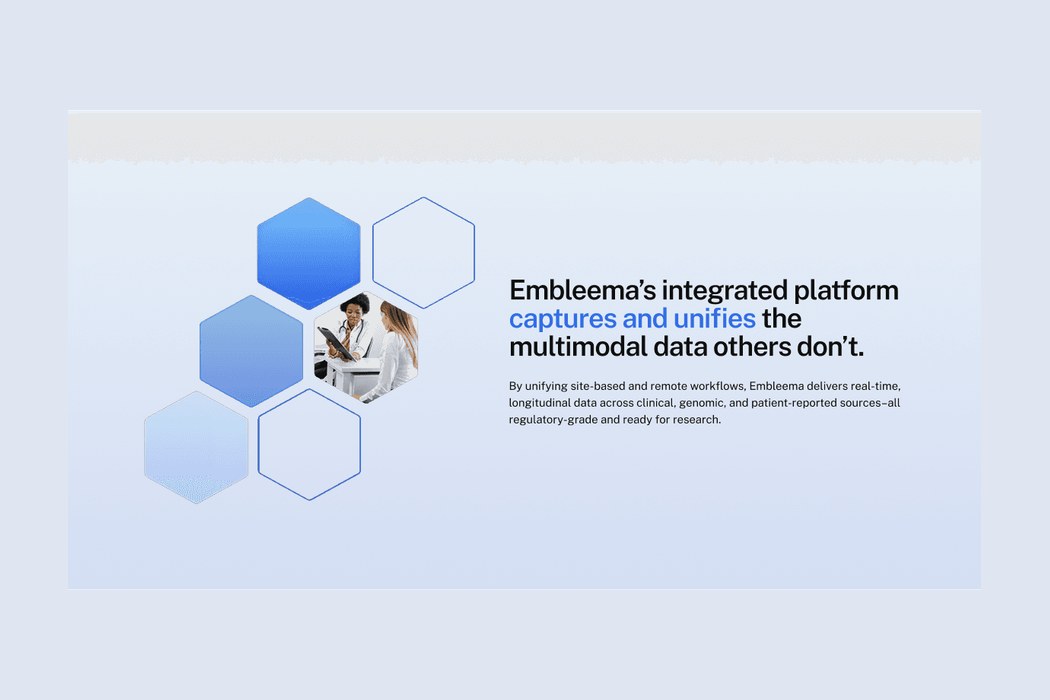
Embleema
Embleema is a New York- and France-based healthcare technology company that builds a unified real-world data and evidence platform for clinical research. It aggregates clinical, genomic, and patient-reported data from electronic medical records, wearables, biospecimens, and patient apps into regulatory-grade datasets, and uses no-code protocol tools plus dynamic consent to help pharmaceutical sponsors, research sites, and patient groups run non-interventional and Phase IV studies faster and at lower cost. Founded in 2017 by Robert Chu, the company started with a patient-driven health blockchain and its analytics stack has been used by the FDA for genomic regulatory review.