A hospital has an extraordinary memory and a peculiar difficulty remembering. It records blood pressure, prescriptions, scans, diagnoses, the physician’s hurried observations. Yet ask what happened to comparable patients in another hospital, and that memory acquires a locked door. Truveta began with a question about those doors: what if the institutions holding the records also owned the company that helped researchers learn from them?
- US health systems supply the records and own and govern the business.
- Researchers buy access to clinical data, analysis tools and evidence expertise.
- Genomics adds a new layer - with consent, sequencing and delivery still essential.
A phone call, then an ownership bargain
The idea preceded COVID-19. Providence’s Rod Hochman had identified the opportunity in 2018. In early 2020, he called Terry Myerson, the former Microsoft executive. The pandemic gave an existing proposal an unpleasantly persuasive demonstration: healthcare needed to learn across institutions faster than it could. In September 2020, four health systems and three individual co-founders established Truveta.
Myerson brought technology leadership; Jay Nanduri brought engineering experience; physician Ryan Ahern brought clinical and data expertise. The unusual contribution came from the hospitals. They were investors, contributors and governors, rather than merely suppliers whose records arrived at somebody else’s warehouse.
“Our health providers aren’t just members - they are builders, researchers, and governors.”Terry Myerson · July 2021
That arrangement matters because a data business needs continuing cooperation. A signed contract is helpful. An institution with money, reputation and governance invested in the result has additional reasons to keep participating. Truveta’s strategy offers a lesson in incentives before it offers a lesson in artificial intelligence.
The bill leaves out the interesting bits
An insurance claim describes the billable encounter. Researchers may also need the laboratory measurement, the clinician’s account, the scan, and the sequence of events afterward. Truveta assembles structured and unstructured electronic health records with linked claims, mortality and social drivers of health. Records are ingested daily, standardized, de-identified and checked for quality.
Its paying audience includes pharmaceutical companies, device makers, public-health organizations and academic researchers. Pfizer announced a collaboration for safety research in 2022. Boston Scientific wanted to study long-term device outcomes and disparities. These are customers with specific questions, rather than consumers looking for a diagnosis on their phones.
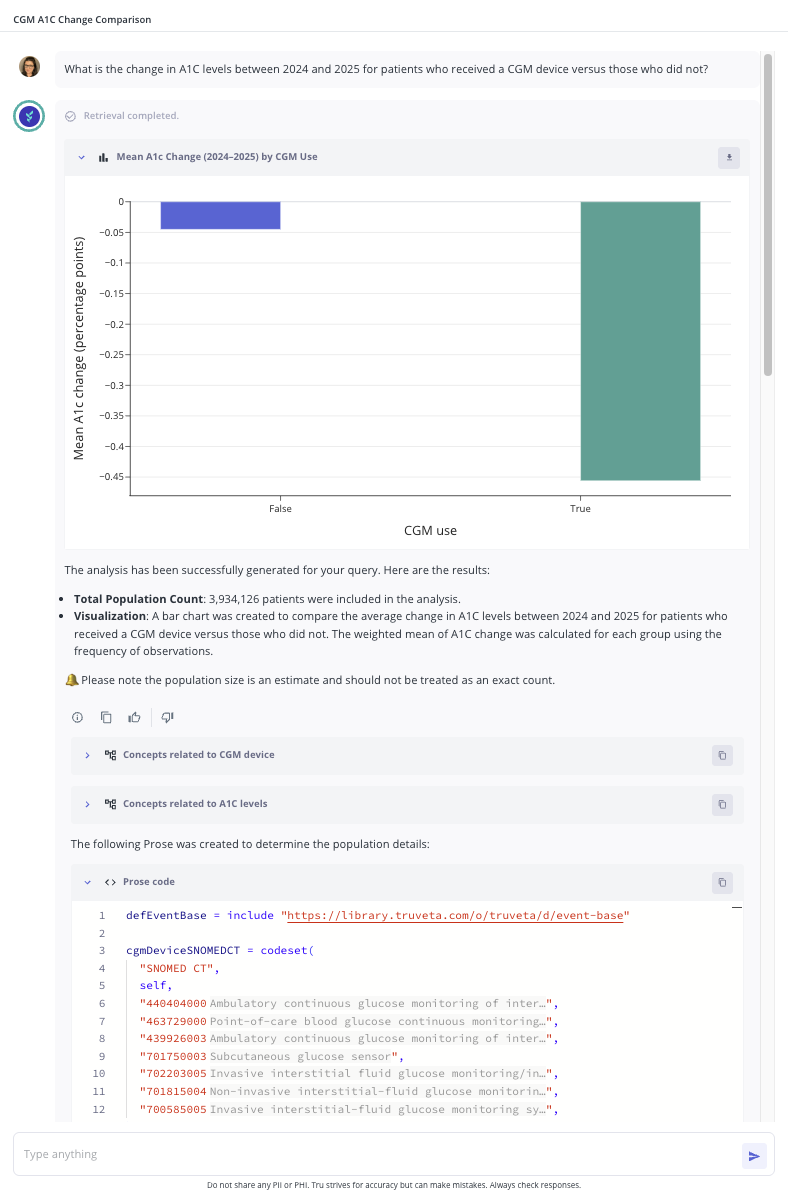
The commercial offering now has three connected parts: Data, Intelligence and Evidence. Studio, now presented through the trusted research environment, supports cohort building and reproducible analysis. Evidence Services supplies specialist help. Intelligence, launched in April 2026, lets subscribers ask questions in ordinary language and inspect the analytical definitions and methods behind the response. Live Link connects customers’ own datasets with refreshed clinical records for prospective research.
For a buyer, the practical starting point is a defined population and an outcome that the records can actually capture. A device team might investigate complications after a procedure; a researcher might test whether trial eligibility rules exclude too many patients. The subscription supplies an environment for asking those questions, with expert services available for the study work.
A weight-loss question with a useful complication
The proposition becomes clearer when somebody asks a question people actually care about. Truveta researchers compared weight loss among patients taking tirzepatide and semaglutide, using the diabetes-approved products Mounjaro and Ozempic. Published in JAMA Internal Medicine in July 2024, the study used propensity-score matching to construct a balanced comparison of more than 18,000 patients.
Among patients remaining on treatment, estimated mean weight loss at twelve months was 15.3% for tirzepatide and 8.3% for semaglutide. The records also contained a less convenient detail: discontinuation was common. Everyday care supplies evidence that can be considerably messier than a launch presentation.
Matching reduces measured differences between groups; it cannot remove every unmeasured difference. Missing follow-up and selective prescribing can complicate interpretation. Truveta itself says Intelligence does not establish causality or replace clinical judgment. Speed helps researchers reach an answer sooner. It leaves them responsible for whether the question and comparison were sound.
This is where epidemiology and clinical informatics earn their place beside software engineering. A tidy table can conceal a badly defined population. The scientific work is deciding what belongs in the table and what a comparison can reasonably mean.
The next specimen is already in the building
Clinical records describe what happened. They do not routinely contain the genetic information that might help explain why. Truveta’s next expansion starts with something surprisingly ordinary: leftover specimens from laboratory tests. With patient consent, participating health systems can send those specimens for sequencing and link the resulting genetic information to de-identified clinical histories.
Announced in January 2025, the Genome Project brings together health systems, the Regeneron Genetics Center, Illumina and Microsoft Azure. The initial sequencing agreement covers up to ten million volunteers. That is a target, not a count of completed sequences. Myerson’s account describes the economic mechanism: compensate health systems and the sequencing center when others use the de-identified data.
Capital raised for the company’s expansion. Financing is not the project’s total cost.
Reuters reported a $320 million investment and a valuation above $1 billion. Subsequent reporting put cumulative funding at $515 million. These figures describe money raised, not audited spending or the cost of a subscription. The biological ambition still depends on willing participants, functioning collection sites and sequencing capacity.
Borrow the bargain before the interface
Truveta operates in a busy market. TriNetX offers a federated international data network; Flatiron concentrates on oncology evidence. The choice depends on geography, variables and study design. Truveta’s distinctive combination is health-system ownership, refreshed clinical detail and a route from exploration to documented evidence.
The copyable idea is institutional: give contributors reasons to remain contributors, make the transformations inspectable, and produce research others can examine. Its stated culture emphasizes curiosity, trust and responsibility. Those words acquire meaning when an analyst can challenge an answer rather than simply admire its fluency.
A company that has to outlast its first CEO
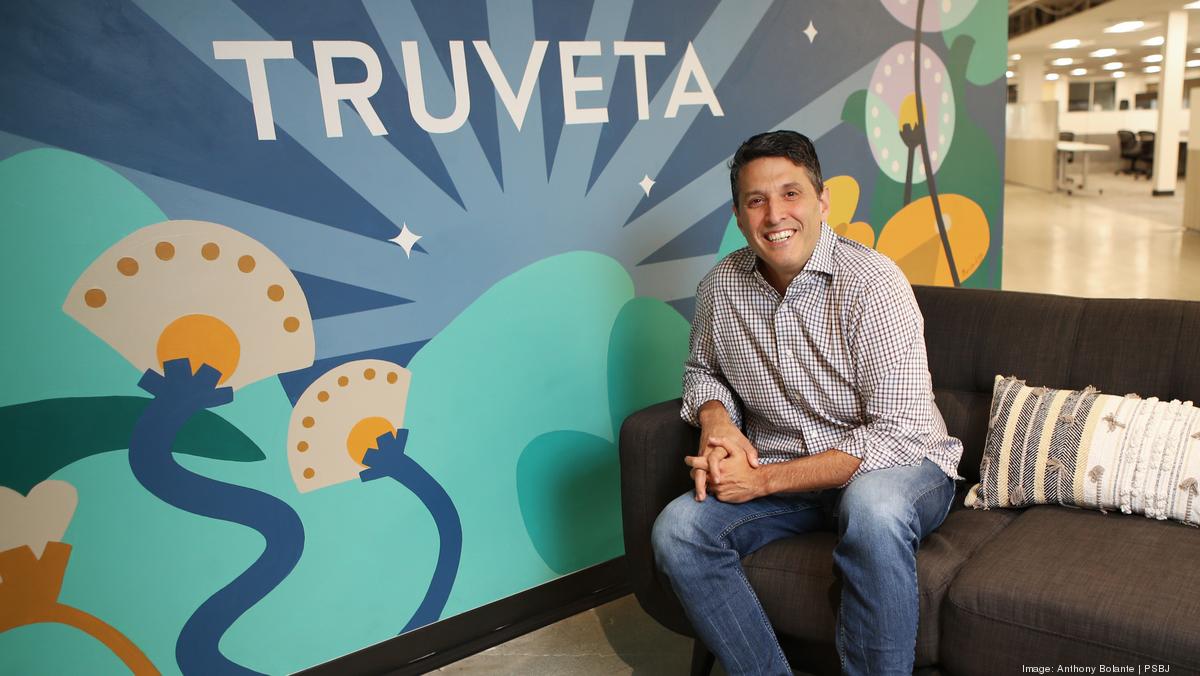
Myerson retired on September 15, 2026. Nanduri and Ahern became interim co-CEOs while the board searches for a successor. Myerson’s farewell reported more than 140 million patient journeys, 30 health-system partnerships and 500 employees. The next test is whether the company keeps those institutions learning together after its founding leader leaves. A hospital’s memory is valuable. Making that memory useful requires a relationship that lasts.
Follow the questions
Explore Truveta, Intelligence and the company blog.
LinkedIn · X · Instagram · Facebook
Watch the Boston Scientific collaboration discussion or browse the official video channel. The October 14, 2026 webinar includes a live product demonstration.