Somewhere in an oncology clinic, a research coordinator opens a patient chart. The record may contain a scan, an old pathology note, a drug stopped after a bad reaction, and a molecular test whose result sits in a PDF nobody thought to search. The question is simple: does this person qualify for a trial? The answer is not. It must be assembled from documents written by different people, at different times, for different purposes.
Mendel.ai was founded to do that assembly at scale. The San Jose company reads structured and unstructured clinical data, links the pieces into a patient journey, and lets researchers ask questions of the result. Its most interesting public test, though, revealed an awkward truth about automation: a better answer can still take the same amount of time.
- Mendel sells clinical data software to life sciences companies, care providers, and research teams.
- Its Hypercube platform pairs language models with a clinical hypergraph to search charts, define cohorts, and support trial screening.
- In a 356-chart randomized analysis, assisted reviewers were more accurate than reviewers alone. The completed study found similar review times.
- The practical idea is to put AI where a human can inspect its evidence, then measure the whole workflow.
The patient chart is a badly indexed library
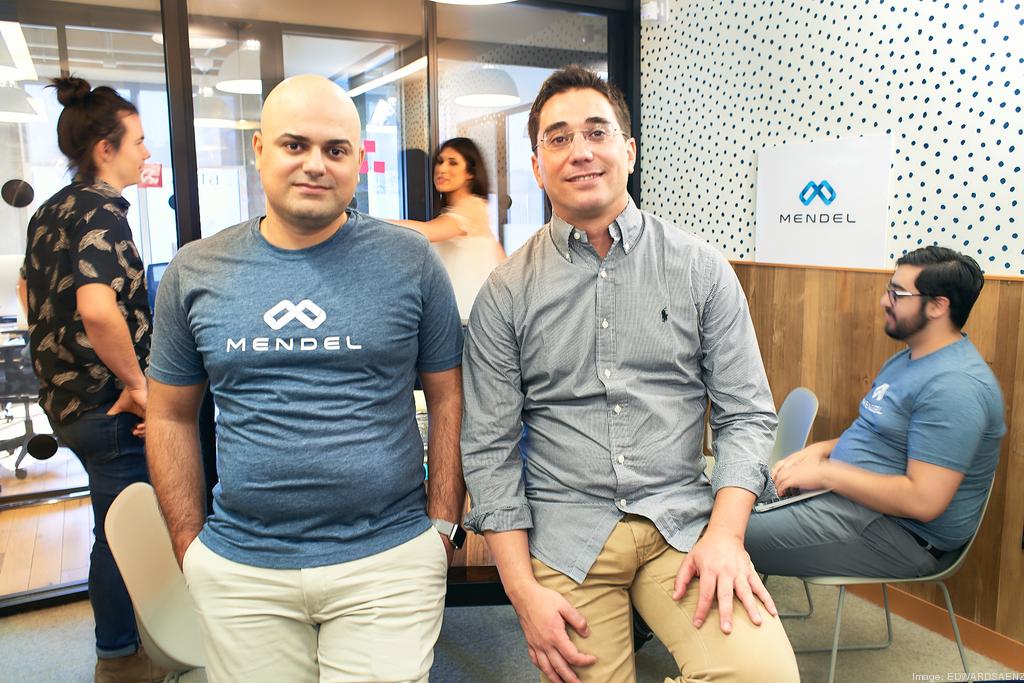
The founders make an apt pair. Karim Galil trained as a physician; Wael Salloum studied computational linguistics. They began in a two-person Silicon Valley office in 2017. A doctor knows why “fatigue” might matter; a linguist knows how treacherous that word becomes when a machine has to decide whether it was a symptom, a treatment side effect, or a complaint recorded years before the diagnosis. Their company lives in the gap between those two kinds of knowledge.
Galil once offered a bracing analogy: “Imagine the internet without search engines, that’s exactly what medical records are like today.” It is more than a clever line. Electronic records contain searchable fields, but the clinical clues often live in notes, scans, faxes, and PDFs. They contradict one another, repeat old facts, and omit context. A straightforward database query can miss a patient who qualifies; a fluent chatbot can invent certainty where the chart contains none.
Mendel’s answer is a layer between the raw record and the question. Its software extracts facts from clinical text, resolves their timing and relationships, and stores them in what it calls a clinical hypergraph. A large language model makes that structure approachable in ordinary language. The graph is meant to keep the answer attached to what the record actually says. That is the company’s distinguishing technical bet, although the sweeping promises of “no hallucinations” and perfect explainability in its marketing deserve to be read as claims, not clinical guarantees.
The result worth arguing about
An early retrospective study at the Comprehensive Blood and Cancer Center offered encouragement. In two oncology trials that had enrolled patients, Mendel’s system found 24% to 50% more potentially eligible people than standard prescreening. It also contained an inconvenient third result: in a trial that had failed to enroll, neither the standard approach nor the AI found a suitable patient. Software cannot conjure eligibility from an empty pool.
The later test was more rigorous. Research coordinators reviewed records from patients with lung or colorectal cancer, with and without Mendel’s annotations. Physicians had prepared a reference standard. The 2024 interim analysis of 74 charts suggested a time saving: 34.1 minutes per review with AI assistance versus 43.9 without. It did not yet establish overall accuracy superiority.
Then the full 356-chart analysis arrived. Human-plus-AI review scored 76.1% chart-level accuracy, against 71.5% for human review alone. The model by itself scored 59.9%. The team had the edge; the machine, left to its own devices, did not. Better recognition of biomarkers and cancer stage did much of the work. Yet median review times in the final conference abstract were virtually identical: 32.1 minutes for the assisted group and 31.8 for the unassisted group. The earlier speed signal did not survive the larger analysis.
Chart-level eligibility accuracy against a physician-created reference standard. Mendel funded the study; the conference abstract reported similar review times in both human groups.
That is a better healthcare story than the customary promise of liberated hours. A trial candidate missed because a biomarker result hid in a document is a real operational problem. More accurate screening matters even when the coordinator still spends half an hour on the chart. At the same time, this was a specific study: two coordinators, one community oncology setting, two cancer types, and a defined set of eligibility criteria. It supports a narrower conclusion than “AI solves clinical trials.”
What the product actually buys
Hypercube is now a suite. Cohorts helps researchers define patient groups; Charts lets users interrogate records; Analyst offers low-code data queries; Redact removes identifying information; and a build-your-own option lets organizations tailor clinical copilots. Resolve, announced in 2022, was built to consolidate the patient’s history into a coherent timeline. These are enterprise tools, not a consumer app that diagnoses a visitor on a phone.
A biopharma team might use the platform to estimate how many patients meet a protocol before opening a trial site. A research coordinator might check whether a patient’s tumor stage and prior treatment fit the enrollment rules. A data group might create an analysis-ready cohort or review redacted records. The common task is to turn a large, ungovernable archive into a set of questions people can ask and audit.
The company sells into a market crowded with alternatives: manual abstraction teams, general-purpose AI models, and clinical data vendors such as ConcertAI, COTA, Saama, and Verantos. Mendel’s pitch is that its clinical graph handles time and relationships that a plain keyword search misses, while its language interface spares a clinician from writing a query. A 2024 Mendel benchmark reported gains over a GPT-4 retrieval setup on cohort search, but that company-run comparison should not be mistaken for a universal ranking of clinical AI systems.
What did it cost? A lot of patient work and a lot of capital. Mendel announced an $18 million Series A in 2021 and a $40 million Series B in 2022, after years of research and development. Its public materials do not give a standard Hypercube price; enterprise buyers appear to purchase or deploy it through direct arrangements and cloud marketplaces. That distinction matters. Funding tells us the scale of the bet, not the price a hospital would pay or the savings it would see.
Distribution follows the data
The platform appeared on Google Cloud Marketplace in August 2024 and as a Snowflake Native App the next month. Both moves addressed a prosaic enterprise objection: sensitive patient data is hard to move. Snowflake’s native deployment was designed to limit data egress. In 2025, AWS described Mendel’s migration to its infrastructure and its work on clinical copilots. Meta, meanwhile, detailed how Mendel fine-tuned Llama models for medical language tasks. None of these partnerships is a clinical endorsement; all make the product easier to place where customers already work.
The company’s likely customer is not shopping for a chatbot. It is paying for a more usable record of what happened to patients, and for answers traceable enough to survive a skeptical clinician’s follow-up. This is why the blend of machine extraction and human judgment is central. In the randomized study, the best-performing unit was neither the human alone nor the AI alone. It was the person with better organized evidence.
“Imagine the internet without search engines, that’s exactly what medical records are like today.”Karim Galil, co-founder and CEO
The lesson travels beyond oncology. Start with a narrow decision whose correct answer can be checked. Make the supporting evidence visible. Compare the whole human workflow against current practice, including the minutes consumed and the errors that remain. Mendel’s completed trial offers both a reason to keep building and a reason to keep measuring. Accuracy moved. The clock did not. In medicine, that is still a finding worth reading to the end.