Peter Foley had a reasonable theory. People would buy a sexual-health test to use at home because they wanted privacy. In a 2016 interview, the LetsGetChecked founder explained how that theory met the customer. Privacy mattered, but another obstacle kept appearing: people at work or university could not find the time. A clinic visit required a hole in the calendar. The kit could fit into the life they already had.
- Start with the calendar. Move sample collection into the home.
- Connect the handoffs. Add laboratories, clinical support and pharmacy capabilities.
- Reach beyond the shopper. Run programs for health plans, employers and providers.
“Time was an issue for people at work or university.”
Peter Foley · 2016
It is a useful distinction. Embarrassment suggests one kind of business: discreet packaging for a sensitive purchase. Lack of time suggests something much larger. Cholesterol checks, thyroid tests and preventive screenings all compete with the same meetings, shifts and school runs. LetsGetChecked’s subsequent expansion makes sense when viewed through that second problem.
The laboratory stays in the laboratory
The company, founded in Dublin by Foley, sends out collection kits. Depending on the test, a customer supplies blood, urine, a swab or another sample, then returns it using prepaid shipping. A laboratory performs the analysis. Results arrive in a secure account, with medical support available to explain what comes next. For standard tests, the advertised turnaround is roughly two to five days after laboratory receipt.
The distinction between collecting and analyzing deserves attention. The box does not diagnose anything on the kitchen table. It moves one task out of the clinic while retaining the laboratory and clinical review behind it. That is where the company’s expertise sits: making a medical process work across somebody’s home, a delivery network, laboratory equipment and a clinician’s screen.
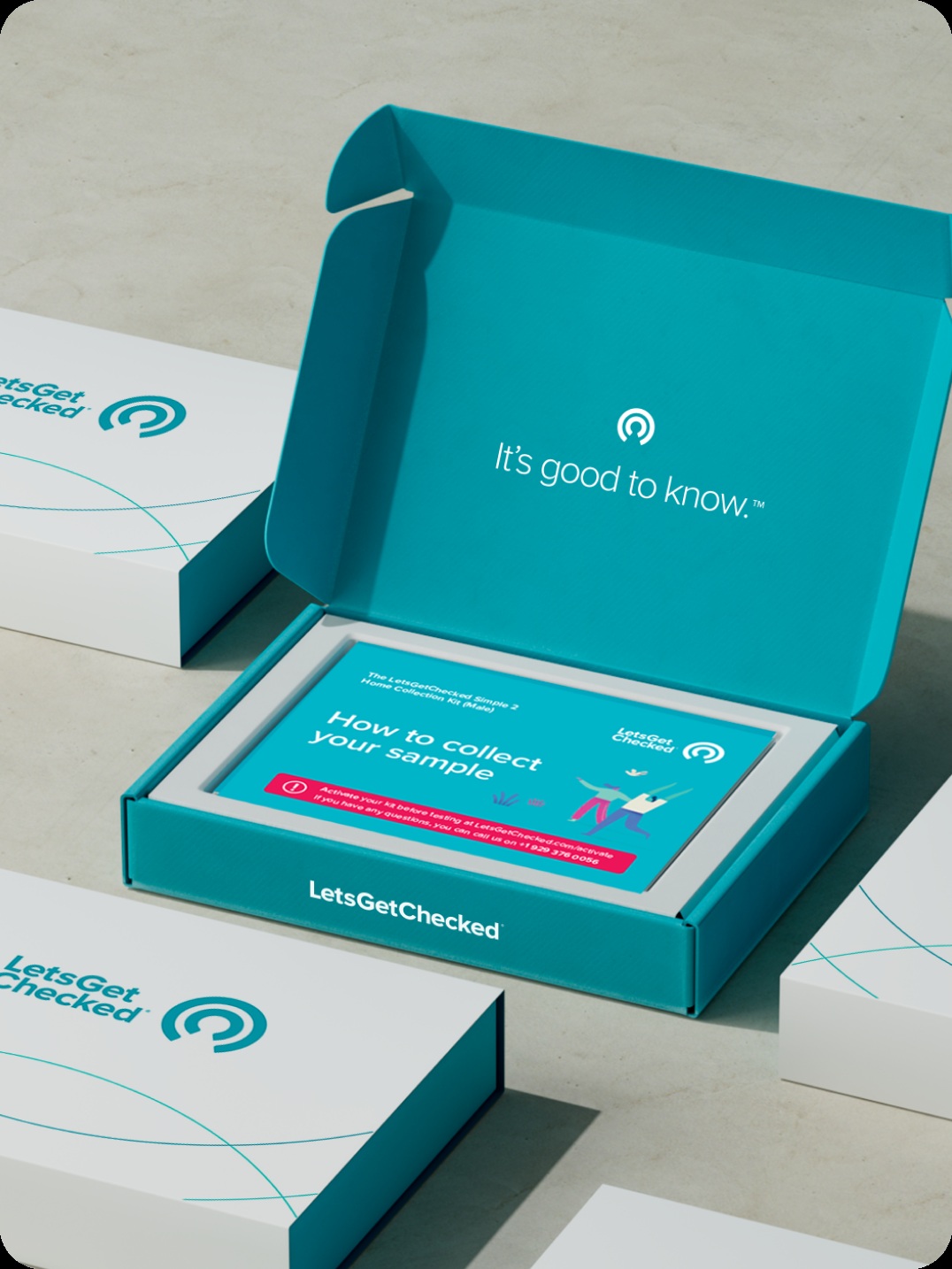
In November 2023, the FDA authorized Simple 2, its home collection system for chlamydia and gonorrhea. Adults aged 18 and older can provide urine or a vaginal swab; the laboratory uses Hologic’s Aptima technology. The authorization attached to a particular system, with specified samples and testing, giving substance to an otherwise rather slippery phrase: home testing.
- 01Collect
at home - 02Return
the sample - 03Laboratory
analysis - 04Clinical
support
Buying the next step
A result creates another appointment problem. Someone must interpret it, decide whether treatment is appropriate and help the patient obtain that treatment. LetsGetChecked began assembling more of those steps. The acquisitions tell the story more clearly than the usual language about platforms.
BioIQ, acquired in 2022, brought experience serving health plans and employers. Its relationships extended the business beyond individual shoppers toward organizations responsible for whole populations. The Veritas Genetics and Veritas Intercontinental acquisitions added genomic sequencing and interpretation. These were different purchases for different jobs: reaching people, then learning more about their inherited risks.
Buying those capabilities was not frictionless. The planned BioIQ merger led to a lawsuit after BioIQ accused LetsGetChecked of trying to withdraw. In March 2022, the companies agreed to dismiss the case, each bearing its own costs. Completion followed. It is a reminder that the neat acquisition diagram leaves out the negotiations required to make the pieces belong to one business.
Truepill supplied another piece. LetsGetChecked announced completion of the digital pharmacy acquisition in October 2024. Its stated purpose was to connect testing with treatment over time. By May 2025, the combination had become the foundation of Fuze Health, with Alto joining that week. LetsGetChecked remains a name patients encounter, now inside a broader screening, genomics and pharmacy business.
The customers now include health plans, employers, providers and life sciences companies, alongside consumers. A health plan can use home screening to reach members overdue for care. A provider can use genetic services without building the entire operation. LetsGetChecked’s current website reports more than 5,000 organizations served. The business sells both individual tests and the machinery for running programs.
Convenience has an operating bill
That machinery required capital. A $30 million Series B in 2019 targeted technology, manufacturing and North American logistics. A $71 million Series C followed in 2020. The $150 million Series D in 2021 supported the move toward fuller virtual care and accompanied a reported valuation above $1 billion. Those are historical financing milestones, rather than a present-day price tag for the business.
For a customer, cost depends on the test and how it is obtained. Consumer purchases, employer-sponsored screening and insurance-billed clinical services have different economics. The hereditary cancer service introduced in April 2025, for example, combined multigene panels with in-house counseling and a provider portal; its announcement said it accepted major insurance plans. An insurance relationship still leaves individual coverage and eligibility questions to resolve.
Everlywell offers overlapping home tests. Conventional laboratory services remain an alternative. LetsGetChecked’s competitive argument rests on how much of the journey it can coordinate: kit production, shipping, laboratory analysis, clinical contact and access to pharmacy services. Owning more steps creates more opportunities to smooth a handoff. It also creates more steps to manage.
The box still needs a person
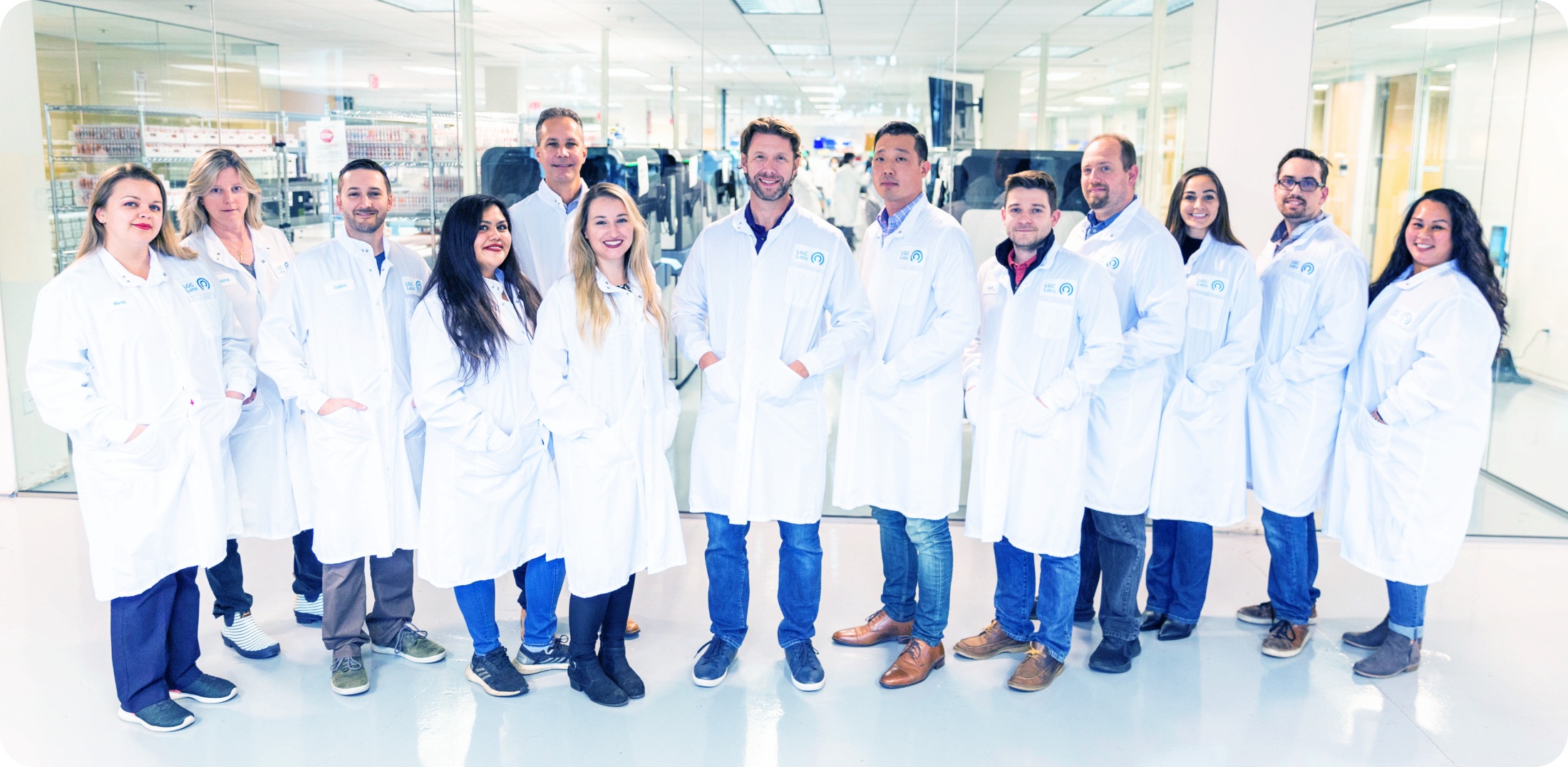
There is an unglamorous condition underneath the convenience: the sample must be usable. Instructions must be understood, collection completed and the package returned. Clinical support must then make a result useful. The practical lesson for another business is to map those moments of effort before adding features. Removing one appointment helps only if the replacement process is manageable.
The model also depends on what happens outside the box. A returned sample cannot provide a physical examination. A screening result may prompt further investigation, and a genetic finding needs interpretation in context. For organizations evaluating the service, the useful questions concern completion and follow-up: who returns a sample, who receives an explanation, and who reaches the next appropriate step? Counting shipped kits answers only the first part of the operational story.
Even the product details resist an easy slogan. ImPress, the company’s capillary blood lancing device, won a Red Dot design award and received FDA clearance in January 2025. That clearance covered healthcare professional use; it explicitly excluded at-home collection and lay users. A device associated with a home-health company can have a narrower permitted setting.
The expansion continues. In August 2026, LetsGetChecked announced a Waters partnership offering Onclarity HPV home self-collection, with laboratory testing for 14 high-risk HPV genotypes. Oonagh O’Brien, now listed as its CEO, described the aim as making preventive care easier to obtain. It returns the story to Foley’s early discovery. A test may exist, and a person may want it. The business opportunity lies in helping those two facts meet in an ordinary week.