The San Francisco company that looked at an 80-year-old test, asked one obvious question - and made the Pap smear optional.
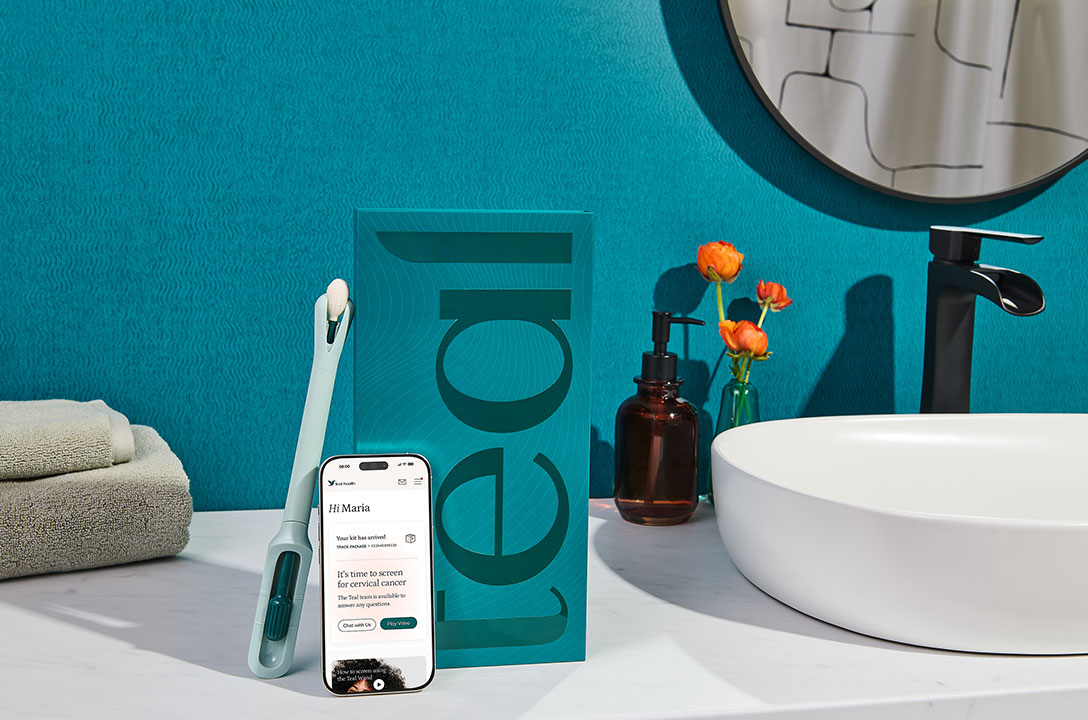
It shows up like any other parcel - a tidy box on a doorstep in any of the fifty states. Inside is a device that looks unremarkable, a little like an elongated tampon. What it replaces is anything but unremarkable: the cold table, the paper gown, the speculum, the appointment booked three months out and then quietly skipped. For roughly one in four women who fall behind on cervical cancer screening, that skipped appointment is where prevention quietly fails.
Teal Health built the thing in the box. The company makes the Teal Wand, the first and only FDA-authorized at-home self-collection device for cervical cancer screening in the United States. A person collects their own sample, drops it in the mail, and a lab runs the same Roche cobas HPV test a clinician would order. Results land in a portal within about a week. A Teal provider reviews screening history on a short virtual visit and coordinates follow-up if anything needs a closer look.
The pitch fits on a sticker: skip the stirrups. The science underneath it is less flippant - self-collected samples matched clinician-collected ones, detecting cervical precancer 96% of the time.
Co-founder Dr. Avnesh Thakor, an associate professor at Stanford, was, in his words, shocked by the lack of innovation in a screening process older than the ballpoint pen. He had a self-collection prototype. What he didn't have was a company built around the person holding it.
Enter Kara Egan, a twenty-year veteran of finance, health, and technology, introduced by a mutual friend. Together they reshaped the prototype into the Teal Wand and wrapped it in a telehealth platform designed around how women actually live. Egan's explanation for why this took until the 2020s is disarmingly simple.
I think the biggest reason was we never asked women if they wanted something better.
Order a kit online and complete a brief virtual visit with a Teal provider to review your screening history.
Use the Teal Wand to collect a sample at home, seal it, and mail it to the lab for Primary HPV testing.
See results in your Teal portal within about a week. Providers coordinate any follow-up care you need.
The FDA-authorized at-home self-collection device. Ergonomically designed for a wide range of bodies and health-literacy levels, it captures a vaginal sample analyzed with the clinically validated Roche cobas HPV test.
A women's telehealth experience: a quick virtual provider visit, a results portal, and coordinated follow-up - so a single screening becomes ongoing care rather than a one-off transaction.
Teal sells direct to consumer. The kit bundles the device, the lab test, and the provider review. It's HSA/FSA eligible and accepted by major insurers including Cigna, Aetna, Anthem Blue Cross, Blue Cross Blue Shield, and United Healthcare.
Figures from Teal Health public pricing. Bars scaled to the highest listed price.
The company is founded and raises early capital to turn a Stanford prototype into a product.
Led by Forerunner Ventures, with Serena Ventures and testing firm Labcorp on board.
A National Cancer Institute grant backs development and clinical validation of the Teal Wand.
Led by Emerson Collective and Forerunner; backers include Labcorp, Metadora, Serena Ventures, and Chelsea Clinton.
The first and only at-home self-collection device for cervical cancer screening clears the FDA.
After a phased rollout that began in California, screening reaches the whole country by mail.
The Teal Wand runs the same Roche cobas HPV test your doctor would order - you just collect the sample yourself.
The company is headquartered in San Francisco's Presidio; devices are manufactured near Sacramento.
Tennis champion Serena Williams (via Serena Ventures) and Chelsea Clinton are among the backers.
It earned an FDA Breakthrough Device Designation before authorization.
Company values, stated plainly: Expect Exceptional. Elevate Women. Learning, every day.
This is about accessibility, comfort, and dignity.
Cervical cancer is nearly 100% preventable with routine screening - and yet it still kills, largely because too many people fall behind. Teal aims squarely at that gap: women and people with a cervix who are due to screen but avoid or delay the clinic. The product's whole logic is to remove the friction that turns "I'll book it later" into years.
It still looks unremarkable - a parcel, a device shaped a bit like a tampon, a prepaid mailer. But the thing it quietly removes is a hundred years of inconvenience that prevention couldn't afford. The appointment that got skipped doesn't get skipped, because there is no appointment to dread. The sample that never got collected gets collected, on a Tuesday night, at home.
Teal Health didn't cure anything. It did something less glamorous and arguably harder: it made the test small enough, comfortable enough, and ordinary enough that people will actually take it. A box on a doorstep, and a question someone finally thought to ask.
WATCH · interviews & product
► Teal Health on YouTube - product demos & explainers