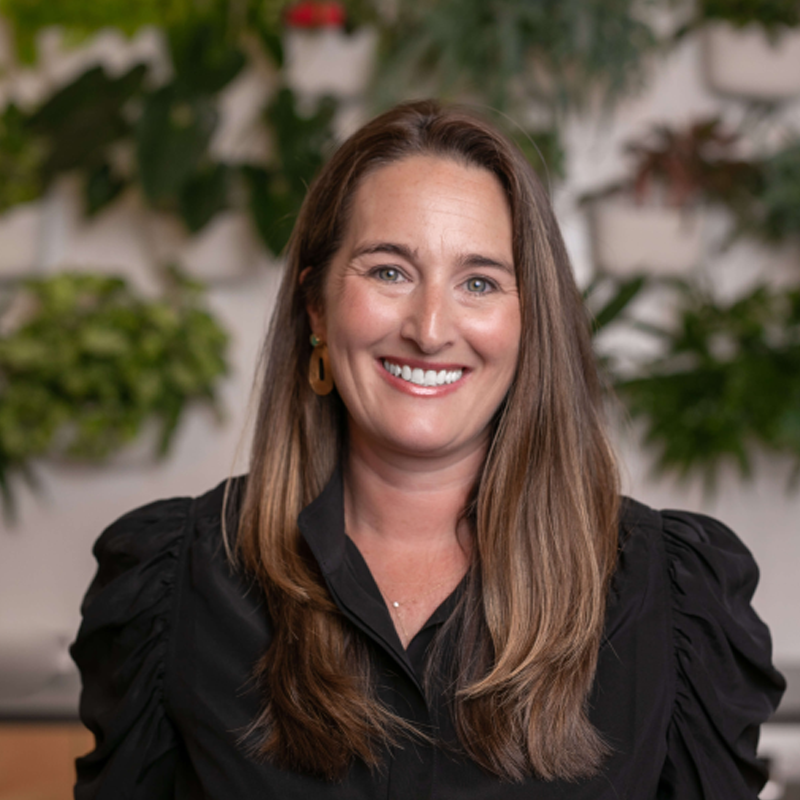
The Wand, the Wharton MBA, and the 80-Year-Old Process Nobody Fixed
In 2020, while the world was locked indoors and questioning everything about how medicine gets delivered, Kara Egan was doing math. She had spent years in venture capital, first at .406 Ventures, where she helped raise an inaugural $170 million fund, then as a Principal at Emergence Capital, one of Silicon Valley's go-to firms for enterprise software. She had read thousands of pitch decks. She had funded dozens of companies. And she kept noticing a particular gap: the tools women need to manage their own preventive care hadn't changed in a generation.
The standard cervical cancer screening had been around since the 1940s, required an office visit, a speculum, and often a scheduling lag of weeks or months. In 2020, roughly 40% of eligible women in the United States weren't current on their screenings - not because they didn't care, but because they faced barriers: no appointment availability, no transportation, no time off work, discomfort with the procedure, lack of insurance. The gap between who should be screened and who actually was screened was enormous. And, critically, nobody was closing it.
Egan decided to stop watching from the cap table and start building. She co-founded Teal Health with Dr. Avnesh Thakor, an interventional radiologist and Associate Professor at Stanford who hand-built the first prototype of a self-collection device. The company's name comes from the color of cervical cancer awareness. It wasn't accidental branding - it was a signal about what the company was for.
As a CEO and mother of two, with considerable experience navigating the healthcare system to care for aging loved ones, Kara is driven to create solutions that value a woman's time.
Teal Health, Official ProfileFrom Sail to Scale
Before she was a founder or a VC, Egan was an All-American sailor and captain of the nationally ranked Stanford sailing team. It's worth pausing on that. Competitive collegiate sailing means reading conditions in real time, making rapid adjustments under pressure, and competing against sailors who trained their whole lives for the same outcome. The sport rewards people who don't freeze when the wind shifts - and the FDA regulatory pathway for a novel medical device is nothing if not an unpredictable headwind.
At Stanford, Egan studied Management Science and Engineering - a field that trains students to solve complex systems problems, not just mechanical ones. After Stanford, she moved through finance (Arcadia Partners), then venture (both .406 Ventures and later Emergence Capital), punctuated by operating roles at companies like Zendesk and Stitch Labs, where she led product marketing during high-growth phases. She added a Wharton MBA. She completed the Kauffman Fellows program, Class 23, an elite fellowship for investors that has produced some of the most prominent venture capitalists of the past two decades.
By the time she left Emergence in 2020, she had logged enough hours on both sides of the table - founder and investor, operator and backer - to know exactly what she was signing up for. She signed up anyway.
What Teal Actually Built
The Teal Wand is a self-collection device for at-home HPV testing. HPV - human papillomavirus - is the cause of nearly all cervical cancers. Catching it early, through regular screening, is what turns a potential cancer diagnosis into a manageable clinical finding. The Teal Wand lets users collect their own vaginal sample at home, which is then tested using the cobas HPV assay from Roche - the same gold-standard diagnostic used in clinical settings.
The critical word there is "same." Teal's pitch was never that home testing was good enough. The SELF-CERV clinical trial, which enrolled 609 participants across 16 sites with intentional demographic diversity, found that self-collected samples matched clinician-collected samples in their ability to detect cervical precancer - 96% detection accuracy in both cases. The results were published in JAMA Network Open in 2025, providing peer-reviewed validation for what was then still a novel category of medical device.
The FDA authorized the Teal Wand in May 2025, giving it the designation as the first and only FDA-authorized at-home self-collection device for cervical cancer screening in the United States. The agency had previously granted the device Breakthrough Device designation, which expedited the review process. From California launch in August 2025, to New York and Florida in September 2025, to all 50 states by January 2026 - the expansion moved quickly once the authorization was in hand.
The service is end-to-end: the Teal Wand ships to your door, you collect the sample, you return it in a prepaid kit, and a virtual provider reviews your results and walks you through next steps. At $99 with in-network insurance or $249 without, it's designed to be accessible. The kit is HSA/FSA eligible. The company partners with Labcorp for processing. Nothing about this was accidental.
94% of women in the clinical trial preferred at-home collection to in-person screening with a speculum. 97% found the device easy or very easy to use.
SELF-CERV Clinical Trial DataThe Capital Behind the Cause
Teal Health's investor list reads like a deliberate casting call. The $8.8 million first seed round in January 2023 brought in Emerson Collective (Laurene Powell Jobs' philanthropic and investment organization), Serena Ventures (Serena Williams' fund), Metrodora Ventures (Chelsea Clinton's fund), and Felicis Ventures. The follow-on $10 million seed in January 2025 was led by Emerson Collective and Forerunner, with Labcorp joining as a strategic partner. Total funding reached $23 million.
These are not passive backers. Emerson Collective, Serena Ventures, and Metrodora each have explicit missions connected to equity, access, and advancing opportunities for underrepresented communities. The alignment between who invested and why Teal Health exists is unusually clean for a startup at this stage. Egan didn't just raise money from people who believed in her - she raised it from people with skin in the same game she was playing.
The Gap She's Filling
Cervical cancer is overwhelmingly preventable with early detection. The fact that it still kills roughly 4,000 American women per year is not a scientific failure - it's an access failure. The populations with the highest rates of cervical cancer mortality are often the same populations with the worst access to routine gynecological care: rural areas, low-income communities, communities of color, women who work multiple jobs and can't take a half-day for a preventive appointment that they didn't have any symptoms requiring.
The SELF-CERV trial was designed with this in mind. The 609 participants represented racially, age, and socioeconomically diverse backgrounds - because a device that only works for well-resourced patients with time and proximity to a gynecologist isn't actually solving the problem. Egan has described her mission in terms of equity explicitly and repeatedly: making screening accessible to the women who need it most, not just the women already using it.
That framing - the specific population being underserved, the specific barrier being removed - is what distinguishes Teal Health from a wellness gadget play. The clinical rigor, the JAMA publication, the FDA authorization, the Labcorp partnership: each one is a piece of infrastructure for reaching a group of patients that the existing system was quietly leaving behind.
What the VC Years Taught Her
There's a version of the Teal Health story where the VC background is background noise. Egan is a founder; her investing past is just her past. But that misses something. She spent years evaluating companies in enterprise software and health IT, learning to pattern-match on which bets pay off and which don't. She understood regulatory risk, capital efficiency, clinical validation timelines. She knew how investors would pressure-test her clinical data and her market size assumptions. That knowledge didn't just help her build a company - it helped her build it the right way from the start.
She spoke at the Milken Institute Global Conference in 2024, appeared on CNBC when the FDA authorization was announced, was featured in Healthcare Brew, Fortune, and the Wharton alumni magazine. The coverage has a consistent throughline: this is someone who understood exactly what she was building, exactly who it was for, and exactly why no one had built it before. The "why no one had built it before" part is the most instructive. The answer, usually, is that the problem was real but the patients didn't have the lobbying power to force a solution. Egan had the investor relationships to fund one instead.
There's also this: she's a mother of two. She has navigated the healthcare system to care for aging family members. The product she built is one she would use. That's a different kind of founder conviction than building in a category you only know from pitch decks.