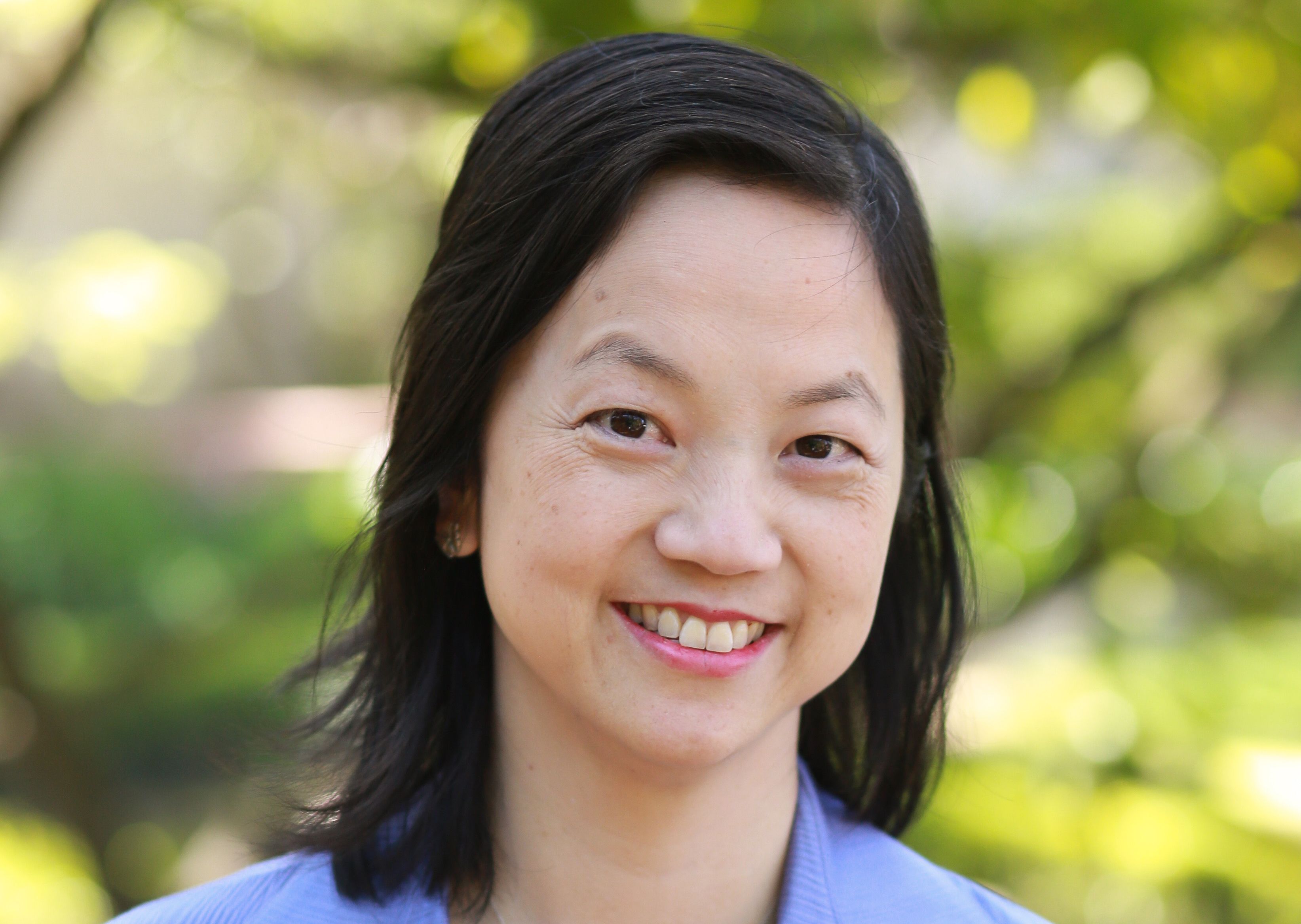
Here is a fact that sounds invented: Sophia Yen showed up to early investor meetings with a uterus necklace around her neck and an MIT class ring shaped like a beaver on her finger. She was pitching a women's health telehealth company in a room that was probably 90% men who had never heard the word "dysmenorrhea." She raised the money.
That image - the necklace, the ring, the room - is a perfect compression of how Sophia Yen operates. She does not separate who she is from what she builds. The uterus necklace is not a provocation. It is just accurate.
Business in the Blood
Sophia graduated MIT in 1993 with a degree in Biology. Her grandfather was an entrepreneur. Her parents founded a Silicon Valley chip manufacturing company. She did their accounting starting in the fourth grade. "I have business in my blood," she has said. She means it literally - the ledgers were on the kitchen table.
After MIT she went to UCSF for her MD, then to UC Berkeley for an MPH in Maternal Child Health, then through a Pediatrics residency at Children's Hospital Oakland, then through an Adolescent Medicine fellowship back at UCSF. She became board certified in both Pediatrics and Adolescent Medicine in 2003. She joined Stanford Medical School as a Clinical Associate Professor. She published in Obstetrics and Gynecology, Pediatrics, and Archives of Pediatrics & Adolescent Medicine.
For over twenty years she watched teenagers and young women navigate a system designed to make healthcare hard. She saw the anxiety around refilling prescriptions. She heard the stories of women skipping doses because a pharmacy trip felt impossible. She kept notes.
What Pandia Actually Does
Pandia Health, which Yen co-founded in 2016 with a pharmacist and three collaborators, is deceptively straightforward: women fill out a health questionnaire, see a licensed doctor online, and get their prescription delivered to their door with automatic refills. No pharmacy trip. No insurance labyrinth. No monthly re-approval dance.
The company calls it "pill anxiety" - the low-grade dread of managing refills, tracking down prescriptions, worrying about gaps in coverage. Pandia eliminates it. Not by disrupting healthcare delivery. By actually doing healthcare delivery properly.
What makes it different is in the founding DNA. Pandia is, as Yen never lets anyone forget, the only women-founded, women-led, doctor-founded, physician-led birth control and menopause telemedicine and medication delivery service in the United States. Every word in that sentence does real work. The doctors are OB/GYNs, adolescent medicine specialists, and family medicine physicians - not generalists with a prescription pad. The AI medication-matching tool draws on millions of data points to connect patients with the right hormonal treatment for their specific situation.
The Numbers That Matter
Pandia's NPS score sits at 81 - roughly twice the average for healthcare providers. Its retention rate for patients new to birth control pills is 82%. These are not vanity metrics. In a sector where patients routinely fall out of care because of friction, administrative overhead, or simple inconvenience, 82% retention is an argument.
The company raised a Seed round in 2018, backed by Precursor Ventures, Backstage Capital, Allectus Capital, and ONE WORLD Impact Investments, among others. Total funding stands at $22.15 million. Annual revenue reached $3 million. The team: 37 people, all operating from Sunnyvale.
In January 2024, Pandia expanded into menopause care - bringing the same doctor-led, delivery-first model to midlife hormonal health. In August 2025, a strategic partnership with Vivant Health extended the platform's reach further into health equity work.
Advocacy as Infrastructure
Yen's work is not confined to Pandia. She co-founded SheHeroes.org, which creates video profiles of female professionals to give girls something specific to aim toward. She co-founded the Silver Ribbon Campaign to Trust Women. She served as President of the Society for Adolescent Health and Medicine's Northern California Chapter from 2011 to 2013. She sits on the Executive Committee of the American Academy of Pediatrics' Section on Adolescent Health.
Her advocacy on menstrual equity has a characteristic Yen sharpness: "Wherever there is free toilet paper, there should be free menstrual hygiene products. It's about dignity." It is not a complex argument. That is the point.
She also advocates for what she calls "periods optional" - the clinical reality that continuous hormonal contraception can eliminate menstruation as a default, and the social argument that menstruation should be a choice, not an assumption. Twenty years of seeing teenagers miss school for period pain has a way of clarifying your position.
The Professor and the CEO
Yen still teaches at Stanford Medical School. She still sees patients at Stanford Medicine Children's Health's Weight clinic and Teen and Young Adult Clinic. The company and the clinic are not two separate lives - they are the same project run on different tracks. Her patients inform her product. Her product funds her patients' care.
She received Stanford's Outstanding Interdepartmental Faculty Member award, chosen by the OB/GYN staff. She received the Faculty Teaching Award from Stanford Medical School. Her MIT class voted her recipient of the Laya Weisner Award for the woman undergraduate who contributed most. She was named one of the Women in Medicine Legacy Foundation's "20 Years, 20 Leaders."
In 2023, Inc. named her to its Female Founders 200 list. The Entreprenista League named her Changemaker of the Year - their recognition of women using business as a lever for positive change. Both feel slightly like understatements.
Put your money where your values are, she says. She built a company to do exactly that.