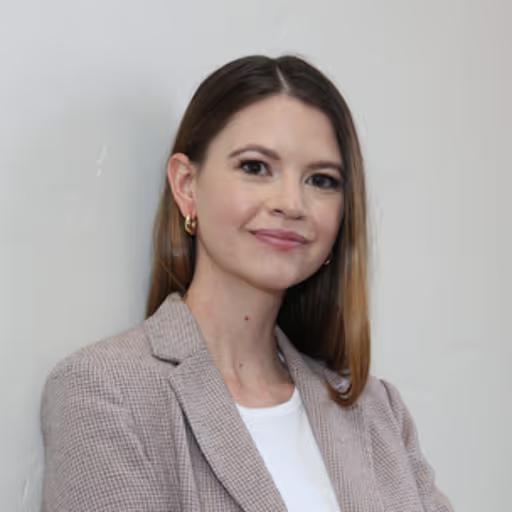
She Built the Company
from the Subway Floor Up
The moment Ellen Rudolph got her lab results, she was on the subway. She read them on her phone. Then she broke down in tears, right there on the train, in the middle of San Francisco's morning rush. The results showed toxic mold exposure, heavy metal toxicity, gut imbalances, Lyme disease, and parasites - a list so long it almost read like dark comedy. Almost. She'd spent four years and $10,000 out of pocket getting to that moment.
I was supposed to be thriving, living my best life and climbing the career ladder. Instead, it felt like I was being struck down. It was terrifying. I thought I was acutely ill and dying.
- Ellen Rudolph, Co-Founder & CEO, WellTheoryWhat makes this stranger: Ellen was already inside the healthcare industry when it happened. She had worked at Oscar Health, the tech-first insurance company, leading the product team for their marketing website. She'd left Stanford with a degree in Product Design Engineering and a fellowship from the Mayfield Program - the same cohort that produced Instagram and Gusto founders. She knew how systems were built. She had watched them fail her anyway.
At 25, working in health tech, she became completely bedridden. Doctors ran tests, shrugged, and told her her labs looked normal. She saw specialist after specialist. Each one passed her to the next. Nobody connected the dots. What she was experiencing - debilitating fatigue, brain fog, neurological and cardiac symptoms - is the invisible architecture of autoimmune disease, which affects 50 million Americans and is famously, frustratingly under-diagnosed.
The diagnostic struggle wasn't just medical. It was economic: roughly $10,000 out of pocket. It was professional: missed deadlines, missed opportunities, an entire chapter of her career shadowed by symptoms nobody could name. And it was psychological: the particular erosion that comes from being told, repeatedly, that nothing is wrong.
Finally being listened to, heard, and believed was one of the most critical parts of my own healing journey. I see you. I believe you. WellTheory was created for you.
- Ellen RudolphShe eventually got her answers through extensive lab testing - and began reversing her symptoms by treating food as medicine, using supplements therapeutically, prioritizing sleep, and addressing stress. The recovery was real. The lesson was furious: the path existed, but you had to find it yourself, at great expense, with no guide.
So in 2022, she co-founded WellTheory with her sister Claire Rudolph - who has an autoimmune diagnosis herself - and Wallace Torres, whose wife had navigated the same broken maze. This is not a founding team that stumbled onto a market opportunity. This is a founding team assembled by shared lived experience. The company is what they all needed and couldn't find.
Seed
Series A
Series A
WellTheory's care model is built on a specific premise: masking symptoms is not care. The platform deploys licensed registered dietitians and board-certified health coaches, supported by proprietary AI tools - Care Hub and Care Scribe - to deliver evidence-based, high-touch support that addresses root causes. It is telehealth that refuses to be thin.
The results have been notable. In the 18 months after commercial launch, WellTheory secured partnerships with Fortune 100 and 500 employers including Maven Clinic, Fortune Brands Innovations, and Dayforce, plus insurance partnerships with payors like Sentara Health Plans. The company achieved 10x year-over-year member growth and 5x revenue growth - numbers that led General Catalyst to lead the $14M Series A closed in October 2025.
That funding round carried an unusual footnote: every institutional investor was a female partner. In a landscape where less than 2% of total venture funding goes to women-led startups, that is not an accident. It is a statement about who was paying attention, and to what.
Ellen was named to Inc. Magazine's Top 200 Female Founders in 2023. She is also a Functional Medicine Certified Health Coach - a credential she earned alongside running the company, adding patient-facing expertise to the engineering brain. The Stanford product designer who once built retail tech stacks now builds care teams and clinical pathways, drawing on every version of herself.
WellTheory is really what I wish I had at the start of my own journey.
- Ellen RudolphWellTheory's ambition is not modest. The company is aiming to reverse the autoimmune epidemic - a word choice that carries weight. Not manage. Not treat. Reverse. That requires a belief in the evidence, a commitment to root causes, and the willingness to stay in the room with patients long enough to find them. Ellen Rudolph has been building toward that room for the better part of a decade - first as a patient, then as a student of functional medicine, now as a CEO with $33 million and a very specific reason to get it right.
From Product Manager
to Category Founder
The Journey to Here
Recognition & Milestones
Inc. Magazine Top 200 Female Founders (2023) - one of the Most Dynamic Women in Business
$33.4M total venture capital raised across Seed and Series A rounds
10x year-over-year member growth and 5x revenue growth at WellTheory
All institutional Series A investors were female partners - rare in an industry where <2% of VC goes to women-led startups
Fortune 100/500 employer partnerships including Maven Clinic, Fortune Brands Innovations, and Dayforce
Stanford Mayfield Fellows Program alumna - same cohort as Instagram and Gusto founders