Imagine a researcher with a good question and two useful databases. One belongs to a hospital. The other belongs to a national genomics program. Both contain clues. Neither can simply be emailed across town. The scientist has reached a peculiar kind of abundance: plenty of information, very little freedom to work with it. Lifebit builds software for that predicament.
- Run biomedical analysis inside the environments that hold the data.
- Connect approved research across institutions without pooling raw patient records.
- Use familiar scientific tools, with access and output controls around them.
The company sits between the people who hold sensitive health records and the people who might discover something useful in them. Its buyers include pharmaceutical companies, biobanks and public research institutions. Its proposition is deceptively tidy: let the question travel, while the records stay home. The tidiness ends where the engineering begins.
First, the researchers lost their time
In Barcelona, Maria Chatzou Dunford and Pablo Prieto Barja worked with genomic and multiomics data. Dunford told investor Connect Ventures that roughly 80% of their time went into data management and computational hassles. That is her recollection, rather than a measured industry average. Still, it captures the indignity: researchers employed to investigate biology, spending their days tending its filing system.
They built methods to reduce that burden. Other researchers used them, and the founders began to see a broader market in what had seemed a local irritation. Lifebit followed in 2017. In an early fundraising interview, Dunford explained the attraction of London: customers, talent and major genomics projects clustered around London, Cambridge and Oxford. The company went where the problem had institutional budgets.

The question travels; the records stay home
Federation means running work across separate data environments while preserving their boundaries. In Lifebit’s model, computation happens inside the custodian’s infrastructure. Approved users can query datasets and execute analyses; controlled results can then leave through an output-review mechanism called the Airlock. The name has a pleasingly literal ambition. Whatever comes out should have been checked.
Data + local compute
Data + local compute
A 2022 demonstration connected the trusted research environments of NIHR Cambridge Biomedical Research Centre and Genomics England. The project described APIs for communication between environments and a scalable airlock for controlled export. Analyses ran in place, with aggregate results brought together in a safe haven. This was a working connection between separately governed research resources, rather than an invitation to pour everything into one enormous bucket.
The practical distinction matters. A scientist can study a larger combined population without acquiring a central copy of every participant’s record. A custodian can permit useful work while retaining its environment. Federation nevertheless requires compatible questions, usable data and permission at every participating site. An elegant connection cannot manufacture consent.
A drug company wants evidence, not another silo
Boehringer Ingelheim’s relationship with Lifebit illustrates the commercial buyer. A 2021 collaboration concerned disease-outbreak detection using real-world data. In March 2022, the companies announced a platform inside Boehringer’s IT environment to support insights from external biobanks. The work included standardization, curation and connections to third parties. The buyer needed an analytical system, not merely somewhere to store files.
Lifebit’s current case study reports more than 90% faster target-identification and validation analyses. Treat that as a vendor-reported customer result, not a promise for every research project. A faster workflow can help a pharmaceutical team test a biological hypothesis sooner; it does not establish that the target will produce an effective medicine.
“All biomedical data that can be used to save lives should be used.”Maria Chatzou Dunford, CEO and co-founder
The market includes other research platforms, such as DNAnexus and Seven Bridges, now part of Velsera, as well as systems built internally. Lifebit’s distinguishing argument concerns where computation happens and how separately controlled sites collaborate. For a buyer, the useful comparison is concrete: data residency, supported workflows, output review and the effort required to operate the deployment.
The invoice follows the research room
The public pricing page offers Start, a free plan with one workspace, and three quoted tiers: Launch, Scale and Enterprise. Annual licenses include onboarding, deployment and training. Workspace counts and capabilities separate the tiers. Importantly for sensitive research, Start excludes the Airlock and data harmonization. A free account is an entry point, not the entire governance apparatus.
CloudOS supports tools such as Nextflow, Jupyter and RStudio. The wider product range tackles preparation and discovery: Trusted Data Factory harmonizes datasets, while Trusted TargetID supports target analysis. Their 2025 launch put names around two recurring jobs - making clinical information comparable and asking what it reveals about a potential treatment.
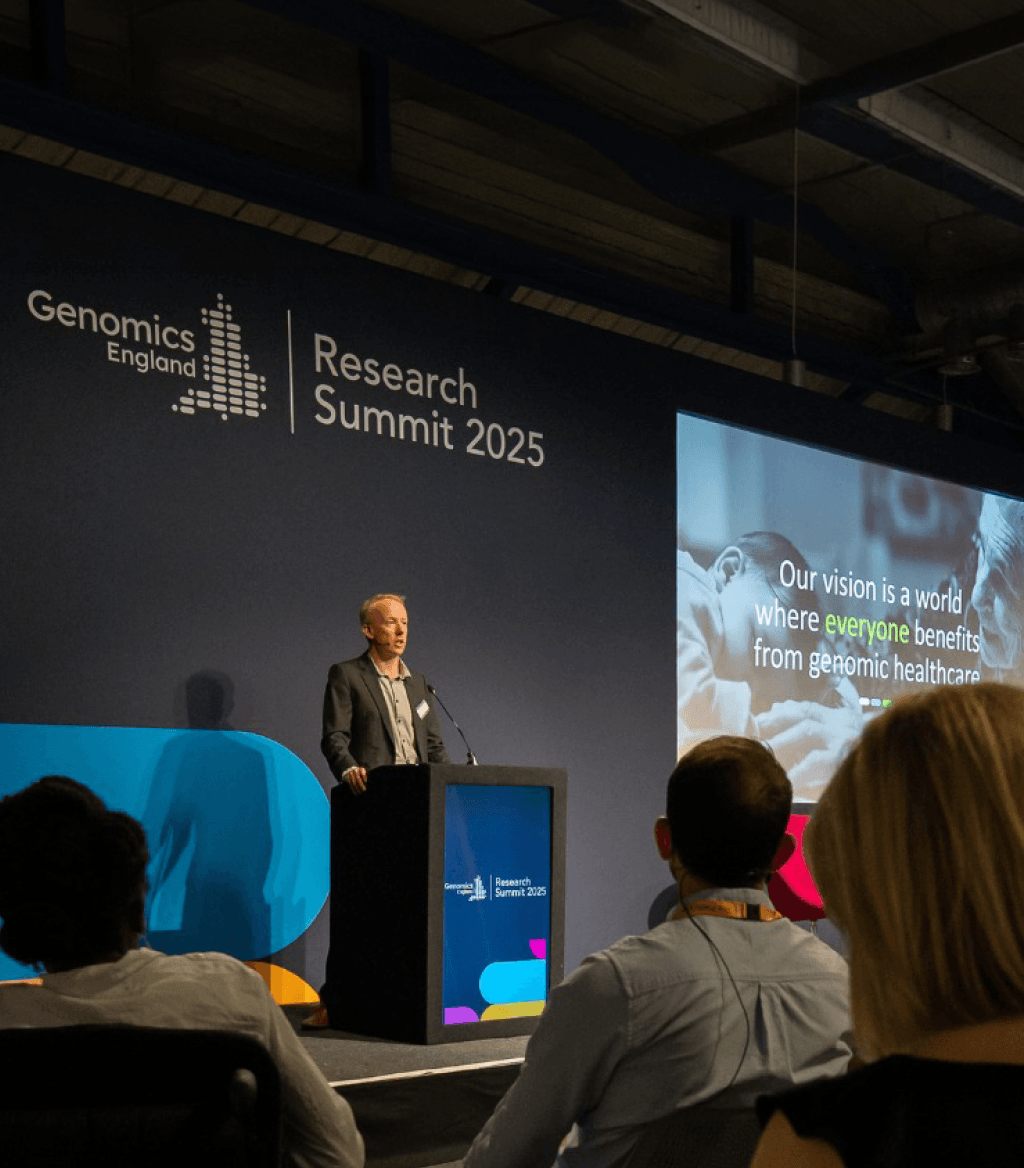
In January 2026, Lifebit announced version four of its Agentic Federated Platform in a selective beta. Its proposed conversational interface covered cohort building, analysis and troubleshooting. The announcement itself acknowledged the reason for another interface: powerful research platforms had become complicated. Easier instructions may reduce that friction; scientific interpretation still demands judgment.
The next institution opens its door
The company raised $7.5 million in its 2020 Series A and $60 million in its 2021 Series B, led by Tiger Global. Those figures describe capital invested in the business, not what a customer pays. In September 2026, Lifebit announced a three-year University of Cambridge contract for the NIHR BioResource, with deployment inside the resource’s AWS tenancy. Another substantial research collection would get tools at home.
The transferable lesson is to locate the obstacle before adding another analytical instrument. If the obstacle is institutional control, design around that control. If datasets use incompatible definitions, harmonize them before comparing answers. If outputs can reveal sensitive information, govern the exit. Lifebit’s appeal lies in assembling these unglamorous jobs into something researchers can use. A database acquires scientific value when a permitted question can finally reach it.