Consider a tube of blood. To a patient, it represents a question: what is happening inside me? To a laboratory, it presents a series of smaller questions. Who collected it? Which tests were ordered? Where is it now? Has somebody changed a result? A machine can measure what is in the tube. Keeping those answers attached to the tube is another job entirely.
- Software for the journey from test order to reported result.
- Specialist modules cover genetics, pathology, microbiology and blood services.
- Deployment takes trained people, careful budgeting and continuing oversight.
That is SCC Soft Computer’s territory. Its laboratory information systems connect the administrative and scientific steps between an order and a reported result. The revealing detail is almost comically specific: SoftLab can track stored specimens by position within a rack, the rack within a device, and the device within a location. Even the refrigerator has an address book.
The refrigerator has an address book
In April 2012, Mayo Clinic announced the completion of a multiyear laboratory-system implementation developed with SCC. It connected laboratories in Arizona, Minnesota and New England. Mayo reported real-time specimen location, more flexible ordering and reporting, and more efficient processing of client specimens. The accomplishment was coordination across a dispersed operation.
For a clinician waiting on a test, a specimen’s whereabouts matter because the next decision depends on the result. For the laboratory, the same information helps distinguish work that is progressing from work that needs attention. SCC’s market is built around making these ordinary, consequential handoffs visible.
- 01OrderDefine the test
- 02CollectIdentify the sample
- 03ProcessConnect the instrument
- 04ReportDeliver the result
One tube. Several different worlds.
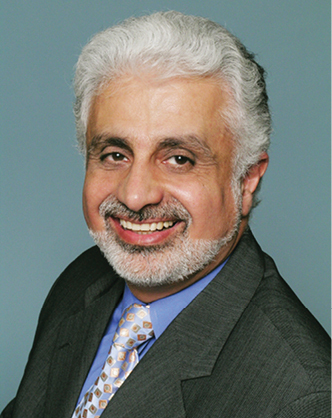
Founded by Gilbert Hakim in 1979, SCC grew around laboratory software. Hakim remains identified as founder and CEO on its company profile. Its product catalogue reads like a tour through the departments that a patient rarely sees. The repeated “Soft” prefix does considerable work: SoftLab, SoftMic, SoftPathDx, SoftMolecular, SoftGenomics. Behind the family resemblance are distinct scientific routines.
SoftLab handles orders, instrument connections and result reporting. SoftMic manages microbiology workflows. SoftPathDx supports anatomic pathology and cytology, including images and configurable reports. SoftBank.web supports transfusion services; SoftDonor.web covers donor operations. These are products for the people running tests and managing blood services, purchased by their institutions.
Genetics adds another complication: an interpretation can change as knowledge changes. SoftGenomics combines molecular and cytogenetic workflows, links family members and maintains versions of variant information. That history helps a laboratory see which information supported an interpretation. Software here must accommodate scientific revision as well as the movement of samples.

The sale continues after installation
SCC sells a configurable suite, with implementation, interfaces, training and support around it. Its website presents modular choices and cloud options. The commercial logic is expansion: an institution can connect more disciplines and operational tasks within the same product family. SoftExpressPlus extends into courier tracking, supplies and client-service work. Laboratory software reaches well beyond the bench.
The customer base spans hospitals, health systems, commercial laboratories, research and public-health settings. An April 2025 announcement described ovo labo as Quebec’s first private laboratory to implement SoftLab, working with MediSolution, SCC’s exclusive distributor in Quebec. It is a useful example of local delivery expertise accompanying a specialist product.
Buyers can also consider laboratory platforms from Clinisys or laboratory functionality within Epic’s broader clinical system. SCC’s proposition centres on its range of laboratory specialties, configurable workflows and connections to other systems. The sensible comparison is how well each option handles the buyer’s actual specimens, instruments and reporting obligations.
“This system allows us to optimize our analytical processes”DR. ARTAK TADEVOSYAN / OVO LABO / APRIL 2025
The expensive part was the work around it
Western Australia provides a less comfortable lesson. In 2017, its government described an SCC laboratory-system contract worth A$47 million over eleven years, including renewal options. It planned to unite four genetics databases and connect a statewide pathology network. Those ambitions meant changing an operating service while continuing to deliver it.
A subsequent replacement-project audit forecast a total project cost of A$50.5 million, A$23.7 million above the approved budget, and a two-year delay. That project forecast and the eleven-year vendor contract measure different things. The auditors found that PathWest had underestimated its own staffing effort for customisation. Weak oversight, inexperienced project management and insufficient planning compounded the problem.
The turning point was a health-department review in 2018, followed by stronger project management, planning and budgeting. SoftLIS replaced the previous system in mid-2020. The practical lesson is to put laboratory staff time, testing and decision-making into the implementation budget before treating a software contract as a complete plan.
forecast at the time of the audit
Somebody still has to own the rules
A June 2025 audit found that PathWest’s SoftLIS supported its pathology work, while identifying serious weaknesses in the deployed environment’s encryption, access controls, vulnerability management and recovery testing. Follow-up work found remediation underway. These findings concern PathWest’s management of SoftLIS and related systems; they do not establish identical conditions across SCC customers.
SCC’s own December 2025 writing makes a related point about billing: automation can keep applying a mapping after the assumptions behind it have changed. Expert review remains necessary. A functioning interface can move information perfectly while carrying an outdated rule.
The company’s training infrastructure acknowledges that continuing responsibility. Its Soft Network Users Group dates to 1992, and members can vote on proposed enhancements through special-interest groups. Product webinars and clinical continuing-education courses give users ways to keep learning after implementation.
For another enterprise-software builder, the transferable idea is concrete: follow the work into its awkward details, preserve its history, and give experienced users a way to improve the product. For a laboratory buyer, the condition is equally concrete. A configurable system needs people who can configure, validate and maintain it. Every specimen needs a location. Every rule needs an owner.
Follow the work
Explore the products, meet the users and watch SCC’s published videos.