A customer sends one more document. Somewhere inside a company, the neat sequence of steps has just become an awkward conversation. Someone must reconsider a decision, find another colleague, or ask a question the form never anticipated. Alex Stein has built much of his working life around this small rebellion. The paperwork may be digital. It still has a talent for making plans look optimistic.
Stein is the CEO and founder of Eccentex, the enterprise software business he co-founded with Len Tokar. Its territory is case management: keeping information, tasks and decisions together while a problem works its way toward resolution. A complaint, an investigation or an application can acquire complications as it goes. Stein’s interest lies in giving the people handling it room to respond.
His career stretches from document-management software to cloud platforms and now AI-assisted work. Read across those changes and a recurring question emerges: how much effort does an organization spend moving information around before somebody can use it? The product names have grown more elaborate. The irritation is wonderfully familiar.
A swimmer learns about the next attempt
Stein’s account of his competitive temperament begins in Kyiv. He swam there, immigrated to the United States in 1980, and continued competing through a Jewish community center, school and college. Breaststroke and butterfly were among his events. Asked about the connection to business, he offered a brisk explanation: “I like to win.”
He also described reviewing losses with colleagues, working out what happened and moving forward. The appeal of the swimming comparison is its lack of mystery. A result arrives. There is something to examine. Another attempt follows. Applied to business, that becomes a preference for persistence and correction, qualities considerably less photogenic than a launch party.
It is a useful opening to his software career because it puts repetition in the picture. Building enterprise systems involves returning to a problem after the first answer has met actual users. The race has a finish. An organization usually has another queue.
Before the cloud, a document had to move
Before Eccentex, Stein was CEO and co-founder of Datamax Technologies, working in document management and business processes. Exigen Group acquired Datamax in 2000. He then held an executive role at Exigen from 2000 to 2006, overseeing government-sector product strategy, definition, execution and plans for bringing products to market.
Those are sober nouns for an occupation concerned with other people’s administrative difficulties. Documents have to reach somebody. That person needs permission to act, enough context to decide, and a way to send the work onward. A page made searchable is useful; the surrounding organization still has to do something with it.
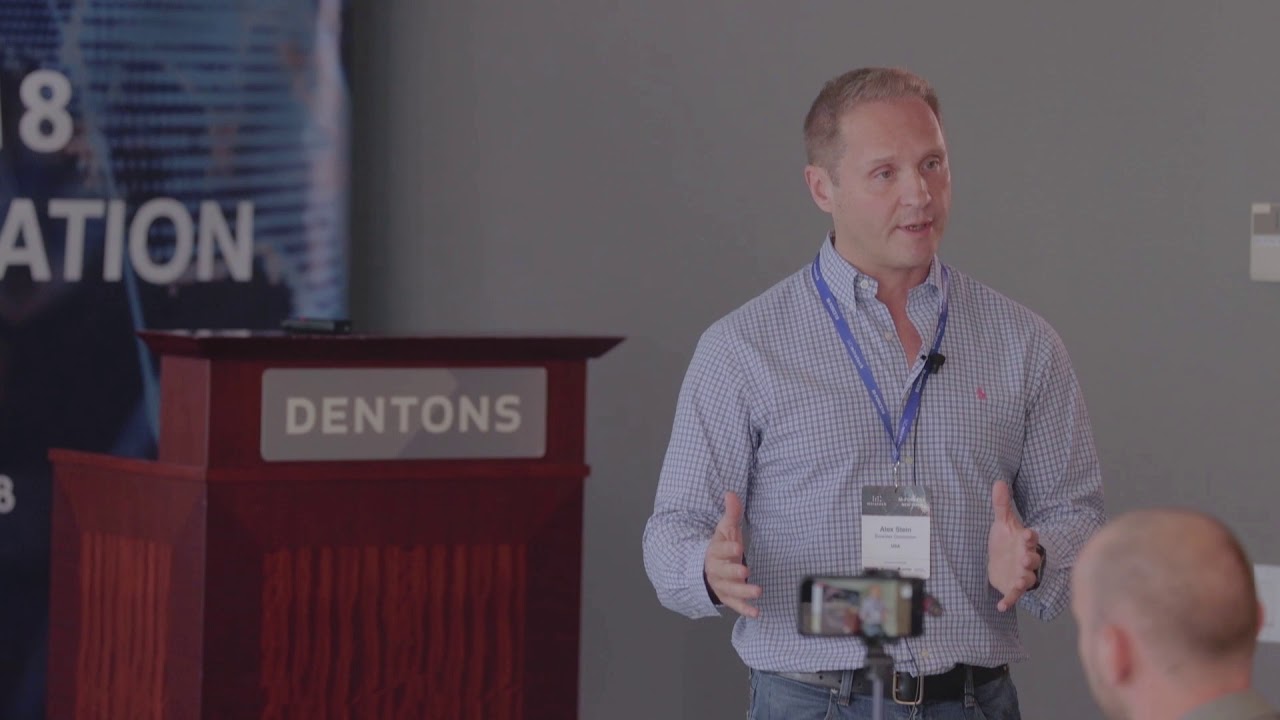
In 2013, Stein appeared in the Cloud Computing Conference at NAB program as Eccentex’s founder and chief strategy officer. His panel concerned military and government cloud requirements. The subject suited the experience he had accumulated: institutions with demanding information needs, complicated responsibilities and little reason to welcome a casual approach to implementation.
The case gets a life of its own
Eccentex took shape around cloud delivery and case-based work. Its proposition allows an organization to gather the moving parts of an unresolved matter and adjust the work as information changes. That has consequences for design. A process can have rules and deadlines while still needing an unplanned task, another review or a different route.
Consider an illustrative dispute about a bill. The initial message looks straightforward. Then an attachment contradicts an earlier record. A colleague needs to examine it. Another system contains the missing transaction. The person answering the customer now needs more than a clean inbox. Each handoff has a chance to lose the point of the conversation.
Stein was making a related argument in a 2015 essay about predictive analytics and fraud investigation. Analytics could identify something worth examining; case management could connect that signal with people, content, collaboration and follow-through. His argument also favored cloud systems for agencies facing the cost and complexity of installing enterprise technology.
The interesting part is the connection between discovering a problem and managing what follows. An alert creates work. Somebody must own it, assess information and record a decision. More alerts without a workable response can leave an institution impressively informed and thoroughly behind.
Good company for a difficult handoff
Stein’s work also has an organizational counterpart. Eccentex’s leadership pairs him with fellow founder Len Tokar, the executive vice president responsible for operations. The company describes a team spanning technology, finance, marketing, solutions and customer success. A platform meant to connect different kinds of work requires several kinds of expertise around it.
Partnerships extend that arrangement. In 2023, Stein publicly welcomed an agreement with Customer Experience Ltd., or CX Ltd., to represent HyperAutomation Cloud in Europe and the Middle East. The announcement was shared around Genesys Xperience23 in Denver. A product built to cross departmental boundaries still needs people who can explain it in a customer’s own setting.
Another 2023 announcement concerned a New Zealand telecommunications provider, with ServiceJourney integrated with Genesys Cloud CX. The intended work included customer-service operations and handling email. It is an instructive example of the terrain Stein chooses: the place where an incoming conversation becomes a collection of tasks across the business.
Email has a modest reputation for something so capable of organizing a working day against its owner’s wishes. Automating its handling makes sense only if the next steps remain connected. The wider project gives an ordinary message somewhere useful to go.
The customer gets a vote
In discussing HyperAutomation Cloud, Stein has emphasized visual builders, reusable processes and the ability to add programming where required. The attraction is understandable: people close to a business problem can help shape its application, while technical teams handle the parts that need deeper work.
He has also made a less comfortable observation. Customers who dislike an automated process may abandon it and call a human agent instead. The company can then incur additional cost. A system designed to remove effort has successfully manufactured a second interaction. Efficiency, having dressed for the occasion, has missed the meeting.
That warning puts an unusually practical limit on the automation pitch. The relevant questions include whether customers get their issue resolved and whether employees can do the work. A shorter interaction can still leave an unfinished case. A faster form can still ask for information the business already possesses.
Stein’s stated ambition is for Eccentex to offer cloud-based process automation that businesses around the world can use. The everyday test of that ambition lives with the people completing the process. Their willingness to stay in it is a kind of verdict, delivered without a procurement committee.
“System friction carries measurable costs.”
Alex Stein / February 2026
AI arrives at an occupied desk
On February 10, 2026, Eccentex announced Applied AI Orchestration capabilities within HyperAutomation Cloud. The stated design coordinates AI models, business rules and human tasks inside a case. AI can examine documents, identify possible risks and recommend next steps; people retain control over approvals, outcomes and escalation decisions.
For Stein, this places a new technology inside an established concern. A recommendation needs context. It also needs a person with authority to act and a record that can explain what happened. The announcement emphasized transparency, accountability and keeping human judgment involved in consequential decisions.
Those are design intentions, and their usefulness depends on how a customer implements them. The distinction matters. An AI capability can be available immediately while the work of assigning responsibility, configuring a process and earning employee confidence continues. Buying the instrument is the relatively tidy part of making the music.
The case offers a defined place to attempt that coordination. It contains the question being resolved and the material bearing on it. Stein’s latest product direction can therefore be read as another stage in a long interest: making the information available at the moment somebody needs to decide.
A better screen still has to do the work
A week later, on February 17, Eccentex and Enforce Assist announced development of a law-enforcement records management system. Priorities included mobile use, guided workflows, reducing duplicate entry and linking information across incidents and cases. At the time of the announcement, the system was still in development and was not commercially available.
Stein’s stated focus was the behavior of the system and the logic of the work. That is a concrete demand. If someone has to enter the same fact twice or navigate a record in an unnatural sequence, a new appearance can leave an old inconvenience comfortably installed.
The October 2026 Boise Valley ARMA program listed him for a presentation on hyperautomation and agentic AI, including application development and critical incident management. The audience was concerned with records and information governance. After all the changes in software vocabulary, the connection to his earlier career remains easy to see.
Stein has followed documents into workflows, workflows into cloud case management, and case management into AI-assisted decisions. The public ambition has expanded with the tools. The underlying question still fits on a person’s desk: what needs to happen next, and what would help them do it?
Continue the conversation
- Eccentex
- Alex Stein on LinkedIn
- The sports and entrepreneurship conversation
- The HyperAutomation Cloud interview
- Stein on analytics and case management
- Applied AI Orchestration announcement
- Records management development announcement
- Public-safety modernization conversation on YouTube
- Boise Valley ARMA program