business-process-management
(18)
ElectroNeek and the case for bots without a meter
A second-hand clothing seller needed fewer clicks, not a grand AI strategy. ElectroNeek’s answer reveals why the economics of automation matter as much as the software.
ANB makes clean energy wait less
A solar installation can be ready while its paperwork is still making the rounds. ANB Systems built a business around shortening that journey - and DNV bought it for $39.4 million.

Bizagi and the expensive art of waiting for approval
A process map looks harmless until it starts moving money, documents and decisions. Bizagi turns those maps into working software - and makes the handoffs inside a company visible.
EPSoft wants to fix work before it speeds it up
A staffing company learned to automate business processes. Now EPSoft is applying the same instinct to hiring: check what is really happening before making it happen faster.

HGS wants AI to earn its keep
After a $1.2 billion healthcare divestment, HGS is building its next chapter around technology that does the work. The revealing details are in the queues, case files and calls it helps companies handle.

Camunda sells the missing step between AI and getting things done
A Berlin consultancy turned executable flowcharts into an enterprise software business. Now Camunda is betting that AI agents need the same thing its customers always did: someone keeping track of the whole job.
Orbus Software maps the mess before you switch it off
Big companies accumulate software faster than they understand it. Orbus sells a way to trace the connections, challenge the costs and decide what can safely go.
Enate Wants to Make the Shared Inbox Obsolete
The British software company sits above the bots, agents, inboxes and spreadsheets that run global services - then tells each one what to do next. Its wager is that AI needs an air-traffic controller more than another clever pilot.

Samir Gulati Has Spent Three Decades Making Enterprise Software Make Sense
From electronic commerce at GE to AI-assisted hiring at Hirevue, Gulati’s career follows one durable idea: complicated technology earns attention only when its value becomes plain.
Appian Survived the Dot-Com Bust. Now It Wants to Put AI on a Leash.
Appian began with a product nobody reliably paid for. Twenty-five years later, it is selling the unglamorous machinery that makes enterprise AI useful: processes, guardrails, and a place for humans to step in.
The Quiet Machine Room Behind Wall Street's Trades and Your Favorite Brand's Homepage
Two Wharton classmates started a "virtual" outsourcing shop in a small South Mumbai office in 2000. Twenty-five years later, eClerx settles trades, cleans data, and builds e-commerce pages for the Fortune 500 - and is betting its next chapter on AI that reshapes work instead of replacing people.
Nintex
It started as a plug-in that let office workers drag boxes into a workflow instead of begging IT for a script. Two decades and a shopping spree of acquisitions later, Nintex is betting its process platform can put AI agents to work without setting the whole building on fire.
Newgen Software
For three decades, Newgen has quietly run the paperwork that banks, insurers, and governments would rather not think about. Now it wants to orchestrate the whole enterprise.
ISIS Papyrus
For more than 35 years, a bootstrapped software company outside Vienna has quietly run the letters, statements and claims of some of the world's largest banks and insurers - on one platform it refuses to break into pieces.

Celonis
Celonis is a German-American enterprise software company that pioneered the process mining market. Its Process Intelligence platform reconstructs how a company's work actually flows by reading event logs from systems like SAP, Oracle, Salesforce and ServiceNow, then surfaces bottlenecks, rework and hidden inefficiencies and helps fix them through automation, simulation and, increasingly, AI agents. Founded in 2011 by three Technical University of Munich graduates, Celonis serves more than 1,500 enterprise customers and was last valued at roughly $13 billion.
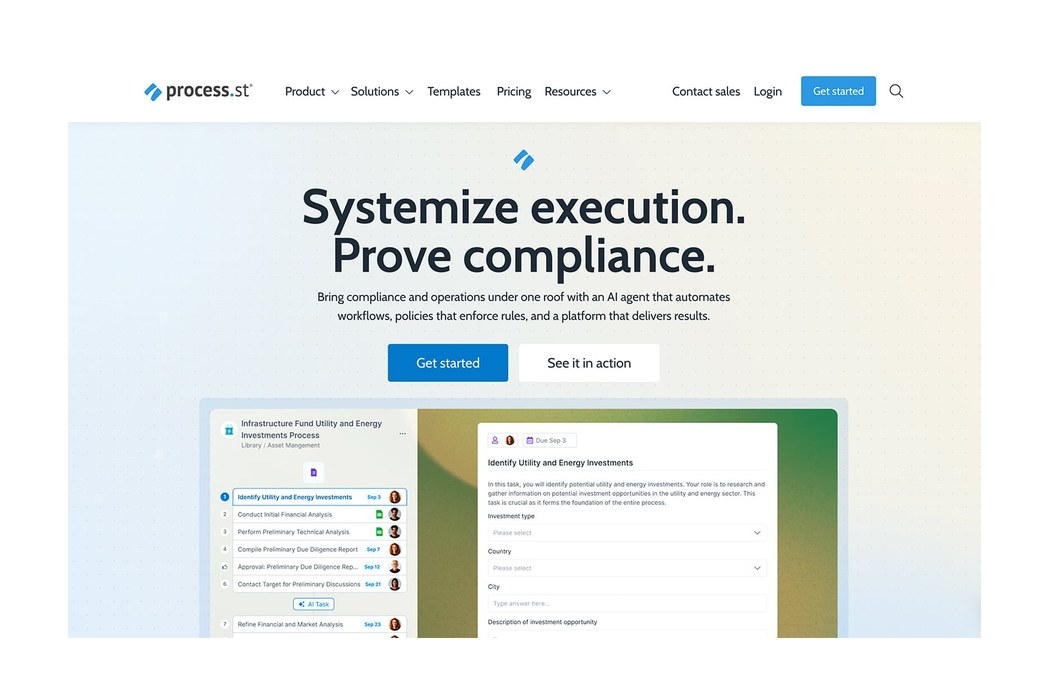
Process Street
Process Street is a San Francisco-based SaaS company that helps teams turn recurring, human-driven work into structured, trackable workflows. Founded in 2014 by Vinay Patankar and Cameron McKay to tame the repetitive processes of their remote marketing agency, it began as no-code, checklist-based process software and has since repositioned as an AI-powered compliance operations platform. Today it lets non-technical teams document policies, run standardized workflows, capture data through forms, automate approvals, and prove control for standards like ISO 9001 and SOC 2 - with AI agents such as Cora monitoring execution and flagging risk.

Epik Solutions
Epik Solutions (Epikso) is a Pleasant Hill, California-based digital transformation and IT consulting company that helps organizations modernize operations through cloud, data, analytics, AI, and customer-experience services. Its flagship no-code platform, View360, digitally maps an organization's entire business experience so leaders can unify siloed data and act on real-time insights. Founded by CEO Ashish Kataria and built around the tagline 'the power of technology plus the power of human intuition,' the firm serves clients across energy and utilities, government, healthcare, finance, manufacturing, retail, and technology.

Alessio Alionco
Alessio Alionco is the Brazilian-born founder and CEO of Pipefy, a San Francisco-based AI-driven process automation platform he built from scratch in 2015. A Lean Six Sigma Black Belt, Harvard OPM alumnus, and Endeavor Entrepreneur, he turned a front-row view of chaotic enterprise workflows into a company with 4,700+ deployed AI agents, partnerships with Accenture, and over $225M in total funding. His prior venture, Acessozero, grew to 1 million users before being acquired by Brazilian local-search giant Apontador in 2012 - a deal that planted the seeds for Pipefy.