The revealing detail in EPSoft’s automation software is a pair of boxes asking what human work costs and what bot work costs. Enter the numbers, and EZFlow compares them. A company selling automation has built a place where the buyer must supply the arithmetic. Somewhere between the demo and the purchase order, enthusiasm has to meet a spreadsheet.
- See the work: EZFlow uses process data to expose bottlenecks before teams automate.
- Connect the work: modeling, bots and human tasks sit within a broader process.
- Check the people: Trustume, launched in April 2026, puts employment verification early in recruiting.
That small design choice is a useful way into EPSoft, an enterprise technology company whose interests span software, consulting and staffing. Its products ask a related question in different settings: what are we assuming about the thing we are about to accelerate? A workflow may conceal a queue. A resume may conceal an invention. Speed makes either problem more expensive to ignore.
The queue before the bot
Consider an illustrative invoice that takes seconds to enter and days to approve. Automating entry saves seconds. The customer, supplier or finance team still experiences days. The tedious task was visible; the consequential delay was somewhere else. A spectacular little bot can occupy an utterly ordinary bottleneck.
EZFlow’s Process Intelligence is designed to make that distinction visible. It combines process mining with business intelligence to reconstruct work from data. Its guide describes uploading spreadsheets, event-log files or database data, validating the fields and generating a process graph. The object of scrutiny is the route work actually takes, including variations, repetitions and delays.
This is a different starting point from asking a department to nominate its most annoying chore. Annoyance is easy to report. A delay between departments is harder to see from either desk. EPSoft’s discovery tools turn the investigation toward the sequence of events. The practical attraction is that a team can choose its next intervention with a picture of the surrounding process.
Four rooms, one process
EZFlow organizes the job into four connected areas: Process Intelligence, Business Process Studio, Automation Engine and Control Center. EPSoft’s proposition is that discovery and execution belong in the same system. Otherwise, a business can end up with one tool explaining the problem and another requiring somebody to translate the explanation.
Business Process Studio handles that translation into a plan. Teams can model workflows, compare the existing process with a proposed one, and assign particular steps to humans or bots. It supports BPMN and DMN, standards for depicting processes and decisions. Collaboration records and approval submissions give the drawing an owner and a history. A diagram becomes more useful when somebody can be held responsible for changing it.
The Automation Engine supplies drag-and-drop tools for creating tasks with little or no code. Its documented capabilities include attended, unattended and hybrid automations, alongside tools such as optical character recognition and natural language processing. Those distinctions matter: some work runs on its own; some waits for a person. A readable screen does not abolish that dependency.
Control Center attends to what happens after deployment. It includes scheduling, start-pause-stop controls, service-level warnings and designated recipients for alerts. This is the quieter part of automation, where the original excitement encounters Tuesday afternoon. Somebody needs to know that work has stalled, understand which step owns the delay, and decide what to do next.
A software company with a services habit
EPSoft’s own history begins with IT staffing and consulting in 2015. It places its automation expansion in 2018-2020. That sequence helps explain the company’s shape today: a product business surrounded by people who can implement systems and supplement a customer’s team. Software is one part of the engagement.
The current service menu includes cloud transformation, data engineering, application development, Salesforce, ERP and managed services. Its ERP offering names SAP, Oracle and NetSuite implementations. Staffing includes contract and contract-to-hire placements, dedicated engineering teams and specialists in areas such as AI and cybersecurity. An enterprise can buy a tool, expertise or delivery capacity according to the job.
Named partners add industry and systems context. The Vested Group brings NetSuite expertise; HCJ Healthcare Solutions works on healthcare revenue, training and team models. These are useful clues to EPSoft’s intended territory: organizations with existing systems and operational complications. A finance process or healthcare workflow rarely becomes simpler merely because a vendor has given it a new dashboard.
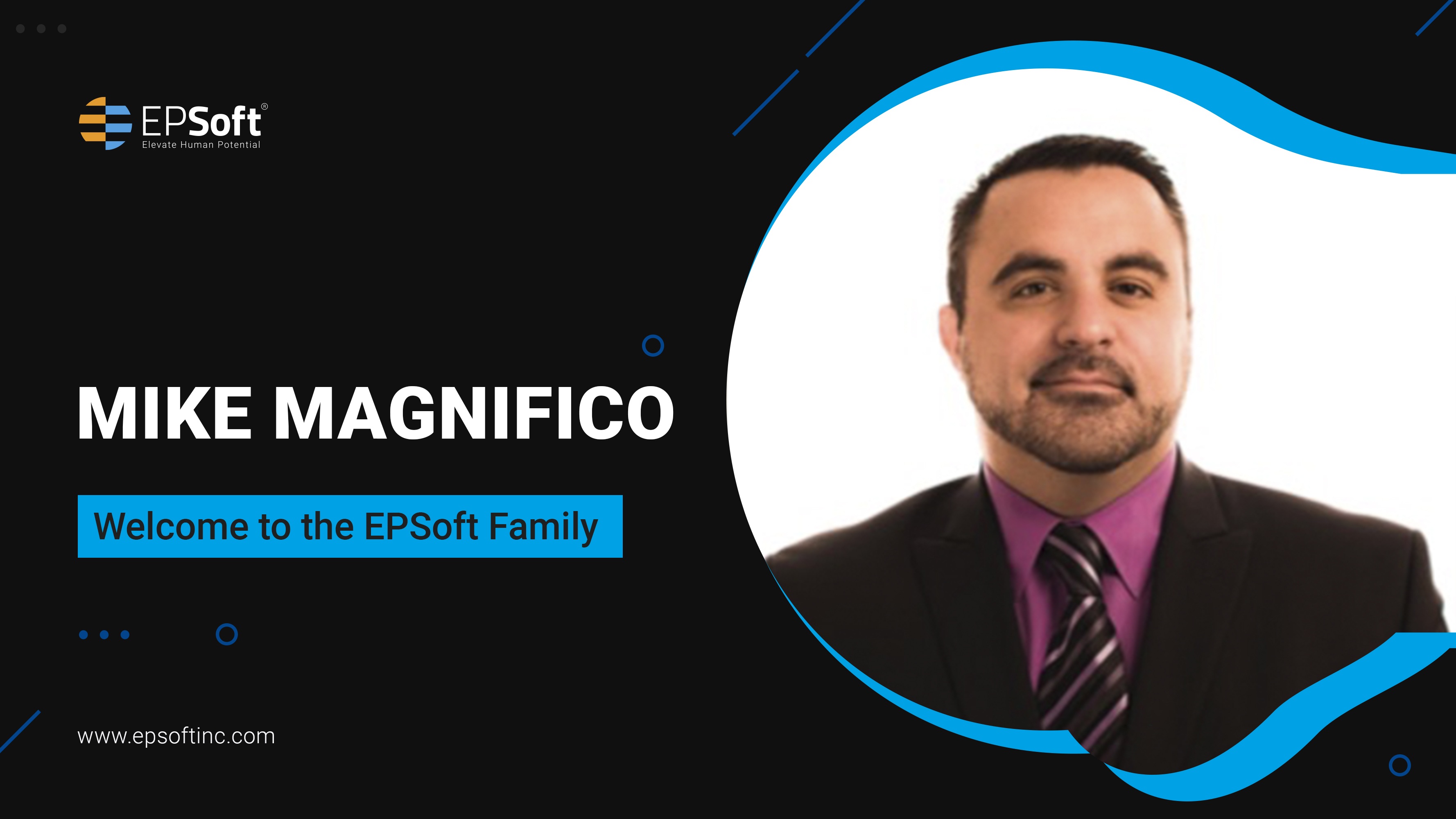
In 2021, incoming CEO Mike Magnifico described EZFlow’s audience in a compact phrase: “we specifically built it for the business user.” Today the company lists Gopal Parvathaneni and Lahari Medarametla as co-CEOs. The continuing commercial idea is access: give the people responsible for a process tools to change it, with technical help available around them.
EPSoft occupies a competitive market. UiPath’s Maestro also coordinates robots, AI agents and people using process models. Whole-process automation is therefore a shared ambition. EPSoft’s case rests on its integrated product design, business-user emphasis and accompanying services. Buyers can test those claims against their own systems and the amount of assistance their teams require.
The resume gets checked first
The company’s newer hiring product makes its staffing background especially relevant. In a public launch post, Parvathaneni said Trustume grew from resume fraud and proxy interviews he witnessed at EPSoft. Here the first troublesome input was a claim about a person. Making recruitment faster would leave that claim intact unless somebody checked it.
Trustume officially launched on April 14, 2026, for staffing and recruitment firms operating in the United States and India. Its approach moves employment-history verification to the beginning of the pipeline. Matching and assessment then operate around candidates whose histories have been authenticated, according to the company’s launch announcement.
The product combines that verification with AI matching, skills assessments and applicant tracking. The hiring interface lets recruiters review applicants, send profiles to clients and invite candidates. Read alongside EZFlow, the family resemblance is clear: inspect the input, organize the decisions, then move the work along. Recruiting gives EPSoft a specific process in which it already has experience.
Speed makes a weak assumption travel farther.
An editorial reading of EPSoft’s two product businesses
Put the assumptions on the invoice
Trustume’s hiring page, reviewed in October 2026, displayed a $99-per-month early-adopter offer with fees waived for six months. That is a promotional offer, so its terms deserve a fresh check before purchase. It gives a prospective recruiter a concrete entry point without turning a trial into proof of long-term economics.
For process automation, the more interesting cost question is what the savings calculation includes. Human and bot costs are inputs, rather than truths supplied by a logo. As a practical inference, a team comparing them should also account for integration, exception handling, review and maintenance. Time released from a task only becomes useful capacity when somebody can put it to work.
This suggests a method readers can copy: choose one process, establish its current performance, identify a delay, assign responsibility and measure the result of a change. Keep the pilot small enough to understand. If the records omit major steps or nobody owns the exceptions, a polished process graph will have limited value. Discovery needs usable evidence; execution needs accountable people.
Who owns the next step?
EPSoft’s culture statements emphasize transparency and empowerment. In a company leadership feature, then-CMO Katie Oliver singled out “The freedom to fail.” That is a company-published account, but it fits the product’s appetite for examining and revising work. The point of a process model is that someone can challenge it.
EZFlow A² extends that appetite into conversational and generative AI, offering workflow generation through conversation. The appealing possibility is a shorter distance between describing a process and drafting one. The managerial obligation remains: inspect the draft, decide where judgment belongs and approve what will run.
EPSoft’s journey from staffing to automation and back into hiring makes sense through that obligation. Whether the next worker is a software bot or a newly recruited engineer, the handoff needs a reason, a record and an owner. The useful question at the end of a demo is wonderfully plain: who gets the work when the easy part is over?