robotic-process-automation
(22)
Sola wants to retire your copy-and-paste career
A screen recording becomes a bot. Behind Sola’s simple proposition is a bet that the people doing the paperwork should be able to automate it themselves.

ElectroNeek and the case for bots without a meter
A second-hand clothing seller needed fewer clicks, not a grand AI strategy. ElectroNeek’s answer reveals why the economics of automation matter as much as the software.

Airolabs.ai wants your AI agents to survive their debut
Airo sells enterprise AI by the fleet. Its more interesting proposition is what happens after the applause: someone stays to manage the agents, the integrations and the bill.

nirvanaHealth wants your insurer’s departments to stop playing telephone
A pharmacy benefits company grew into a bet on the machinery of health insurance. Its Aria platform brings medical and pharmacy operations together, one transaction at a time.

EPSoft wants to fix work before it speeds it up
A staffing company learned to automate business processes. Now EPSoft is applying the same instinct to hiring: check what is really happening before making it happen faster.

KeyMark knows where the paperwork is buried
Before an AI system can answer a question, somebody has to make sense of the files. KeyMark has spent three decades doing that work - and its most revealing projects start with a very human mess.
Rewst’s Bet: The MSP’s Next Hire Is a Workflow That Never Sleeps
Managed service providers built businesses on other companies’ messy software. Rewst wants to turn that sprawl into a programmable operating system - without asking every MSP to become a software company.

Appian Survived the Dot-Com Bust. Now It Wants to Put AI on a Leash.
Appian began with a product nobody reliably paid for. Twenty-five years later, it is selling the unglamorous machinery that makes enterprise AI useful: processes, guardrails, and a place for humans to step in.

Lucas Ochoa Is Teaching Software to Watch, Learn and Get to Work
Before Lucas Ochoa built agents that click through office software, he designed wallets, robotic hands and expressive machines. Now the Automat CEO is betting that the future of enterprise AI will be won in the least glamorous corner of work: the stubborn space between one screen and the next.

Rajeshkumar Ganesan Spent 25 Years Learning the Work - Then Built Software to Do It
After a career that ran from code to telecom architecture to RPA program management, the Automatiga founder packaged the entire automation lifecycle into one product. Its 2026 acquisition by qBotica turned a patient operator's accumulated lessons into the next chapter of an agent-first platform.

Automatiga Built the Control Room for Software Robots - Then AI Agents Took the Keys
A three-person Utah company assembled the plumbing for an automation program - ideas, bots, controls, analytics and 550-plus connector actions. Its next move was not another dashboard, but an acquisition that folded the stack into qBotica's agentic AI push.
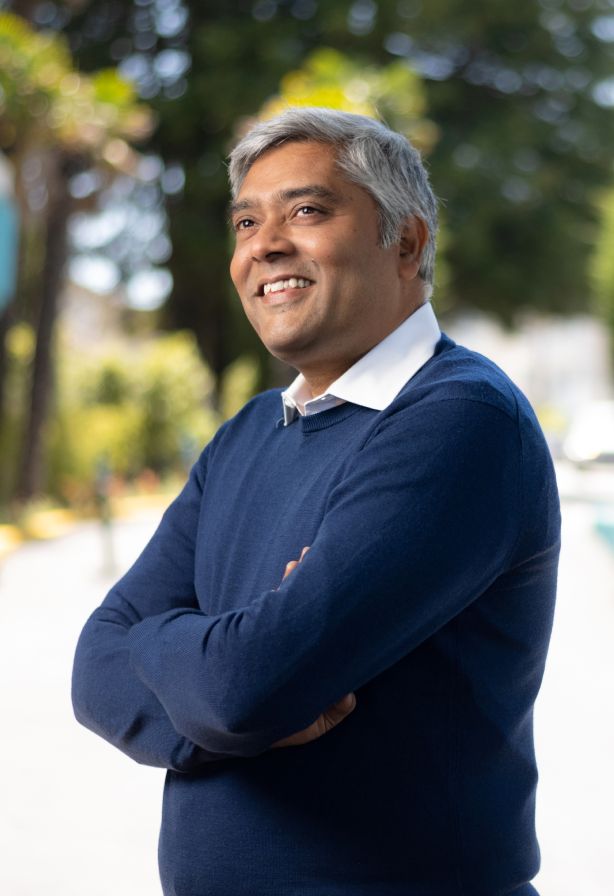
Mihir Shukla Is Rewriting the Office’s Oldest Habit: Busywork
He left a PhD path for the early internet, watched office workers copy data between screens, and spent two decades turning that frustration into Automation Anywhere. Now his bet is larger: AI should change the design of work, not merely add another tool to it.

The Quiet Machine Room Behind Wall Street's Trades and Your Favorite Brand's Homepage
Two Wharton classmates started a "virtual" outsourcing shop in a small South Mumbai office in 2000. Twenty-five years later, eClerx settles trades, cleans data, and builds e-commerce pages for the Fortune 500 - and is betting its next chapter on AI that reshapes work instead of replacing people.
Eleviant Built the Software Plumbing - Then Became Part of a Bigger Machine
For two decades, the Texas-born consultancy sold an unusually practical promise: connect the old systems, automate the dull work, and ship the application. Its 2022 sale to CTG made that hybrid of services and software the real story.

UiPath
UiPath taught software robots to copy clicks. Now it wants to conduct the whole office - AI agents, old systems, APIs and the humans who still know when to say no.

AMISEQ
AMISEQ has built a 650-plus-person business around an unglamorous enterprise truth: buying technology is easy; making it run across old systems, strict controls and global teams is the difficult part.

RamAIn
RamAIn is a San Francisco startup (YC W26) building fast computer-use AI agents that operate legacy systems, desktop apps and web portals the same way a person does - reading the screen, clicking buttons, filling forms - without needing API access or custom integrations. Founded by IIT Delhi dropouts Shourya Vir Jain and Vansh Ramani, it turns any repetitive UI task into a managed, self-healing API and targets enterprise back-office work in procurement, insurance, healthcare and finance.

Automat
Automat is a San Francisco AI company building agents that operate computers the way people do. Founded in 2023 by CMU design alumni and ex-Google Creative Lab designers Lucas Ochoa and Gautam Bose, it pairs a transformer-based RPA engine with intelligent document processing so enterprises can automate manual back-office work - from KYC checks to mortgage disclosures to medical-claims processing - by simply showing the software a recording of the task. It positions itself as a modern, AI-native alternative to legacy RPA tools like UiPath, Automation Anywhere and Blue Prism.

Magical
Magical is a San Francisco software company building AI agents and browser-based automation that move data between apps and websites without formal integrations. It started life as a free Chrome extension for text expansion and form autofill used by roughly a million people at companies like Amazon, Airbnb and Netflix, then pivoted toward agentic AI that runs multi-step operational work - increasingly focused on healthcare revenue-cycle and patient-access tasks. Founded in 2020 during the COVID lockdown by the husband-and-wife team of Harpaul Sambhi and Rosie Chopra, the company has raised roughly $41 million, led by a $35M Series A from Coatue.
Muchammad Rifky
Muchammad Rifky is the Chief Executive Officer for Indonesia at Automation Anywhere, one of the world's leading enterprise automation and AI software companies headquartered in San Jose, California. Leading Indonesia operations for a company with over $1 billion in total funding and nearly 1,900 employees globally, Rifky bridges the gap between Automation Anywhere's cutting-edge AI-driven robotic process automation platform and one of Southeast Asia's largest and fastest-growing markets. His career path - from hospitality sales at Jakarta's top hotels to leading country operations for a Silicon Valley-backed unicorn - reflects the kind of cross-domain journey that defines modern tech adoption in emerging markets.
Murad Hasan
Murad Hasan serves as Chief Executive Officer for Automation Anywhere's Bangladesh operations, leading enterprise automation and AI initiatives across one of Southeast Asia's fastest-growing technology markets. He represents a global leader in robotic process automation - a company that raised over $1 billion in funding and generates nearly half a billion dollars in annual revenue - at the country level in Dhaka, Bangladesh.

Expedock
Expedock is a San Francisco-based AI and tech-enabled BPO platform for freight forwarders and logistics providers. It pulls structured data out of messy shipping paperwork - invoices, packing lists, statements - and pairs the automation with offshore operators so freight teams can move faster without growing headcount.