Enterprise automation begins with an insultingly simple demo. A cursor opens a spreadsheet, copies a number, visits another application and pastes it. Applause. Then production arrives with passwords, version changes, exceptions, job queues, nervous security teams and a finance chief asking whether the robot saved a dime. Automatiga built for the morning after the demo. The Herriman, Utah company packaged the machinery around software robots: a place to collect automation ideas, a visual studio to build them, agents to run them, controls to govern them, analytics to score them and a support desk for when the cursor goes wandering.
That breadth is unusual for a company publicly listed at two to ten employees, with supplied company data putting the team at three. Automatiga was founded in 2023 by Rajeshkumar Ganesan, an automation practitioner whose background includes years in RPA program management and an advanced UiPath developer certification. Its slogan, “Anyone can Automate,” sounds democratic. Its actual product map is more sober. Anyone may draw a workflow; enterprises still need someone to manage identity, permissions, deployment and evidence.
The product is the whole messy loop
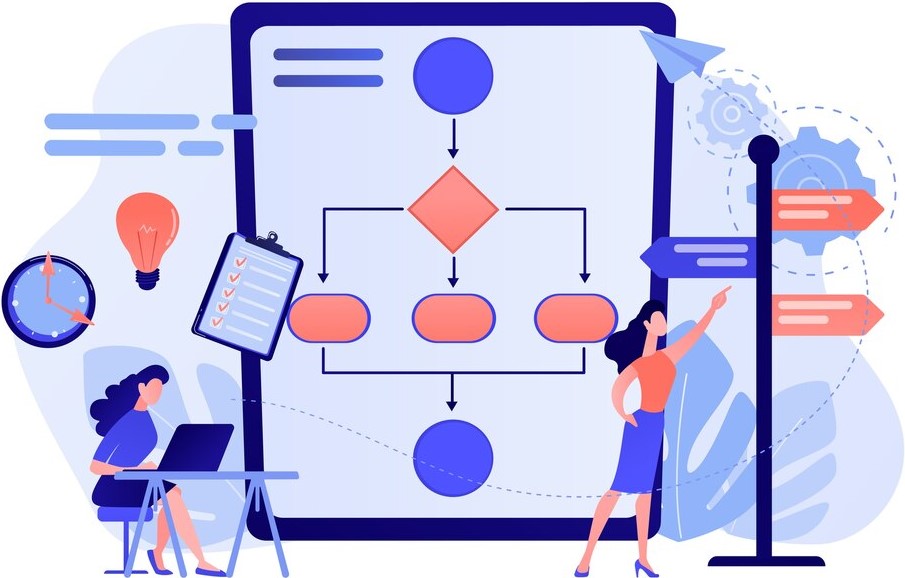
Automatiga divides the work into four verbs. Discover starts in Automation Hub, where a center of excellence can collect ideas, assess them and rank them by impact and expected return. Automate belongs to Studio, connectors and AI tools. Operate covers attended and unattended Bot Agents plus Control Hub. Monitor lands in Analytics Hub and Support Hub. It is a tidy diagram for an untidy organizational problem: good automation is less about scripting one task than sustaining a portfolio of fragile dependencies.
Studio is the friendly front door: a desktop development environment with graphical panels, debugging, publishing and a drag-and-drop editor aimed at people who may not write code. The connector catalog is the more revealing asset. It reaches into SAP, Salesforce, ServiceNow, Jira, Microsoft 365, Google Workspace, databases, browsers, PDFs, OCR, Python, terminals and OpenAI. This is less glamorous than a reasoning model and more likely to determine whether an invoice actually moves.
A bot with keys, a badge and a supervisor
Once a workflow exists, Bot Agents execute it. An attended agent waits for a human cue and helps with a task. An unattended agent runs without a person at the keyboard. Control Hub provisions those workers, delivers package versions, schedules jobs, triggers runs, distributes queues and tracks utilization. Identity Server adds centralized authentication and roles through OpenID Connect and OAuth 2.0. In other words, the bot gets a badge and a manager before it touches payroll.
Analytics Hub closes a particularly awkward loop. It compares estimated ROI with actual ROI, reports the best and worst automation projects, and exposes bot performance. Support Hub records ticket volume, categories, status and priority. Those modules make a quiet argument: automation debt behaves like software debt. A broken process does not become less broken because a robot can repeat it at midnight.
“We built Automatiga as an agent-first platform to enable enterprises to design and orchestrate intelligent, autonomous workflows.”Rajeshkumar Ganesan, founder
The market moved from hands to judgment
Classic RPA is excellent at deterministic work: click here, copy that, check this rule. It becomes brittle when the screen changes or the decision is ambiguous. By 2026, Automatiga's public description had moved beyond an RPA suite toward an “agent-first architecture.” Agent Hub was presented as a place to create and orchestrate AI agents across chat, voice and workflow modes. An Agentic Workflow Builder promised visual, multi-agent processes that could combine enterprise systems, automation bots and conditional actions.
This was not a clean break with the old product. It was a layering move. RPA remained for precise execution; agents were added for interpretation and decisions; humans could stay in the loop; Control Hub and analytics supplied the guardrails. The public product evolution suggests the company saw the central enterprise problem changing. Buyers no longer wanted only robotic hands. They wanted software that could decide which hand to use, while still leaving an audit trail.
The hybrid matters because office work refuses to live in one technological decade. A customer request may arrive as natural language, require judgment from a model, pull a record from Salesforce, open a desktop application that has no modern API, generate a PDF and pause for a manager's approval. An agent can interpret the request; an RPA bot can operate the old screen; a connector can reach the database; a person can own the exception. Automatiga's product thesis was that these should be parts of one governed workflow rather than five clever demos taped together. That makes the platform less magical on a conference stage and more plausible on a Tuesday morning.
That is also where Automatiga fits in a crowded market. UiPath, Automation Anywhere, Microsoft Power Automate, SS&C Blue Prism and ServiceNow all offer routes to workflow automation. Automatiga's pitch was not scale or an installed base. It was compression: one relatively compact stack spanning the idea queue, no-code construction, native bots, AI, governance, performance and support. The risk is the mirror image of the advantage. A small team maintaining a broad platform faces a punishing integration matrix and well-funded incumbents.
What did it cost? The menu had no prices
Automatiga's public pricing page described “Automation as a Service (AaaS),” bundling automation and license, then directed visitors to a contact form. It did not publish dollar tiers. Revenue, valuation, outside funding and the April 2026 purchase price are also undisclosed. That absence fits the product. Enterprise automation touches legacy applications, security policies and custom process maps; the true bill is usually a blend of software, integration, implementation and maintenance, not a cheerful monthly toggle.
Nor does Automatiga publish a customer roster or usage count. The buyer, qBotica, says the combined organization serves work in financial services, healthcare, logistics and other industries. The obvious users are automation centers of excellence, operations teams, developers and business users who know a process well enough to diagram it. The suite is designed for organizations with enough repetitive work to justify a program, not a lone freelancer looking to connect two web apps before lunch.
Why qBotica bought the plumbing
qBotica announced the acquisition on April 21, 2026. The buyer sells Agentic AI and Intelligent Automation-as-a-Service, pairing technology with enterprise delivery. Automatiga brought a product-driven platform and engineering talent; qBotica brought a larger services operation, industry reach and an existing route into complex organizations. It is a comprehensible trade: product depth meets deployment muscle.
At the same time, qBotica introduced qubi, an agentic AI platform for orchestrating front-, middle- and back-office work. Its description echoes Automatiga's later direction: collaborative agents that reason and act, native automation for deterministic tasks, human oversight, governance, observability and performance tracking. qBotica said it would continue investing in agents, voice AI and intelligent document processing. Automatiga's control-room logic did not disappear. It became part of a larger control room.
The playbook worth copying
- Sell the lifecycle, not the party trick. Intake, permissions, deployment and measurement turn a bot into an operating system.
- Treat connectors as product. Intelligence without access to the systems of record is a clever spectator.
- Measure after launch. Put expected and actual ROI on the same screen before weak projects become permanent.
- Pair probabilistic agents with deterministic tools and human checkpoints. Judgment and execution need different controls.
What tends to fail first
The first casualty in enterprise automation is often not the workflow logic. It is the handoff to production: a credential expires, an interface moves, an exception sits unclaimed or nobody can explain which version ran. Automatiga's architecture reads like a checklist against those failures. Identity manages access. Control Hub manages versions and queues. Analytics spots disappointing performance. Support Hub gives breakage an owner. The company offers no public failure diary, but its product priorities are an unusually clear map of the potholes.
The approach will not work everywhere. A broad platform is excessive for a team with two simple, stable workflows. No-code does not repair a poorly understood process. Agentic execution is a bad fit when decisions cannot be audited, data access cannot be governed or errors carry intolerable consequences without review. And a catalog of connectors loses value if those connectors lag behind the applications they touch. The operating discipline is not optional; it is the purchase.
Automatiga's most useful lesson is therefore less futuristic than its agent-first language. The future of work still needs a ticket queue. The small Utah company built the queue, the studio, the runners, the supervisor and the scoreboard. When AI agents arrived asking for the keys, the locks were already installed.