Enterprise automation has a charming parlour trick. A cursor wakes up, opens a spreadsheet, copies a number, visits another application and pastes it into the correct box. Nobody touches the mouse. Somebody says “wow.” Then Monday arrives. A password expires. The target application moves a button. The queue backs up. A manager asks who approved the bot, an auditor asks what it changed, and finance asks the rudest question of all: did it save any money?
Rajeshkumar Ganesan built for Monday. Automatiga, the Utah software company he founded and led, did not sell automation as a single dazzling cursor. Its product map followed the whole untidy life of automated work: collect the idea, assess its value, build the workflow, connect the applications, deploy the software worker, control its access, monitor its performance and open a support ticket when the robot develops a taste for chaos.
That breadth makes more sense when read backward through Ganesan's career. His public record begins in software development in 1999, moves through technical architecture and telecom systems, crosses consulting, project management and program management, and lands in robotic process automation. By the time he became Automatiga's CEO and founder in 2024, he had spent roughly a quarter-century watching work pass between code, systems and people.
A career that kept widening the frame
Ganesan's early work put him close to the machinery. He was a software developer and later a technical architect, with public career data listing Tata Consultancy Services and USWEST in his first years, followed by Qwest Communications International. Brief spells as a TIBCO consultant at Scintel Technologies and lead software engineer at HCLTech added another view: integration work, where neat diagrams encounter actual enterprise systems and discover that every arrow has an opinion.
From 2011, his roles tilted toward delivery. Project management became program management. The systems remained technical, but the unit of failure grew larger. A function can be correct while a project is late; a project can be delivered while a program misses the point. That progression matters because automation is an organizational sport disguised as software. A bot runs one task. An automation program decides which tasks deserve bots, who owns them and how anyone can tell whether the effort worked.
In July 2018, Ganesan moved into RPA program management at TCS. That November he earned UiPath's advanced RPA developer certification. The pairing is revealing: manager and builder, portfolio and workflow. He also held a Certified Scrum Master credential from 2015. Automatiga would eventually look like a synthesis of those altitudes, a platform interested in both the little sequence of actions and the large system responsible for them.
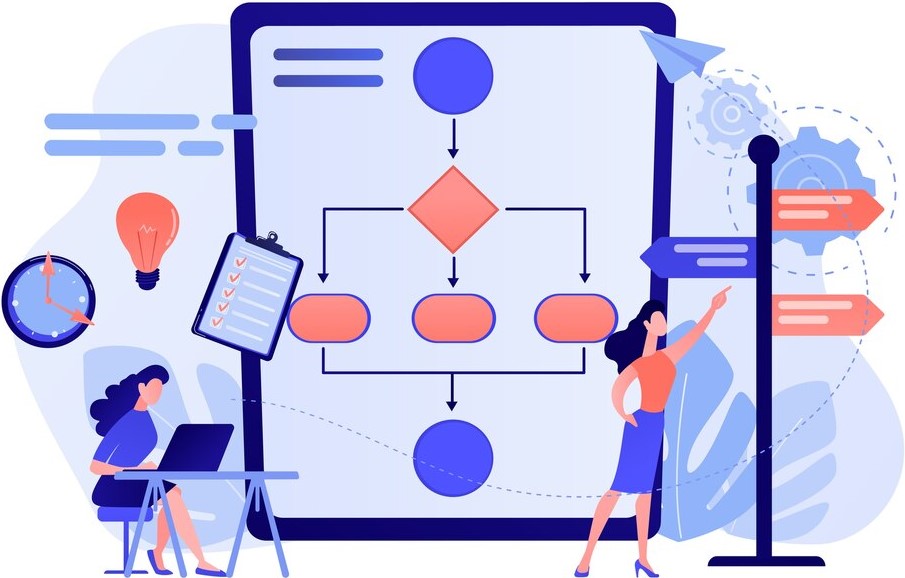
The robot needed a company around it
Automatiga's suite was arranged almost like a small bureaucracy, except this one advertised efficiency. Idea Hub gathered proposed automations and ranked them by impact and expected return. Automation Studio gave developers and business users a visual place to assemble workflows. Bot Agents handled attended and unattended execution. Control Hub managed provisioning, versions, schedules, queues and capacity. Identity Server handled organizations, users, applications and roles.
Then came the two modules that give the game away. Analytics Hub compared promised return with observed return and exposed bot performance. Support Hub tracked problems by status, priority and category. Plenty of software can perform when the demonstration is controlled. Software meant for operations must also confess when it did not.
One automation, six grown-up questions
The connector catalog reached more than 550 prebuilt actions. The list stretched from familiar enterprise systems and office tools to databases, APIs, OCR, machine learning and large language models. Connectors are not glamorous, but they are where automation becomes useful. An agent without access to the applications where work happens is merely a talented correspondent.
Automatiga described its development environment as no-code and drag-and-drop, yet its larger architecture was not casual about governance. This is the sensible tension inside enterprise software: make creation easier without making control optional. Ganesan's background helps explain the compromise. The developer wants speed. The program manager wants repeatability. The architect wants the whole arrangement to survive contact with the rest of the stack.
“We built Automatiga as an agent-first platform to enable enterprises to design and orchestrate intelligent, autonomous workflows.”Rajeshkumar Ganesan, April 2026
AI agents arrive; the plumbing stays
Robotic process automation is good at deterministic work: open this, copy that, follow the rule, repeat without complaint. Agentic AI introduces a different promise. A system can interpret context, choose among actions and coordinate with other agents. The vocabulary moves from scripts toward decisions. The risk, naturally, moves with it.
Automatiga's later positioning did not throw away RPA to make room for agents. It put both in the same ecosystem. Visual agentic workflows could coordinate collaborative AI agents while native RPA handled the stable, rule-based steps. Human-assisted execution remained part of the design. So did orchestration, analytics and governance. The future was invited inside, but it still had to sign in at reception.
This hybrid view is less cinematic than announcing that autonomous workers will replace every old process by Thursday. It is also closer to how companies adopt technology. A finance workflow may need an AI model to interpret an unusual document, a deterministic action to enter approved fields, a human to resolve an exception and a control log to remember the entire episode. Intelligence and reliability are not rival camps. The useful system assigns each one a job.
The buyer recognized the blueprint
On April 21, 2026, qBotica announced that it had acquired Automatiga for an undisclosed amount. qBotica brought a larger intelligent automation services business, industry reach and delivery capability. Automatiga brought its product platform and engineering team. At the same time, qBotica launched qubi, an enterprise agentic AI platform built to orchestrate work across front, middle and back offices.
The overlap was plain. qubi combined collaborative agents, human oversight, native automation, governance, observability and performance tracking. Automatiga had been building an agent-first automation environment with the same respect for deterministic work and enterprise controls. The acquisition paired a product-driven system with a company accustomed to implementing automation inside large organizations.
qBotica founder Mahesh Vinayagam described meeting Ganesan and seeing the “strong engineering mindset” behind Automatiga as the moment the deal felt natural. It is a compact compliment, and more specific than it first appears. An engineering mindset is visible not only in what a product can do, but in the uncelebrated provisions around it: identity, monitoring, failure handling, support and measurement.
Ganesan marked the acquisition publicly with pride in the team and an insistence that agentic automation would reshape enterprise operations. His prepared statement focused on acceleration: qBotica could take Automatiga's vision further and deliver more value to customers around the world. The founder's language remained centered on the system being built, not on the financial details, which were never disclosed.
The product did not emerge from a sudden fascination with robots. It emerged from years spent noticing everything a robot needs in order to become a colleague rather than a demo.
The quiet playbook
There is an appealingly unflashy lesson in Ganesan's path. He did not arrive at enterprise automation from the observation deck. He worked upward through its floors. Development taught the logic of the task. Architecture exposed dependencies. Project and program management revealed the organizational cost of getting the right software built. RPA made repetitive work visible as a design material.
Automatiga turned that accumulation into a product map. For founders, the useful question is not simply which industry they know. It is which recurring irritations they have been paid to notice. A long career can become a private research project if somebody keeps the notes. Ganesan's notes appear to have included permissions, queues, connectors, support tickets and the awkward gap between projected savings and actual savings.
The company also offers a warning against confusing a new interface with a complete new world. AI agents can reason across changing situations; they still require access, boundaries and evidence. RPA can execute stable sequences; it still requires monitoring and maintenance. The winning diagram is rarely a single heroic box. It is the network around the box.
After the acquisition, Automatiga's independent chapter became part of qBotica's larger one. What survives is a particular operator's conviction: intelligent workflows should be designed, orchestrated and measured as systems. The cursor may still perform the parlour trick. Somewhere behind it, a control room is keeping Monday from becoming exciting.