At a hedge fund, Jessica Wu encountered a peculiar obstacle to progress: old brokerage software. The work around it was repetitive. The tools meant to automate that work were difficult enough to frustrate someone with a computer-science background. Across a different institution, her future co-founder Neil Deshmukh was encountering similar trouble with hospital systems. Two technically capable people had discovered how much effort it took to make a computer do something a person already knew how to do.
- Sola turns recorded browser and desktop work into AI-assisted bots.
- Operations staff can edit workflows visually, including document processing and data handling.
- The company targets repetitive work across existing systems, including applications without APIs.
The software that refused to retire
Wu and Deshmukh founded Sola in 2023 and joined Y Combinator’s summer batch. Their proposed customer was easy to overlook: the person carrying information between applications. An analyst. A billing worker. Someone entering the same facts in several places because the systems had never been introduced. An impressive corporate technology budget can coexist quite comfortably with a clipboard.
Sola’s proposition is to let that worker demonstrate the job. Record the process on screen, then use the recording to generate a bot. Large language models help interpret the task; computer vision helps the software navigate what is visible. Instead of requiring every application to offer a convenient connection, the bot can work through its interface.
The distinction matters. Replacing a business system is a sizable undertaking. Automating the journey between systems offers a smaller intervention. Sola is selling an automation layer for the software companies already use, including desktop applications and browser portals. The old brokerage screen may remain perfectly ugly. It simply need not occupy quite so much of someone’s day.


Teach it once. Then inspect the work.
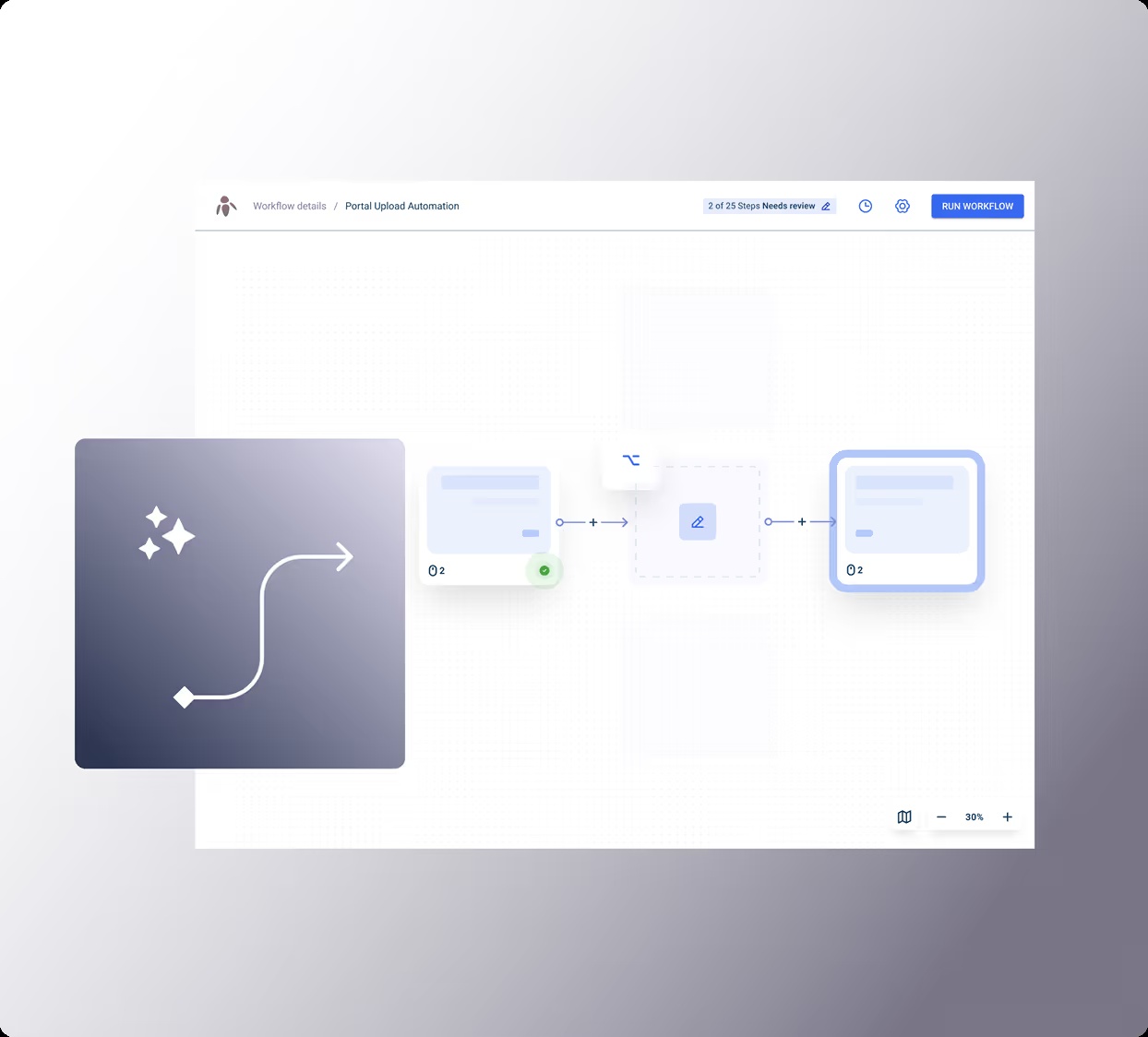
The recording is the entrance, rather than the entire product. Sola’s visual editor exposes the sequence of actions so teams can modify it. Document processing extracts and validates information. Data transformation prepares it for subsequent steps. Orchestration coordinates runs, while monitoring supplies logs and audit trails. Those unromantic features become rather attractive when an invoice disappears.
Sola describes its automations as adaptive: they can respond to minor interface or data changes and incorporate feedback when a person intervenes. That is a product claim about reducing maintenance, not permission to stop checking outcomes. A completed click and a correct business transaction are different measurements. A useful evaluation needs to examine both.
The platform also supports APIs. A team can trigger workflows programmatically or call other services within them. Screen interaction therefore supplies another route through a process, alongside conventional integrations. The practical question is which route fits each step, and who will understand it when something goes wrong.
- 01RecordShow the actual task
- 02EditInspect steps and logic
- 03RunOperate across systems
- 04ReviewCheck logs and outcomes
A growing brokerage, a growing pile of chores
In May 2026, Sola published a case study about WSI’s brokerage division. As the division grew, repetitive operational work grew with it. The account describes automation across onboarding, compliance, and customer updates, with workflows built in minutes. It is a company-published customer story, and the useful detail is its scope: several ordinary operational chores, rather than one theatrical AI performance.
The website also names Morgan & Morgan and Ally Logistics among its customers. For a legal operations team, the appeal is the ability to create bots without depending on developers. For logistics, it is moving information between systems without assigning every handoff to a person. Sola’s wider industry examples include billing, claims processing, filings, and financial reconciliation.
“Sola makes automation accessible.”Michael Frederickson, Director of Project Management, Morgan & Morgan
These are jobs where volume can make a small inefficiency expensive. They are also jobs where a mistake creates another job. Sola’s relevance rests on reducing the manual work while preserving enough visibility to catch exceptions. The user buying speed still needs a way to explain what happened.
The funding is large. The task is small.
In August 2025, Sola announced $21 million in funding: a $3.5 million seed round led by Conviction and a $17.5 million Series A led by Andreessen Horowitz. The money supports a business in a well-populated market. Sola explicitly positions itself against UiPath, Automation Anywhere, Blue Prism, and Microsoft Power Automate, arguing for easier setup and lower maintenance.
Its differentiation is a design wager: the person who understands the work should be able to build much of the automation. Incumbent tools also evolve; a purchasing decision needs a comparison on an actual workflow. Ease of demonstration, handling of exceptions, and maintenance after a system changes are better tests than a category label.
By December 2025, Amazon was publicly describing Sola’s integration of Nova Act. Wu said it supported business-critical processes running hundreds of thousands of times per month. The account points to production use and an evolving technical stack. It does not supply an independently measured error rate for Sola’s customers.
Start with the chore you can count
A reader can borrow the premise before buying anything. Choose one recurring process. Have the person doing it demonstrate the full sequence, including the awkward exceptions. Count time spent, successful completions, rework, and human interventions. Then compare the automated version under the same conditions. A polished demo is less informative than an ordinary bad Tuesday.
That approach is most useful when a task repeats, its inputs are understandable, and its outcome can be checked. Poor access permissions, ambiguous documents, or decisions requiring expert judgment still need attention. Sola’s enterprise sales process begins with a demo; evaluating cost should include review and maintenance alongside the software itself. The prize is simple enough: fewer people spending their expertise transporting information.