In biotechnology, the difference between an interesting fact and a useful fact is often a plane ticket. A therapy program may be promising in Taipei, financed in Tokyo, presented in San Diego and invisible to the person in Boston whose job is to find it. The science travels. The context does not. GeneOnline built a publication around that little failure of geography, language and professional attention.
The company began in Taiwan in 2015 under founder Thomas F. Huang, a molecular biologist who had worked in biochemistry research and transplant diagnostics. Its first tool was not software. It was translation in the broad sense: English and Mandarin coverage of drug development, genomics, precision medicine, company moves and the giant conferences where this industry temporarily squeezes itself into badge lanyards and over-air-conditioned halls.
That makes GeneOnline a trade publication, but only in the way a field notebook is merely paper. The reporting creates a network. The network produces interviews, introductions, marketing work and events. And those encounters expose the same complaint again and again: finding a relevant Asian biotech company, checking its pipeline and understanding whether it is ready for a partnership takes too much manual work.
The clever bit was recognizing that the newsroom had been drawing a commercial map all along.
The spreadsheet hiding inside the newsroom
In April 2023, GeneOnline showed a developing database called BioNest. The pitch was practical: search companies by region, type, drug stage or service; compare similar technologies; inspect product pipelines, fundraising stages and licensing activity. Investors could screen targets. Pharma business-development teams could assemble a partner list. A startup could see the neighborhood around its own science without spending a week stitching together tabs.
BioNest was expected in the third quarter. What arrived in November was called BIODND, short for “Biopharma Industry’s Data and Deal.” The public record does not describe a failed product or explain the renaming. It shows a sharpening. “Nest” suggested a place to gather. “Data and Deal” named the job to be done.
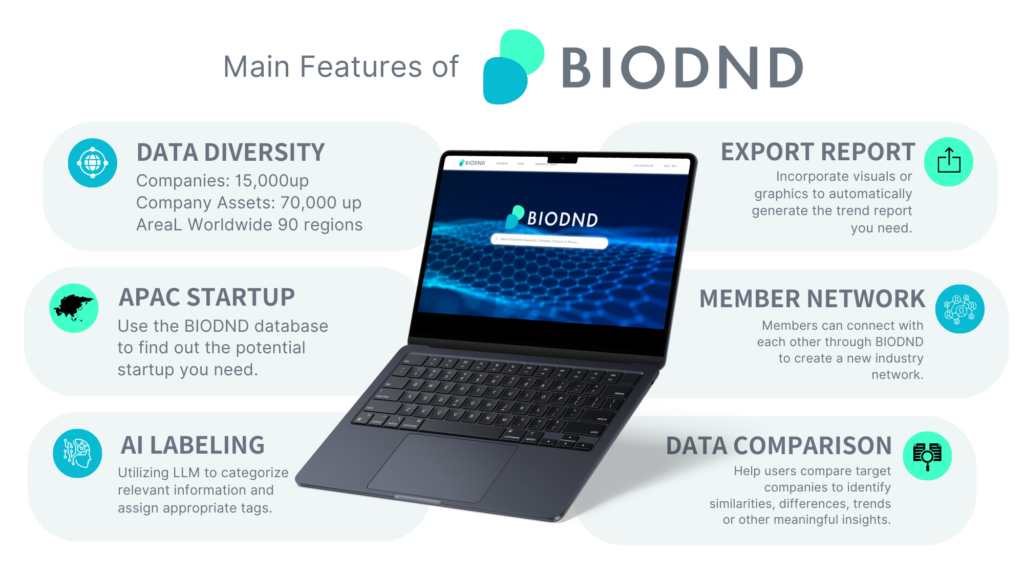
At launch, GeneOnline said BIODND covered nearly 18,000 companies and more than 70,000 products, technologies and services, with extra attention to emerging Asia-Pacific businesses. Its AI tagging and keyword search were intended to tame inconsistent industry language. Comparison tools placed companies and competing technologies side by side. A visualization feature turned results into charts and trend reports. By the time GeneOnline announced a partnership with Taiwan’s Industrial Technology Research Institute in August 2025, it described the platform as containing more than 500,000 real-time biotech and pharmaceutical data points.
Who pays for orientation?
GeneOnline sits in an unusual patch of the market. Readers can use its English and Chinese sites for news, interviews and conference reporting. Companies can hire it for biomedical marketing, public relations, consulting, industry reports, exhibitions and event production. Brands buy access to a specialist audience. BIODND adds the logic of enterprise software and data subscriptions, although the company does not publish its price list.
The likely users are not patients looking up symptoms. They are the people who must make a consequential shortlist: a pharmaceutical scout, an investor, a founder looking for a licensee, a research institute trying to commercialize work, or a foreign company attempting to understand the Asia-Pacific market. Established alternatives include Citeline, Evaluate, GlobalData, Cortellis, DealForma and BioCentury’s BCIQ. On the editorial side, GeneOnline competes for attention with BioCentury, Endpoints, Fierce Biotech, STAT, GEN and BioSpace.
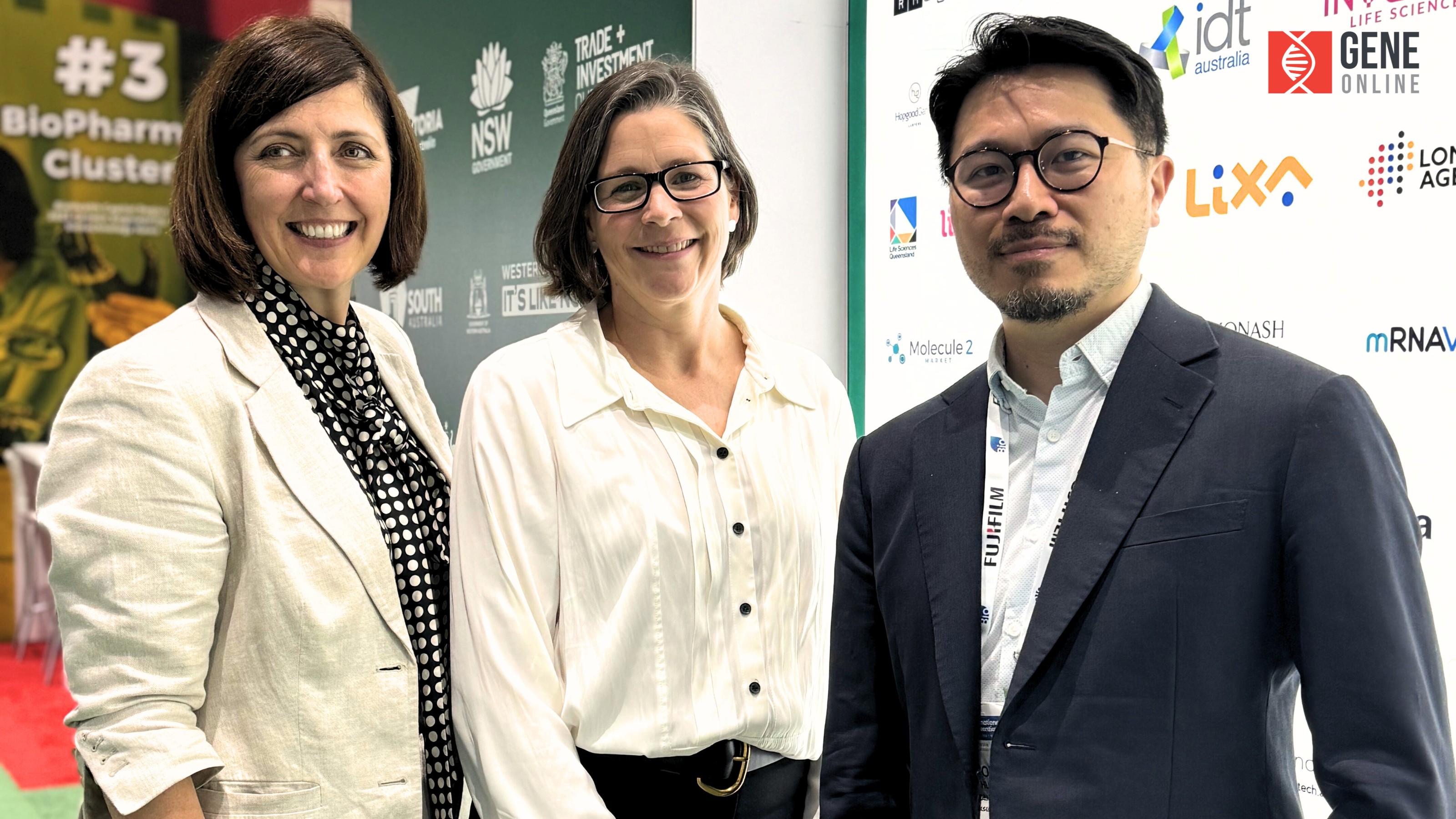
Its advantage is not simply that it has a database. Plenty of companies have more data and larger sales teams. GeneOnline’s bet is that bilingual reporting, regional familiarity and repeated physical presence at industry meetings supply context that a globally broad platform may flatten. A reporter who knows why a company matters can ask different questions of its record.
Cloud credits are not a strategy, but they buy time
The clearest public number attached to the build is not a funding round. In July 2024, BIODND entered Google for Startups Cloud and received up to US$200,000 in cloud credits. GeneOnline said the work would connect Google’s enterprise search and Gemini APIs to its system, structure news, summarize annual business reports and create a conversational Visualization Report Program. The company worked with Taiwanese digital-marketing and cloud specialist cacaFly on the project, then announced its place in NVIDIA Inception later that year.
That is real infrastructure support, but it is not cash in the bank and says nothing about revenue. GeneOnline is privately held. SparkLabs Taiwan has been identified as an institutional investor, but the amount and round have not been disclosed. Public headcounts cluster around 20 to 29 people, while LinkedIn places the company in its 11-50 band. The useful scale comparison is therefore human: a small team attempting to maintain two publications, client services, live events and a changing industry database.
Do not begin with “add AI.” Begin with the recurring research task your audience performs after reading. Earn access through useful coverage, observe the spreadsheet they rebuild, structure that information, then test whether faster decisions are valuable enough to pay for.
The bridge becomes part of the road
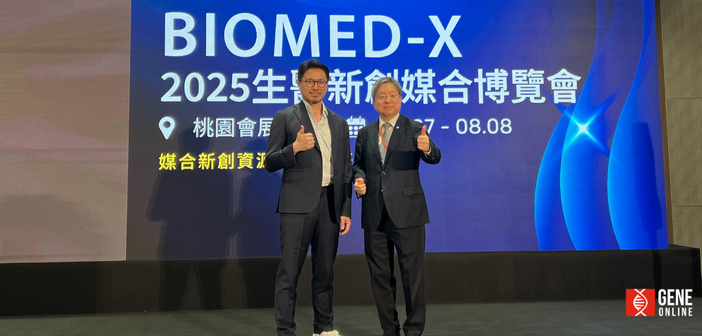
The ITRI agreement shows the model in its fullest form. At the first BIOMED-X exhibition in Taoyuan, more than 120 biomedical startups and over 300 industry, government, academic and research guests gathered. GeneOnline and ITRI signed a memorandum to combine BIODND’s market intelligence with bilingual content, international forums and opportunity matching. The database was no longer merely describing the ecosystem; it was being placed inside a commercialization program.
The company keeps working both sides of the Pacific. It lists Pasadena as headquarters and Taipei as a second base. In 2025 it joined a Taiwanese delegation visiting investors, accelerators, universities and health systems in Phoenix. In 2026 it exhibited at BIO Asia-Taiwan and co-organized a Taiwan Biotech Forum in San Diego. The events generate stories, but they also generate the contact graph that makes a niche information business defensible.
GeneOnline starts in Taiwan with specialist life-sciences coverage.
The company expands across the Pacific and establishes its Pasadena presence.
A proposed industry database launches with a more commercial name.
Google cloud credits and NVIDIA Inception support a larger data product.
ITRI brings BIODND into a startup commercialization platform.
Where the method earns its keep
GeneOnline’s approach works best where the market is fragmented, the vocabulary is technical and access is uneven. It is less convincing when the target set is already obvious, the underlying records are stale, or a buyer needs audited diligence rather than discovery. AI tagging can organize a messy universe; it cannot decide whether a preclinical claim will survive replication, whether a management team can execute, or whether a licensing contract is wise.
Still, there is a lesson here that travels beyond biotech. Specialist media companies often believe their asset is the audience. Sometimes it is the pattern of questions the audience keeps asking. GeneOnline noticed that its readers did not merely want to know what happened. They wanted to know whom to call next. The publication answered the first question. BIODND is an attempt to answer the second.