In 1996, the problem at Sabin was a bill. Janete Vaz and Sandra Soares Costa knew clinical laboratory work. They had founded their Brasília business twelve years earlier. But an accountant had failed to pay taxes, leaving them with a debt they later described as US$97,000. The founders had trusted a process they did not understand well enough to inspect. The laboratory could produce an answer. Its owners could not yet reliably account for the business.
- Sabin grew through new branches and acquisitions, after investing in management skills.
- A R$90 million automation project puts the sample’s journey at the center of its next expansion.
- Primary care and digital access extend the relationship beyond the laboratory result.
They replaced the accountant. When another proposed an informal arrangement involving a tax inspector, they declined, found someone else, and paid the debt in installments over five years. It is a less glamorous origin story than a sudden scientific breakthrough. It is also more useful. A company can be very good at its product and dangerously inexperienced at everything surrounding it.
The second education
Vaz and Costa responded by studying management. In 2005, they formalized a partnership with Fundação Dom Cabral, the Brazilian business school. The training extended beyond the founders to managers further down the organization. Together, they worked on an expansion method intended to repeat the service experience outside Brasília. Knowing how to do the work was one problem. Teaching a growing organization to do it consistently was another.
Their ambition had once fitted on a brochure. Vaz told O POVO that Costa brought back a Hermes Pardini leaflet listing seven addresses. She imagined Sabin reaching that size. The detail is delightful because the target seems so modest now. Growth began with seeing that someone else had already made the arrangement work.
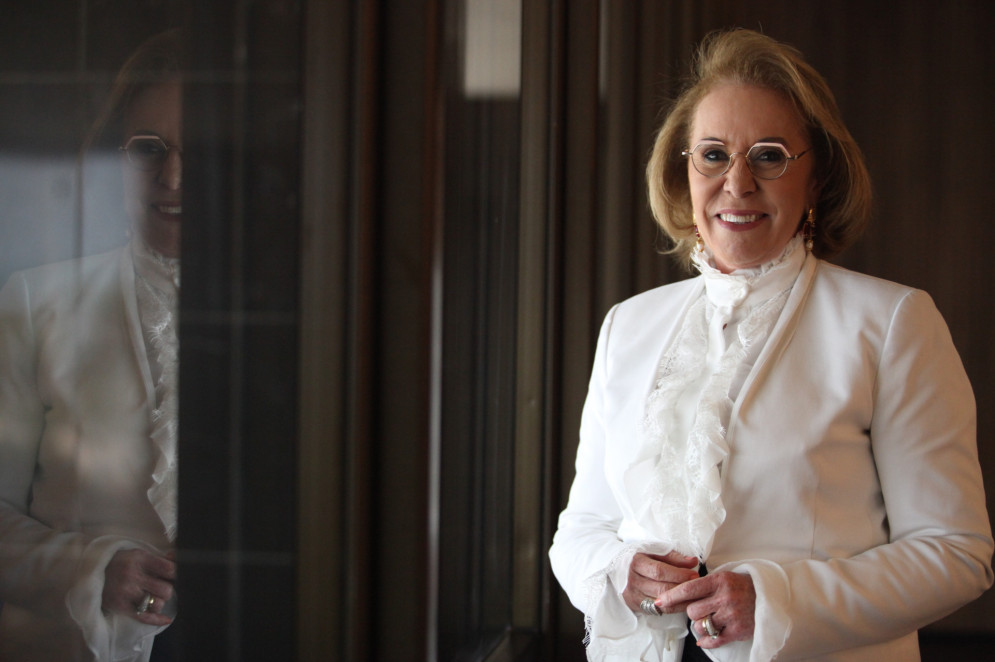
By 2010, Sabin was opening in Anápolis and Barreiras. Its subsequent expansion combined new locations with acquisitions. The founders eventually changed their own jobs, moving to the board as Lídia Abdalla became chief executive in January 2014. Abdalla had entered as a trainee. Her appointment preserved institutional knowledge while giving the founders room to concentrate on strategy. In a business built around trust, that continuity matters.
Follow the tube
The customer sees a needle, a waiting room, perhaps a report on a phone. Behind that short encounter sits a chain of identification, transportation, analysis and storage. The harder the business grows, the more consequential that chain becomes. A friendly receptionist cannot compensate for a sample that has lost its identity.
Sabin’s answer includes its central laboratory platform in Brasília, developed with Roche Diagnóstica. Reported investment: R$90 million. More than 80 specialists worked on a system connecting equipment with automated conveyors. One feature carries samples along overhead walkways. Tubes get their own elevated route; people retain room to move underneath.
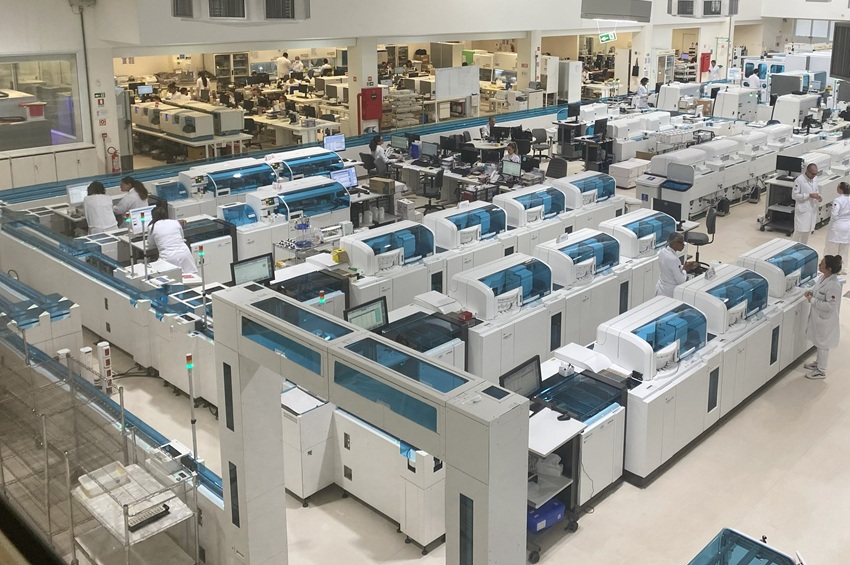
The purpose is practical: fewer manual handling stages, better traceability and more production capacity within the same plant. The project also aims to use fewer plastic tubes. Sabin reported completing NTO 4.0 in 2025. The lesson for another service business is straightforward: map the hidden work between the customer’s request and the finished answer. That is where delays and avoidable mistakes tend to collect.
The laboratory still pays the bills
Sabin sells clinical tests, diagnostic imaging, vaccination, genomics, anatomical pathology and executive check-ups. Patients arrive directly or through health plans; doctors need results they can use, and employers buy services for their populations. Its expertise lies in producing and interpreting diagnostic information across a physical network. Dasa, Fleury and regional laboratories offer alternatives. Sabin’s own combination of locations, technical systems and adjacent care services gives it a particular position within that market.
of gross revenue came from clinical analysis
The numbers impose some discipline on the story. Sabin reported R$1.9 billion in gross operating revenue for 2025. The newer businesses occupy a small share of that total. Their presence describes an ambition to serve more of a patient’s life; it does not mean that diagnostics have ceased to be the economic engine.
What happens after the result?
Amparo Saúde addresses the next step: ongoing primary care. Dedicated teams work with employer and health-plan populations, combining in-person appointments and telemedicine. Its model includes following people with chronic conditions and coordinating referrals. Access depends on the participating organization and its agreement. For the patient, the appeal is having someone responsible for the next appointment, the next question, the unfinished business of getting better.
Rita Saúde tackles access differently. Launched in 2021, it connects patients with consultations, examinations and medication discounts. Its public site advertises a R$49.90 monthly subscription with unlimited digital-center consultations and discounted specialist visits. Those are advertised terms, subject to change. The distinction matters: a subscription and discounts should not be read as a promise that every treatment is covered.
Even the name carries a small piece of history. Rita honors Rita Lobato, the first woman to earn a medical degree in Brazil. The platform’s purple refers to a reagent used by Sabin’s founders. A digital product has borrowed its identity from both the profession and the bench.
Care needs standards
Vaz has encouraged employees to return to education. Sabin’s public company profile reports women as 77% of employees and 74% of leaders. Yet she rejected a protective interpretation of the culture in a 2025 interview. “Não existe protecionismo,” she said, rejecting the idea that care meant shielding people from expectations. She emphasized productivity, commitment and quality. Kindness still has to deliver the work.
“Não existe protecionismo.”Janete Vaz, January 2025
Other operators can copy the controls and training. Copying the physical network requires capital, qualified staff and enough demand to use the equipment. Digital access depends on connectivity and available providers. The useful sequence in Sabin’s history runs from an uncomfortable admission to a repeatable practice: understand what you have delegated, teach the people who must repeat it, and keep checking the result. The tax bill was an expensive place to begin.