An introduction can be a scarce resource. Female Force Latam has made a program out of helping women technology founders meet people who understand the next difficult step: preparing a company for venture capital. The fee is zero. The program takes no equity. The work still involves numbers, uncomfortable questions and explaining why a business deserves someone else’s money.
Its proposition is unusually specific for an organization whose vocabulary includes empowerment and sisterhood. A founder gets access to investors and specialists, with a structured fundraising journey around those relationships. The community’s purpose is to increase women’s access to capital across Latin America. Its practical business is helping entrepreneurs become better prepared for the conversations that precede it.
That specificity was learned. Female Force began inside MAYA Capital, the venture firm founded by Lara Lemann and Mônica Saggioro. It developed from occasional meetings into a community with cohorts, specialist mentoring and pitch events. Along the way, its organizers encountered a familiar contradiction: a network intended to widen access was initially recruiting through people it already knew.
The weekend project needed a different calendar
The beginnings were modest. In March 2019, the initiative offered occasional mentoring through a simple, manually operated platform. People close to the organizers contributed a few hours each month. Positive feedback suggested there was demand; fitting the work around weekends limited what the team could do with it.
“We were doing it on our weekends.”
Mônica Saggioro, 2021 interview; translated from Portuguese
MAYA pushed the project forward in 2020, recruiting volunteers with different professional backgrounds. December brought a pilot designed to learn what entrepreneurs actually needed. Female Force’s own account describes women at different stages working through questions about minimum viable products, market entry, finance and fundraising. Participants also introduced their businesses to one another.
There is a pleasing detail here: the community ran an MVP about MVPs. Rather than assume that every founder needed the same motivational talk, it tested subjects against actual questions. The experiment gave the organizers a way to observe differences between stages of company building. A useful contact for a first product is not automatically the right person for a financing negotiation.
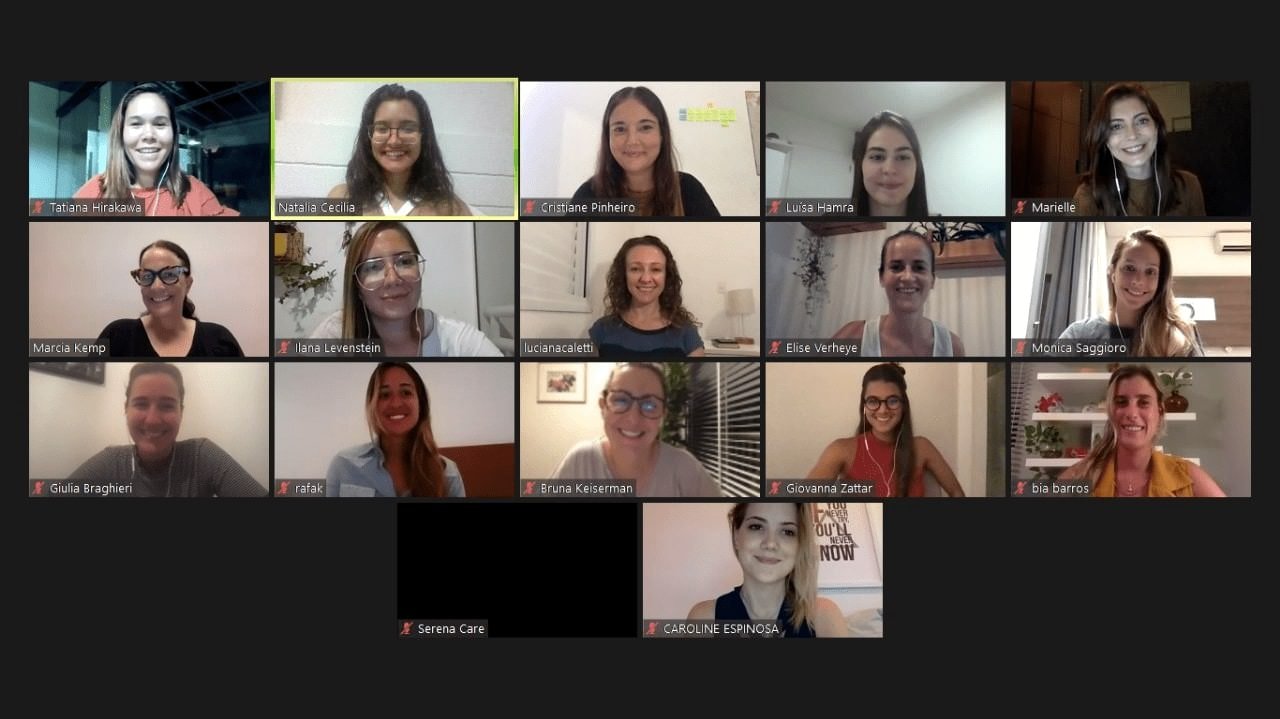
The invitation list was part of the problem
By 2023, Female Force had become independent of MAYA, with volunteers and mentors drawn from multiple investment firms and operating businesses. The broader network did not make recruitment automatically inclusive. Organizers recognized that recommendations were producing too little diversity among participating founders.
A formal selection process helped reach beyond those personal circles. Reporting that year put Black women at roughly 30 percent of the first cohort assembled through that process. It was a cohort-specific result, and organizers still saw room to improve representation. The change matters because it identifies an operational decision behind the mission: who gets to hear about the opportunity, apply and be considered.
For anyone building a similar community, this is the most transferable lesson. Examine the route into the room as carefully as the agenda inside it. A referral can establish trust while also reproducing the limits of an existing network. Female Force’s response was to change how it selected people, alongside sharpening the kind of founder its program could serve.
A fundraising journey with homework
The intended participant is a woman building a scalable technology business and considering institutional investment. The organization’s website emphasizes founders who have yet to raise from institutional funds. Its 2025 recruitment described entrepreneurs with meaningful ownership, a validated product and traction. This is a stage-specific offer, with a reason to care about what an investor will ask next.
The website outlines a 16-week journey, while the 2026 announcement describes five months. That newer announcement covers venture-fund mechanics, investor relationships, pitch decks, data rooms, valuation, dilution and ownership tables. These subjects connect the polished presentation to the business underneath. A deck can tell a story; the supporting materials have to withstand a closer look.
- 01Meet the communityFemale Force Day
- 02Learn with specialistsCollective mentoring
- 03Work through your questionsIndividual mentoring
- 04Present and take feedbackInvestment committees
Individual investor mentoring adds continuity. Female Force describes an investor helping a founder work through questions and improve fundraising materials. That arrangement allows a conversation to progress beyond a single introduction. For an entrepreneur, the useful preparation is concrete: bring the document, the decision or the sticking point that needs attention.
Communications about the 2026 journey describe an opening event, collective and individual mentoring, and investment committees that evaluate startup pitches. The sequence gives founders opportunities both to learn and to be questioned. Treating feedback as part of the experience is sensible: the point of preparation is to discover what needs another draft while there is still time to write it.
Sisterhood, with specialist office hours
The expert directory is called Sisterhood. Its categories include legal, finance, fundraising, leadership, product and go-to-market. The name is warm; the division of labor is practical. A founder can need help reaching customers and understanding an investment discussion in the same week. Those problems benefit from different kinds of experience.
Bianca Martinelli’s profile illustrates the mix. Female Force lists the Alexia Ventures partner as a fundraising expert and member of its investor committee. Her background includes 12 years at Endeavor and international expansion work at RD Station. That combines exposure to investment with the operational difficulty of taking a business into additional markets.
Legal expert Adriana Rollo’s profile covers intellectual property, technology transactions, commercial contracts, privacy and data protection. These are specific subjects a technology business may encounter as it grows. Meanwhile, Rebecca Fischer’s profile identifies the Divibank co-founder with go-to-market expertise and a background in digital marketing. The directory makes it possible to see what sits behind the word “mentor.”
The published offer also extends beyond graduation. Expert access continues for alumnae who remain entrepreneurs. In return, the community asks for willingness to help other women in the industry or earlier in their journeys. That reciprocal expectation gives an experienced participant a role after her own immediate questions have changed.
Who pays for free?
Female Force describes itself as a nonprofit operated entirely by volunteers, with partner companies supporting events and other activities. Its program announcements call participation free and equity-free. The model therefore depends on contributions of time, expertise and organizational support rather than a tuition bill presented to the founder.
Its values statement pairs ambition and results with respect, inclusion and impartiality. It explicitly discusses avoiding conflicts of interest. That is relevant in a community connecting entrepreneurs to people who work in investment: useful advice requires clarity about whose interests a conversation serves. A participant’s willingness to ask candid questions is part of what makes the arrangement valuable.
There is still a cost in attention. A multi-month program needs founders to make room for sessions and follow-through, and volunteers to keep showing up. The model is most useful when both sides have a specific problem to work on. Someone looking for basic idea validation has a different immediate need; Warmi Ventures, for example, describes its incubator around technical and commercial validation before market launch.
The coffee is part of the work
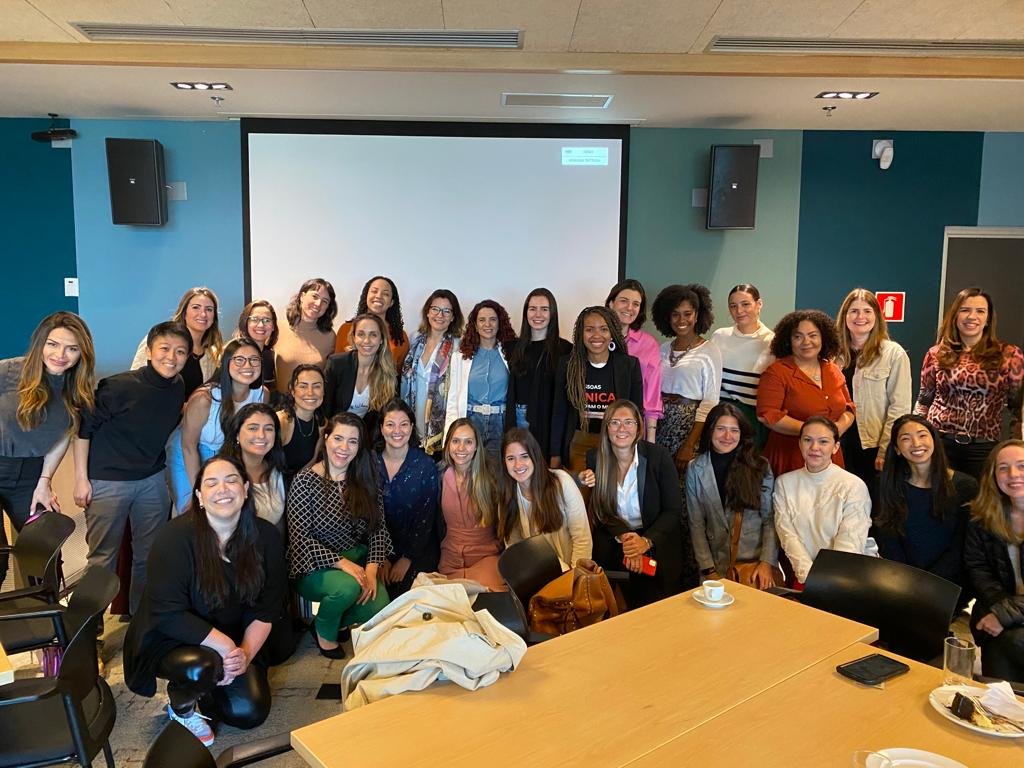
The social calendar helps explain the community component. In November 2021, participants celebrated a cohort and its online Pitch Day at B2Mamy. The following year, Microsoft Brasil hosted a breakfast for founders, investors and supporters. These gatherings gave people accustomed to scheduled sessions another setting in which to meet.
By 2025, the journey included a hybrid format. Organizer Isadora Jacques described an opening at the Google for Startups campus, in-person masterclasses supported by AWS and MAYA Capital, and a closing event supported by Link School and AWS. Her recap reported 16 participating founders, 88 percent overall attendance and no founder departures during the journey.
Those are organizer-reported measures of participation. They help explain whether people stayed engaged, rather than establish what any individual business achieved. The 2025 Pitch Day announcement separately listed a panel including Bianca Martinelli, Flávia Pini, Hida Lambros and Larissa Bomfim. The founders’ audience included people accustomed to evaluating businesses for investment.
Count the money carefully
In March 2025, president and volunteer Giovanna Mattos reported that women who had passed through Female Force had raised R$43 million, compared with R$23 million reported for 2023. The figure concerns money raised by participating entrepreneurs. It is not Female Force’s revenue, budget or investment fund.
Mattos also emphasized the time involved in venture-capital cycles. Results can appear after the program itself. That makes the community’s continuing relationships relevant, while calling for care in interpreting the total: participation and subsequent fundraising do not, by themselves, show how much capital the program caused a founder to raise.
The organization’s company feed offers another kind of outcome. Trexx co-founder Heloisa Passos, a 2023 alumna, described entering with a strong thesis but weak product-market fit and difficulty communicating the business. She credited the experience with helping her adjust direction, including a pivot, and explain the product more clearly. It is a participant’s account of changed decisions, rather than a universal promise.
A prospective founder can start by checking the published program criteria and identifying the work she wants help completing. An investor introduction is more useful when there is a business question behind it. Female Force has built a place to prepare that question, try an answer and return with a better one.