The pitch lasts three minutes. The work that makes it credible can take months. Somewhere between a founder’s ambition and an investor’s questions sit the business model, the financial records, the introductions and the awkward discovery that a good product can still be difficult to explain. VC4A has built its business in that interval.
The company connects entrepreneurs, mentors, investors and the organizations running startup programs, with a particular focus on Africa and Latin America. Its public website reports more than 280,000 community members and 29,000 ventures. Those numbers describe the reach of a platform. Its more interesting claim to usefulness is what people can actually do once they arrive.
A founder can create a venture profile, study fundraising, seek a mentor and apply to programs. An investor can search for companies that fit a particular thesis. An accelerator team can collect applications, organize selection and bring in specialist help. The connecting thread is preparation: making a business easier to understand, assess and support.
A network learns to do the paperwork
VC4A dates its founding to 2007. An early account names Ben White and Bill Zimmerman as founders and describes their experiments with free community management systems before they built their own platform. The reason given was practical: they wanted functionality that better matched African entrepreneurs and investors.
That is a revealing origin for a company associated with venture capital. Its early product problem was how to organize a community. General-purpose software gave way to something designed around the work its members needed to accomplish. The record describes a change in tools, without turning it into a dramatic tale of collapse.
The organization’s stated belief is that entrepreneurship can create employment and durable economic opportunity. Its operating approach puts local partners alongside a distributed team. Today, White’s title is Founder & Community Evangelist; Vincent Hoogduijn is CEO. The team’s backgrounds include acceleration, investment, technology and program operations. That mix fits a business where running a selection process matters as much as writing software.
The free front door has several entrances
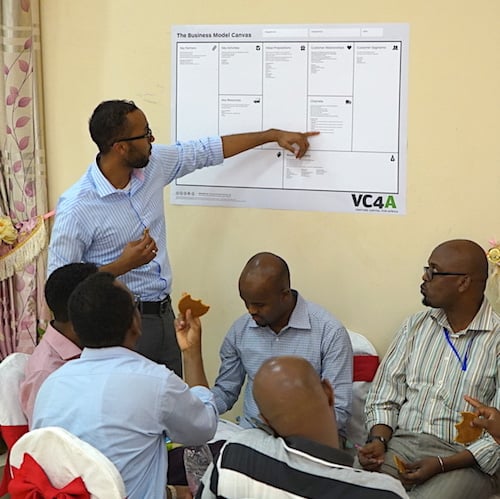
The Startup Academy is the least intimidating place to begin. Its core learning path covers starting, growing, financing and legally organizing a business. Modules mix explanations with expert videos, quizzes and downloadable tools. Learners who complete a course’s material and correctly answer its quizzes can obtain a certificate. A founder can use the material to arrive at a mentoring conversation with a sharper question.
The Academy’s contributor roster includes more than 80 experts active in African and Latin American startup markets. Their backgrounds range from legal services to market intelligence and finance. The point is specificity: an explanation from somebody familiar with the setting can make an abstract business lesson easier to apply.
The Mentorship Marketplace adds a human conversation. Its site reports more than 1,100 mentors and 1,600 mentor-mentee matches. Founders can approach relevant experts, while mentors retain the choice to accept or decline. Organizations can also use the environment for their own cohorts and alumni. A listing creates a possibility; both people still have to make the relationship useful.
VC4A’s help pages describe mentorship as a free offering. They also say partner and campaign pages, including self-service application and selection tools, can be published without charge. Campaign setup assistance and promotional services sit alongside those tools as commercial offerings. For a small program team, that distinction matters: access to software and access to somebody who will run the campaign are different purchases.
The customer on the other side of Apply
Entrepreneur support organizations are central to the business. They need a reliable way to reach suitable companies, compare applicants and deliver support after selection. VC4A offers program design, scouting, due diligence, expert matching, investment readiness training and progress monitoring. Its contact form invites organizations to request pricing for these services.
This gives VC4A a business model with several layers: accessible community resources, promotional support, premium investor access and commissioned program work. A founder and a development organization may encounter the same platform while buying very different things. The organization is purchasing execution capacity, including the people needed to make a program function.
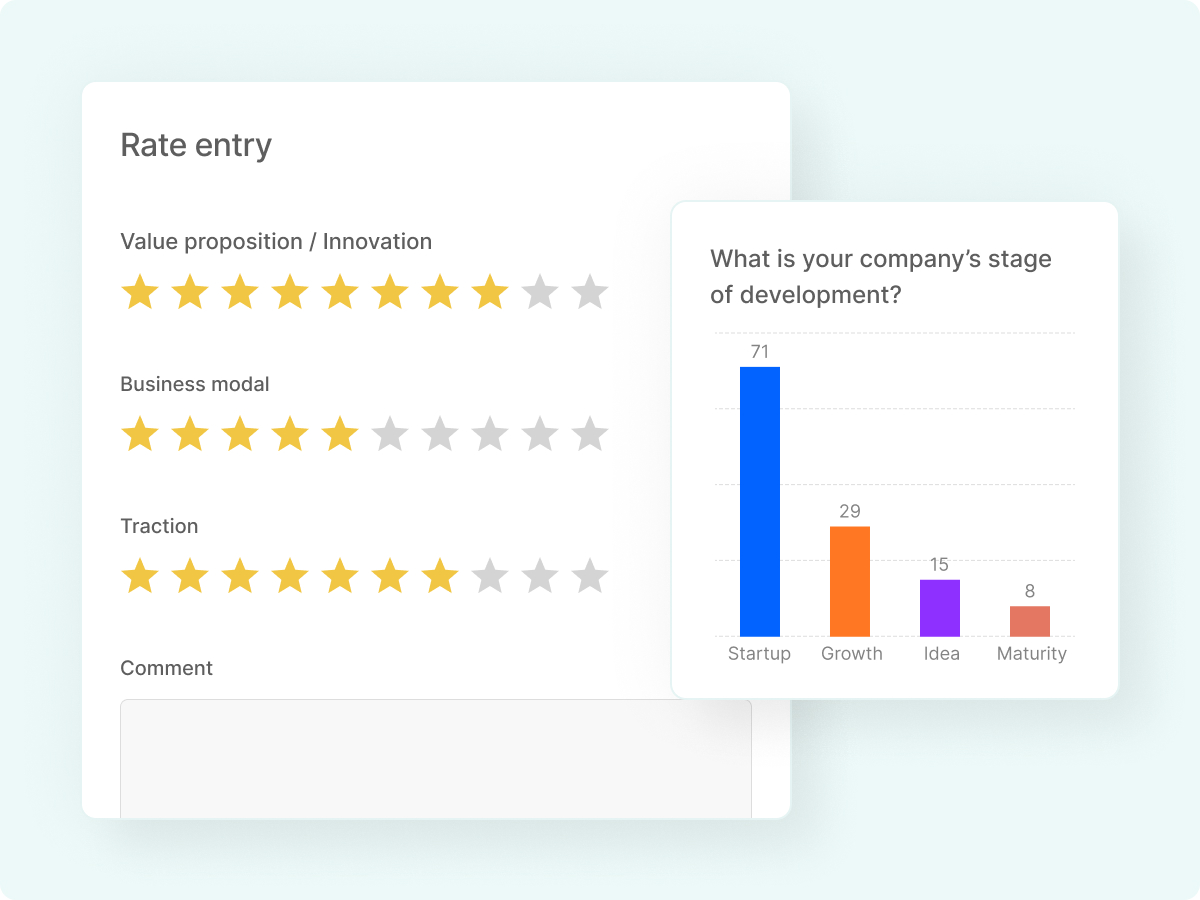
The application tools address an especially familiar irritation. Venture-profile information can pre-fill some forms, sparing founders another round of typing. Organizers can use rating and selection features to review submissions. Neither feature makes a glamorous demo-day photograph. Both address work that otherwise consumes the time of applicants and judges.
A partnership announced with the GSMA Innovation Fund in October 2024 makes the institutional customer concrete. VC4A was to provide investment readiness support for up to 40 funded companies across Africa and Asia. The work connects an existing portfolio to preparation for its next financing step. Orange Corners uses another part of the offering: a dedicated alumni community that keeps graduates connected to opportunities after their programs finish.
Invite the investors before the finale
On the investor side, VC4A provides a dashboard with filters for country, sector, stage, investment type and deal size. Investors can examine business information and supporting documents, set alerts and contact founders. The company describes a curated network of more than 1,200 investors. Search narrows the field; the subsequent conversations determine whether anything fits.
The Venture Showcase takes that relationship further. Launched in 2017, the format involves investors in assessing companies and preparing selected founders. Its first Latin American edition launched in 2022 with support from PES Latam, targeting businesses with commercial traction and fundraising ambitions of $500,000 to $10 million.
- 01Find the companies
- 02Bring investors into review
- 03Prepare with mentors
- 04Meet around the deal
Selection opens a conversation. Investment is a separate decision.
The published offer included a short edited pitch, a dealbook and private investor sessions. This is a useful distinction from simply uploading a company description: the format creates occasions to examine the business together. The demanding part remains with the founder, who must have a functioning company, relevant evidence and time to engage.
Gust offers overlapping company-profile and fundraising tools, while Seedstars operates in emerging-market entrepreneurship and venture support. VC4A’s particular combination is a regional founder network, reusable software and a team that delivers programs for other organizations. A local accelerator can be an alternative for a founder and a partner for VC4A at the same time.
When the invitation list needed changing
The Showcase also exposed a problem with who reached the room. IFC’s 2023 account says women-led businesses initially represented 26% of Showcase graduates. VC4A introduced its Women Founder Edition in Africa in 2022, involving women alumni and investors in recruitment and delivery.
“Investors lead the process.”
Ben White / IFC’s Scaling Equity, 2023
The change addressed access deliberately: find companies through relevant networks, then connect them with investors interested in meeting them. IFC featured VC4A among five ScaleX award winners. The useful lesson is about program design. An open application form still needs an outreach strategy that reaches the founders the program intends to serve.
Twelve weeks, one much clearer sales story
A smaller example shows what the support can look like inside a company. In a January 2026 case study, VC4A described Nigerian logistics business Fez Delivery’s difficulty communicating its strengths. It matched the company with branding adviser Opeyemi Olugbemiro for a 12-week intervention under develoPPP Ventures.
The work included a brand workshop, revised messaging and clearer communication of the service’s value to small businesses. VC4A reported that the customer base increased from 21,000 to 24,000 during the period, and that Fez subsequently extended the adviser’s contract for nine months. These are the program provider’s reported results, rather than a controlled estimate of what the advice caused.
12-week support period · Bars share a zero baseline
The copyable idea is modest: name the bottleneck, bring in an expert who addresses it and agree on a short period with observable results. A busy founder can do more with that brief than with another invitation to discuss “growth.”
The next test is already under way
Recent programs continue the same pattern. In July 2026, VC4A reported 12 companies in develoPPP Ventures’ tenth East African cohort, each set to receive €100,000 in non-dilutive funding plus technical support. DEG Impulse implements the BMZ-backed program, with VC4A and local organizations providing implementation support. Those grants belong to participating companies; they are separate from VC4A’s own finances.
In Latin America, a CAF initiative supported by the Bancolombia Foundation brought seven ventures from Colombia and Chile into an investment readiness and matchmaking program that began in July 2026. It focuses on rural financial inclusion, with investor sessions and deal rooms scheduled through November. The specialist context matters: these founders need counterparties who understand their customers and markets.
For prospective users, fit comes first. VC4A’s venture guidelines call for for-profit businesses beyond the concept stage, with a working prototype, product or service. Individual programs add their own geography, traction and funding criteria. Education can help earlier, but a profile cannot substitute for eligibility, and a meeting cannot promise a cheque.
The practical starting point is to identify the next piece of work: learn a topic, find a relevant mentor, prepare an application or assemble evidence for investors. VC4A offers ways into each. Its usefulness ultimately depends on the quality of the business and the follow-through of the people on both sides of the introduction.