Before Leandro Piazza taught people how to build startups, he received an expensive education in how to lose one. According to 49 educação's account of its founder, a venture he led received US$1 million in 2010. Two years later, it had failed. His retrospective verdict was admirably unadorned: “fizemos tudo errado” - we did everything wrong.
- Practical startup education, mentoring and investor preparation for Brazilian founders.
- Institutional buyers also hire 49 to operate entrepreneurship and innovation programs.
- The useful habit: turn each lesson into work that somebody can inspect.
The million-dollar tuition bill
Money had arrived before the knowledge needed to use it. That sequence matters. Entrepreneurship is full of milestones that look like answers: an investor says yes, an application goes live, a founder acquires a suitably serious job title. None necessarily establishes that a business works. Piazza's later company makes its living in the space between those events and the evidence behind them.
He rebuilt his career in education, then went to Silicon Valley and studied through Stanford's startup programming. The experience helped shape an enterprise aimed at a familiar Brazilian frustration: students could learn management without learning how to put a new venture into the market. The company's current account dates its founding to 2020; its earlier branding history places the beginnings in 2019.
The number in the name supplies the governing metaphor. The forty-niners went to California during the gold rush; 49 educação borrows the idea of supplying tools to the people chasing opportunity. Its tools are frameworks, feedback and introductions. A shovel is a more modest promise than a vein of gold. It is also something a business can actually deliver.
Homework with consequences
Startup University, the central founder program, organizes the work around validation, growth and fundraising. In a January 2023 Startupi interview, Piazza described an eight-week rhythm: take a class, unlock a practical framework, submit the work, then receive specialized mentoring. Progress depends on doing something with the material.
The application described in that interview placed founders on a pathway according to their startup's stage. An entrepreneur trying to establish demand needed different work from one seeking more customers or an investment round. Pitch decks, one-page summaries and data rooms also became part of the record available for investor connections.
A focused lesson
A practical framework
Mentor feedback
The 2023 program description made practical work the bridge between teaching and mentoring.
The distinction from a conventional course lies in that bridge. A video library can explain a sales funnel beautifully while leaving the learner's own funnel untouched. An assignment gives a mentor something specific to challenge. Has the founder defined the customer? Does the offer make sense? Is the supposed progress merely activity wearing a nice jacket?
There is a small, useful example in the same interview. Piazza said the wellness startup Wilu went through idea validation, an MVP and market entry, then reached R$150,000 in annual revenue a year later and received investment. That is a founder-reported case, rather than a forecast for the next student. Its interest is the sequence: first make something testable, then discover whether the world will pay.
The institution picks up the bill
The customer is no longer only the person with an idea. Sebrae-SP and 49 educação announced Primeiras Vendas for 150 startups beginning their commercial journey. The two-month program was free to participants and aimed at businesses that had already validated their products. Here, the institution supplied access to the training rather than leaving each founder to buy it alone.
The announced curriculum was distinctly commercial: identify growth bottlenecks, define an ideal customer, generate leads, build a sales process and write a sales playbook. It combined desktop and mobile access with a platform developed for Sebrae for Startups. The problem being addressed was concrete. A product can be validated and still lack a repeatable route to its next customer.
This illustrates the broader business model. 49 sells founder education, but it also sells the operation of programs to organizations. Its institutional positioning includes governments, universities, corporations and Sistema S entities. Buyers can bring a constituency and an objective; 49 brings curriculum, technology and delivery. That arrangement makes institutional programs both a market and a channel into the founder market.
From lessons to a larger machine
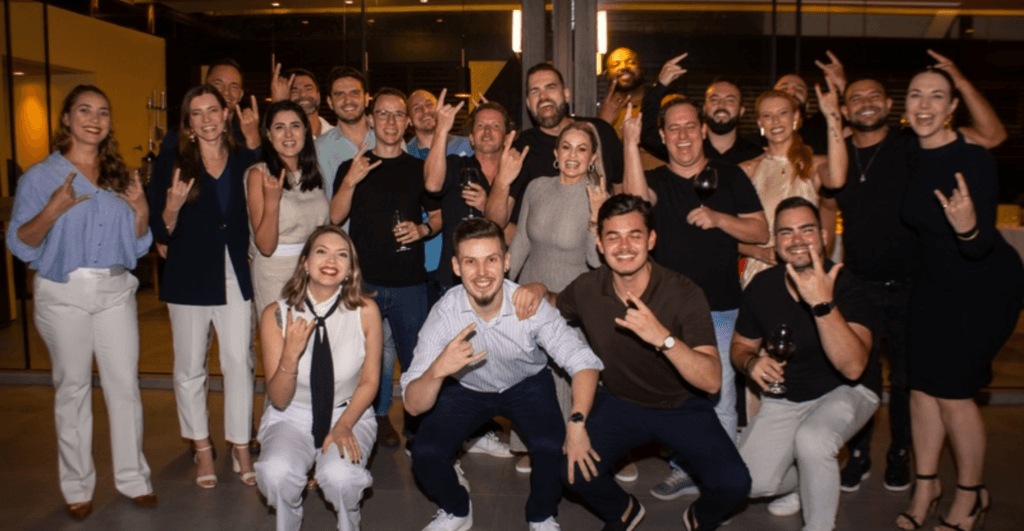
In December 2024, reporting described 49 Ventures as an investment and advisory initiative planned for 2025, with experienced entrepreneurs supplying counsel. Ítalo Sabo and Jady Ferreira Batista joined the partnership structure. Sebrae, Parque Tecnológico Itaipu and CNI were named as strategic customers for the company's educational delivery.
The current services also include 49 Code, a software house for application development, corporate innovation management and applied AI training. These offerings widen the work available after a founder's first lesson: building technology, helping teams innovate and connecting ventures with capital. Each requires more than an inspiring speaker and a room full of eager faces.
That operational emphasis became explicit on October 7, 2026, when Monnaliza Medeiros was announced as COO and Tiago Dellatorre Toigo as CRO. Medeiros's remit covers entrepreneurship programs; Toigo's includes commercial expansion and programs combining AI with product development. Her observation was straightforward: “nenhuma startup cresce sozinha” - no startup grows alone.
“Nenhuma startup cresce sozinha.”Monnaliza Medeiros, on joining as COO
Borrow the uncomfortable bit
The current homepage reports 5,000 accelerated startups and R$2 billion in portfolio valuation. Those are ecosystem claims, not the school's revenue or its own price tag. For a prospective participant, the more useful questions concern the work: which stage fits, what must be delivered, and who examines it?
Sprint 49's June-cohort offer advertised seven days of validation for R$197 cash. Its invitation included speaking to ten strangers and returning with evidence. That method depends on founders having access to potential customers and accepting unwelcome answers. It cannot promise a market or an investment. The part readers can copy costs no tuition: give an assumption a deadline, test it outside the team, and let the result change the plan.