Lídia Abdalla has a career that invites a deceptively simple question. Can staying in the same company make you more adventurous? She arrived at Sabin as a trainee in 1999. Fifteen years later, she became its executive president. The employer remained familiar; the work kept changing. Technical responsibilities gave way to teams, budgets, technology, and a business spreading beyond Brasília. A résumé can conceal quite a lot of travel when it repeats the same company name.
Her account of that progression begins with her appetite for studying. She liked studying. She liked learning about unfamiliar areas. When a larger responsibility came along, she sought the knowledge it required. The successive decisions are what make the story interesting. Each brought unfamiliar work and a reason to prepare for it. The corner office came later.
A mother, a shop, and a move
Abdalla comes from Alpinópolis, in Minas Gerais. At fourteen, she left her hometown for Belo Horizonte to pursue better educational opportunities. Her parents encouraged that move and placed value on education. Later came the Federal University of Ouro Preto and, eventually, a move to Brasília. Her husband, Andrey, was someone she had met at university.
The family example she returns to is her mother, who worked as a teacher, became a seamstress, and ran a shop. Abdalla is the eldest of three children. She grew up seeing paid work and family responsibilities occupying the same life. Ambition had a familiar face long before it acquired an organizational chart.
That background helps explain why visible examples matter so much in her public conversations about women’s careers. A girl watching an adult work has something concrete to consider. She sees decisions, effort, and responsibilities. A shop has customers who need serving whether or not anyone has written an inspiring speech about entrepreneurship.
In Brasília, Abdalla looked for an opening in the field she had trained for. Her eventual entry into Sabin came through its trainee program in August 1999. It was an opening at the beginning of a career, with no guarantee of what would follow. The next step depended on what she did with it.
The education after the education
Her first leadership position came in 2001. In 2003, she became a technical manager, a role she held for six years. The dates make the progression look tidy. The transition itself required her to add skills that her original training had not supplied: managing people, understanding administration, and learning how financial decisions shape a business.
She completed a master’s degree at the University of Brasília in 2007 and also pursued business management and corporate finance at Fundação Dom Cabral. The founders, Janete Vaz and Sandra Costa, encouraged her to study management and finance. She identifies that advice as particularly useful to her professional development.
There is something appealingly unglamorous about this part of the story. Becoming responsible for more people means becoming answerable for questions you cannot solve with the expertise that first got you hired. A budget does not award marks for enthusiasm. Learning another discipline is work, and an earlier qualification cannot do it on your behalf.
By 2009, Abdalla was technical superintendent, with technology among her responsibilities. Her view of Sabin was widening. The specialist’s task was becoming the executive’s problem: how different parts of an organization fit together, and what happens when one part changes faster than the others.
When the map got bigger
In 2010, the founders worked with Fundação Dom Cabral on a geographic expansion project. Abdalla helped lead the process alongside them and two other superintendents. In 2012, Sabin began expanding through acquisitions beyond the Federal District. Planning a business across a larger map brought a different set of decisions into her working life.
An acquisition is easy to draw as a new dot on a map. Running the expanded business asks rather more. Different teams must work together. Local knowledge has to survive the introduction of shared processes. The person overseeing growth needs to understand both the operation already in place and the organization it is becoming.
In 2013, the founders introduced a corporate governance structure and created a board of directors. Abdalla became executive president in January 2014. The succession placed someone with years of experience inside Sabin at the head of its next stage. She had helped prepare the expansion she was now responsible for continuing.
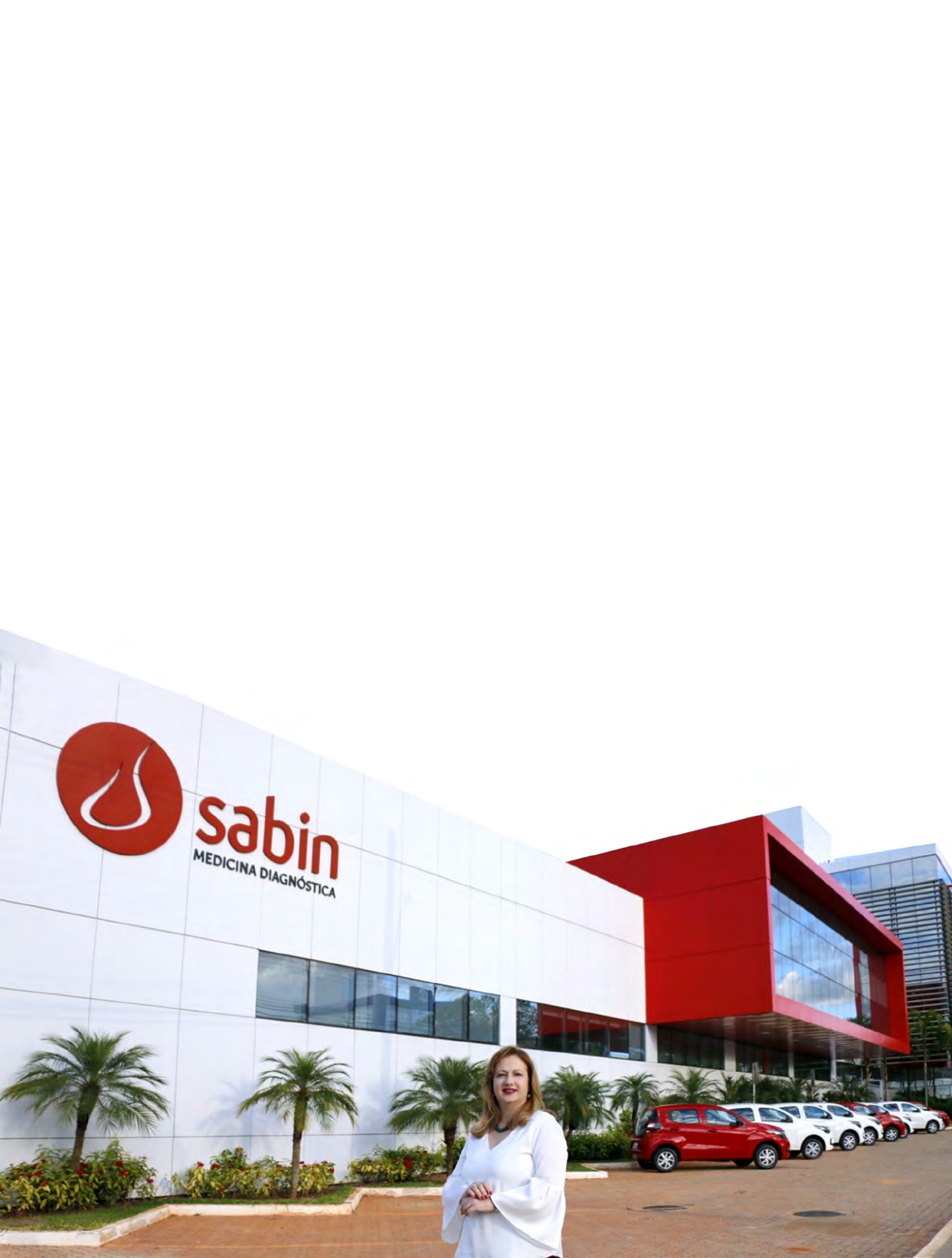
The title was a milestone, but it did not finish the learning. A company crossing regional boundaries offers plenty of ways to be a beginner again. Abdalla’s career makes that possibility visible: familiarity with an employer can coexist with unfamiliar responsibilities. The challenge is keeping the confidence supplied by experience without letting it harden into certainty.
A policy has to survive a promotion
Abdalla’s own progression gives her views on internal development a personal reference point. In a 2023 interview, she said that 99% of Sabin’s leadership positions were held by people developed within the company. That figure describes the company at the time of the interview. It also gives substance to a question any trainee might ask: where can this job lead?
Her account of equal opportunity is similarly concerned with decisions people can see. In 2021, she recalled an internal recruitment for a human resources position. The successful candidate took maternity leave before assuming the role. The business waited. The example makes a hiring policy tangible through an actual appointment.
In 2018, Sabin established a diversity committee. As a business spreads into more places, an informal understanding between colleagues becomes harder to transmit. Committees and written guidance are tools for that problem. Their usefulness still depends on the decisions made when a position opens or a manager chooses who gets a new responsibility.
Abdalla has also described attending meetings where she was the only woman among fifteen or twenty company presidents. The contrast with the women leading her own workplace was plain. She says those situations bothered her without inhibiting her. She had prepared for the work and considered herself entitled to participate in the conversation.
The mentor gets homework, too
In 2016, Abdalla became an adviser to EY’s Winning Women Brazil program. The businesses she has advised include Café Cultura and Água na Caixa. She describes mentoring as an exchange in which advisers also broaden their understanding of business. The experience does not flow in only one direction.
That is a sensible admission from someone who has spent most of her career inside a single organization. An entrepreneur running a different business presents a different set of constraints. Advice has to survive those conditions before it becomes useful. A mentor who listens can learn why an answer that worked in one company needs adjusting in another.
The relationship also gives her an opportunity to support women dealing with decisions and risks they might otherwise face alone. Her own development took place around two women founders. Advising others carries that experience into new businesses, where the people, resources, and questions will inevitably differ.
A shorter queue, a longer view
By 2026, Abdalla was discussing customer experience and automation in public interviews. One example involved a Sabin unit where average service time fell from thirty minutes to eight. She recommended listening to customers and identifying friction before choosing the technology. It is a modestly subversive order of operations in any room full of shiny software demonstrations.
In August 2026, she discussed a digitalized Brasília unit designed around autonomy, speed, and convenience. The customer experience was being considered from the design stage, with attention to different kinds of users. The same practical question runs through both examples: what changes for the person who has to use the service?
Her approach to social investment has also involved looking beyond activity to results. In discussing Instituto Sabin, established in 2005, she described the introduction of indicators to assess projects and concentrate investment. She also recalled the difficult decision to end a youth employment initiative after ten years and redirect resources to other work.
Attachment to a project can make such decisions uncomfortable. Measuring its effect brings another responsibility: being willing to change something the organization cares about. Her account treats that as part of the work of managing social investment, alongside maintaining relationships and supporting local organizations.
The next job is more learning
Asked in 2021 about ambitions for other positions, Abdalla emphasized learning. Her answer leaves room for an ambition that a promotion cannot fully satisfy. A job title occupies very little space on a business card. The work underneath it can keep expanding.
“I don’t dream of other titles, but of new learning.”
Lídia Abdalla · 2021 · translated from Portuguese
In November 2025, she said she hoped to continue in executive work for about another decade, then advise companies and mentor small entrepreneurs. That is a stated aspiration, rather than a fixed departure date. The continuity is easy to see: learn how an organization works, help it develop, then make that experience useful to someone else.
The trainee program, the management courses, the expansion project, and the mentoring conversations are distinct chapters. What connects them is a willingness to take on work that requires another round of preparation. Staying at Sabin gave Abdalla a long view of one company. Staying curious gave her more than one career inside it.