Washington has a generous supply of job titles. Kevin Turpin II has a piece of career advice that makes the whole collection seem a little less urgent: pay attention to what you can do. Research a market. Build a relationship. Learn a useful skill. A title may follow. It is an appealing argument from someone whose own title is CEO, though perhaps the advice improves when delivered by someone who has already tested it.
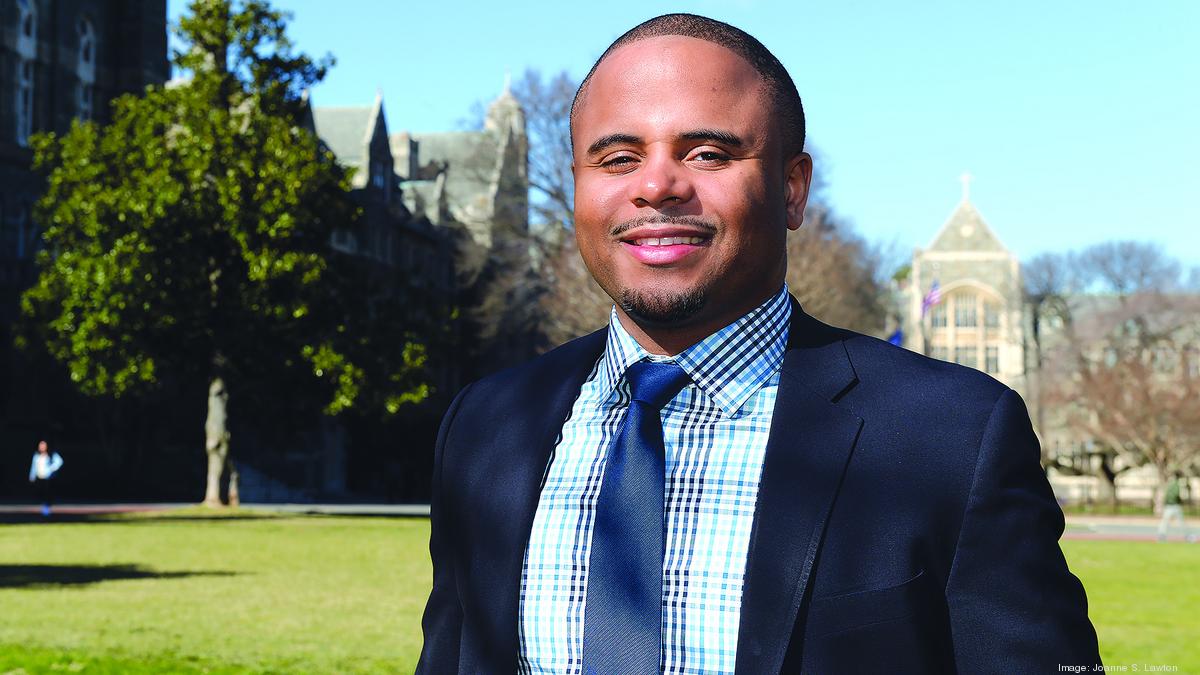
Turpin leads National Journal Group, an institution associated with political journalism that has become a portfolio of research and information services businesses. He became president in 2016. The transformation reaches back before that appointment, through years of product development and a sustained effort to understand the people who paid for National Journal. His contribution was to help turn that understanding into work they could use.
A career can look tidy when reduced to dates and appointments. Turpin’s is more interesting when followed through the questions: what a customer needs, what a colleague feels able to say, what a young person needs to learn next. Each question concerns somebody else. Together, they explain a considerable amount about his approach to leadership.
A customer council, rather than a crystal ball
In 2010, Turpin and National Journal’s owner, David Bradley, brought together an advisory council of 62 organizations. Corporations, consultancies, lobbying firms, and nonprofits spent a year helping the company understand their difficulties. That is a long time to resist announcing that you already know the answer. The exercise asked an established Washington business to study its own customers with something approaching the attention it had long paid to Washington.
The economics were changing. Digital competitors and readily available information were pressing against the old subscription and advertising model. A publication could continue producing valuable work while its customers became less willing to pay for the familiar package. The uncomfortable question was how to remain useful when the package itself needed changing.
The eventual shift can be seen in two historical figures. Advertising accounted for half of revenue in 2012; by 2017, it accounted for three percent. Those numbers describe the organization, rather than an individual accomplishment. Turpin’s story sits inside them: a developing executive helping an established institution work out what to become.
Advertising share of National Journal revenue. These are historical figures, not its current revenue mix.
By 2020, Turpin was explaining the value of asking customers how their responsibilities were changing. A budget can reveal a new priority. A recurring question can reveal a gap. The answer becomes more useful when the conversation gets close to an actual task. A strategy meeting has its place; so does leaving it long enough to hear from the person who has to use the result.
This approach gives curiosity a job description. It requires patience with repetition and a willingness to learn something inconvenient. The person buying a service may care very little about the internal elegance of the plan. They care whether it helps them finish their work. There is a refreshing lack of ceremony in that test.
Washington, translated into a working day
By 2015, Turpin was overseeing the membership program’s research group as executive director of strategy and operations at Atlantic Media. Members wanted to understand congressional subcommittees, voting patterns, and the ways Capitol Hill staff used social media. These were practical questions about how a complicated place operated. Research could help members make sense of the institutions and the people within them.
Presentation Center supplied another practical answer: research and slides that members could adapt to their own briefings. A public-affairs professional might understand an issue and still face the work of explaining it to an entirely different audience. Preparing that explanation takes time. A ready-to-use presentation moved some of that work to National Journal. The slide deck, much maligned in office life, acquired a respectable role in the business model.
The attention to people became particularly explicit with Vignette. Turpin announced the service in August 2020 with more than 9,000 profiles of officials and policy influencers. Its scope included federal, state, and local decision-makers. The research covered backgrounds, policy records, testimony, speeches, and other public material that could help members prepare for a meeting or identify relevant participants.
That launch addressed a geographical change as well as an informational one. Important decisions were happening beyond the federal government. Understanding Washington alone could leave a public-affairs team with an incomplete picture. A database had to follow the work to the places where decisions were being made. The product’s ambition was practical preparation, down to the person sitting across the table.
In 2019, National Journal’s fiftieth anniversary had brought another people-focused project: a report on 50 individuals changing how Washington worked. The newsroom and research team collaborated on it. The choice of anniversary project is revealing. An institution celebrating its own longevity turned attention toward the people altering its field. Turpin and Bradley marked a birthday by looking outward.
The cost of fitting in
Turpin’s public account of his early working life adds another dimension to the listening story. Growing up in Buffalo and Virginia Beach, then building a career in Washington, he encountered questions of identity alongside questions of advancement. In a conversation with Modern Minorities, he described being the only Black person at the company when he started and the effort he put into conforming.
“I spent the first part of my career conforming.”
Kevin Turpin II
The word carries its own weight. Before a person can offer a different perspective, they have to decide whether the room will welcome it. Turpin has discussed that experience publicly rather than leaving the polished executive biography to speak for him. It puts a personal history behind his later emphasis on inclusion, and behind the question of whose experience a workplace allows itself to hear.
In March 2021, he joined the newly formed Diversity in Government Relations Coalition as an anchor partner representing National Journal. The coalition sought better demographic information about the people influencing advocacy and policymaking outside Congress, then recommendations and practices grounded in those findings. Turpin’s stated concern was that the people shaping laws should reflect the people affected by them.
Representation here concerned the professional machinery around policy: teams, leadership ranks, boards, and the people speaking for organizations. It made a broad principle more specific. Researching influence is one activity; considering who gets to exercise it is another. His participation brought those questions into the same professional world. The coalition now lists him among its alumni.
At National Journal, his statement on workplace values ties a culture of belonging to better ideas and business growth. The organization’s named values include generosity and ideas. The interesting part is the expectation that different lived experiences improve the work. For a business built around understanding other people, allowing employees to bring their experience into the conversation has an obvious practical importance.
Giving someone else a way in
Turpin graduated from Georgetown in 2005. His connection to younger people extends beyond returning as an interview guest. His LinkedIn profile records a City Year Washington, DC board chair tenure from January 2018 to June 2024. City Year’s work places mentorship in the school years, well before a first professional title or an ambitious career plan.
The Economic Club of Washington has also documented him speaking to its scholarship alumni about his career. The conversation concerned mentorship and curiosity, and how both had helped him reach executive responsibilities relatively young. There is a useful symmetry in offering time to people approaching a career when your own advancement has given you less spare time to offer.
His work with Gracism Global adds a different setting. He chairs its board, alongside founder and president David Anderson and other directors. The organization focuses on bridging divides of color, class, and culture. Turpin also joins Anderson in podcast conversations about generosity, with David Heiliger hosting. These discussions explore giving as an action and a relationship, rather than leaving it as a pleasant word.
The podcast’s early episodes describe a group pooling gifts and looking for people who could use practical support. The faith underlying those conversations is explicit. So is the attention to an individual situation. A useful act requires learning what another person needs. The setting differs from a research business, but the habit of attending to somebody else is familiar.
The next question
Gravity Research became the name for the group’s research and consulting businesses in 2023. Its work includes reputational questions, stakeholder influence, and political vetting. Official biographies credit Turpin with founding the portfolio company. The expansion carries his responsibilities beyond an individual publication into research services used by corporate leaders.
In April 2026, the JEGI LEONIS Media & Tech Conference program placed him in a conversation with Dow Jones executive M. Scott Havens about National Journal’s transformation into an intelligence platform. The title attached to Turpin was CEO of National Journal Gravity Group. The subject reflected years of accumulated decisions rather than a single clever launch.
There are lighter details too. He enjoys sports and has mentioned listening to Bill Simmons. A 2016 interview recounts winning a car at a Georgetown basketball game in 2002. That is a pleasingly improbable footnote to an otherwise deliberate career. Some outcomes reward preparation; occasionally, a basketball game supplies transportation.
His advice about developing abilities before chasing titles returns the story to the everyday. Listening, researching, explaining, and mentoring are things a person can practice. They make a career less dependent on the next impressive word beneath a name. Turpin has collected responsibilities, certainly. The useful question remains what he does with them, and whom he helps along the way.