Wendy Lund once arrived at a meeting with a project and left with homework. Her boss, Pamela Maraldo, had asked a short question: “So, what’s the strategy?” Lund had no answer ready. The meeting ended. She went away, did the work and consulted her father, a chief financial officer. Enthusiasm had got her through the door. It would take preparation to get her back into the room.
The episode belongs to her early nonprofit years, well before the global titles. It is a useful beginning for a communications executive’s story because there is very little communicating in it. A question. A silence. An assignment. Anyone who has brought an attractive idea to a meeting and discovered that it lacks a reason to exist will recognize the atmosphere.
In January 2026, Lund became global chief executive of Allison Worldwide. She came with experience leading an agency, working inside a company and coordinating clients at a holding group. The CV had grown considerably. The problem Maraldo put before her remained worth asking: what are we trying to accomplish, and how will this work get us there?
A historian learns to read the room
Lund studied history and women’s studies at the University at Albany, then earned a master’s degree in women’s history at New York University. In a profession crowded with business language, this is a pleasantly different set of credentials. She has described herself as a self-taught marketer. Her formal education taught her to pay attention to stories.
History is full of arguments about who gets heard, whose experience counts and who has the authority to describe an event. Those questions travel easily into communications. A campaign also chooses its protagonists. A corporate announcement decides what belongs in the opening sentence. Even the apparently innocent choice of a word can make an audience feel included or leave it outside the conversation.
“Words matter,” Lund has said. She examines whether people will understand a term and whether the story is being told in a way they can relate to. This is an exacting habit for someone paid to make messages travel. A phrase can sound impressive in a conference room and remain utterly unhelpful to the person expected to act on it.
She also describes marketing as a sport. There is pleasure for her in watching the work, seeing the awards and competing through different channels. The historian and the competitor occupy the same desk. One wants to understand the audience; the other wants the message to do something once it arrives.
“Words matter.”
Wendy Lund
The family lesson in building things
Her father was CFO of a major retail chain in New York. The lesson she took from him was that a company is built by people working toward a shared vision. A business might have one name over the door, but a considerable number of people must agree to open it every morning.
Lund’s career developed within organizations. Early marketing roles at Planned Parenthood and the National League for Nursing brought her into nonprofit work. Later came agency leadership and corporate communications. She has talked about applying an entrepreneurial approach inside existing businesses: finding an opening, assembling allies and building something within the institution already around her.
That kind of work comes with its own test. The existing organization has habits, budgets and people who remember why the last idea failed. A proposal must earn room among all three. Her account of setbacks includes taking time to think, resetting and returning with another plan. The practical emphasis falls on finding people who can help make an idea happen.
There is an appealing lack of ceremony about this. Ambition can spend a great deal of time advertising itself. Building usually requires another conversation, another revision and somebody willing to take responsibility for the next step.
Tenfold, with people still in the picture
Lund took charge of GCI Health in 2010. Over ten years, the agency grew tenfold. That figure appeared in the announcement of her Allison appointment, and it supplies a compact answer to the question of whether she has built a business before.
Agency growth over ten years under Lund’s leadership, as reported in her 2026 appointment announcement.
A growth multiple leaves much of the working life underneath it invisible. There are people to hire, relationships to maintain and responsibilities to distribute. More work produces more opportunities for colleagues to misunderstand each other. The internal conversation becomes part of the commercial assignment.
In a 2015 discussion of workplace culture, Lund emphasized giving employees information, encouraging dialogue in both directions and treating family responsibilities as part of ordinary life. Managers were expected to intervene when behavior went wrong. “Don’t tolerate ‘mean’ behavior,” she advised. This is an unusually plain instruction in a field capable of making a disagreement sound like a strategic alignment opportunity.
Her examples included lunches where staff taught one another and a competition timed to the college basketball tournament. The latter brought her interest in competition into account work. Learning, new ideas and a little play could occupy the same workplace. The details suggest a manager who wanted people engaged in the business around them.
There was external recognition for that approach. In 2017, GCI won the small-agency category in the North American Best Agencies to Work For selection. The documented arrangements included monthly lunches with vice presidents and senior vice presidents, mentoring pairs and a buddy for new arrivals.
One exchange program invited London and US colleagues to pitch for the chance to trade seats across the Atlantic. A participant had to persuade senior management, then go and experience another office. The exercise joined presentation practice to travel and gave the phrase global perspective an actual boarding pass.
These arrangements matter because they describe opportunities someone could use. A welcome buddy answers a question. A lunch puts a leader within reach. An exchange lets a colleague encounter a different working environment. Culture acquires substance when there is a place to turn up.
Motherhood belongs on the achievements list
Asked in 2019 about career highlights, Lund included transforming her agency and creating a workplace people wanted to join. She also included raising two children as a working single mother. Their accomplishments and care for other people mattered deeply to her.
It was an answer that widened the usual account of professional success. The industry question invited business achievements. Lund placed family in the same frame. There is something quietly revealing about which parts of a life someone insists on keeping together when a formal question offers permission to separate them.
Her writing about women’s advancement had already made that connection practical. In 2016, as her daughter entered her second year of college, she argued that the number of women working in PR did not translate reliably into representation at the top. A profession can welcome women into its workforce and still need to examine the route toward leadership.
Lund proposed regular mentor meetings, opportunities to shadow leaders and clear permission to use flexibility. Coffee dates appeared among the suggested mechanics. The point was access: seeing what a senior job involves, discussing concerns and making ambitions easier to express. A leadership pathway becomes more credible when an employee can name the person helping her walk it.
The same concern appeared in her reflections on risk in 2026. Lund recalled growing up with an expectation that she should stay within her lane. Studying women’s history, learning from challenging mentors and encountering inequities changed her thinking. Confidence, in that account, had an education of its own.
A turn through the client’s chair
In 2021, Lund was chief communications officer at Organon as it separated from Merck. In 2022, she moved to a chief client officer role at WPP. The sequence gave her experience of a company’s internal communications responsibilities as well as the agency and holding-group perspectives.
Each seat changes what is visible. The agency presents work; the client has to bring it through an organization. Other executives, employees and competing priorities become part of the brief. That is why a move between the two sides can be an education in the pressures surrounding a decision.
By February 2026, client empathy and change management were among the subjects of her Brand Insider: BTS conversation with MediaPost. Her return to an agency therefore carried experience of the people buying the advice, alongside experience managing the people delivering it.
GCI
Organon
WPP
Allison
What she is assembling at Allison
Lund started at Allison on January 12, 2026, based in New York and reporting to executive chairman Ray Day. The assignment covers global operations, expansion and business strategy. She succeeded co-founder Jonathan Heit, arriving at an agency with an established business and a new chapter to organize.
She has said that leading agencies was the work in which she particularly thrived. The attraction is understandable from her account of a career spent building teams and seeking commercial opportunities. Agency leadership brings those activities into daily proximity: the people, the client relationship and the next piece of work.
By June, organizational choices were visible. Tracey Cassidy became US chief operating officer. Emily Wilson Sawyer was appointed executive creative director. Molly Luby became managing director of the work connecting consumer and corporate communications. An existing AI taskforce became an AI Center of Excellence, with Jaime Tero as managing director and Marcel Goldstein leading generative engine optimization.
The arrangements put names against operations, creative work and the changing ways brands are discovered. They also brought consumer and corporate communications closer together. A person encountering a brand may be its customer, employee or investor; that person carries those experiences between settings, however neatly the company divides its departments.
In her own account of the changes, Lund described pairing positivity with performance. The phrase brings together concerns that recur through her career: people enjoying the work, and work producing a result. It is an intention that can be judged through the choices that follow, from the responsibilities leaders receive to the relationships clients experience.
The pause before the next move
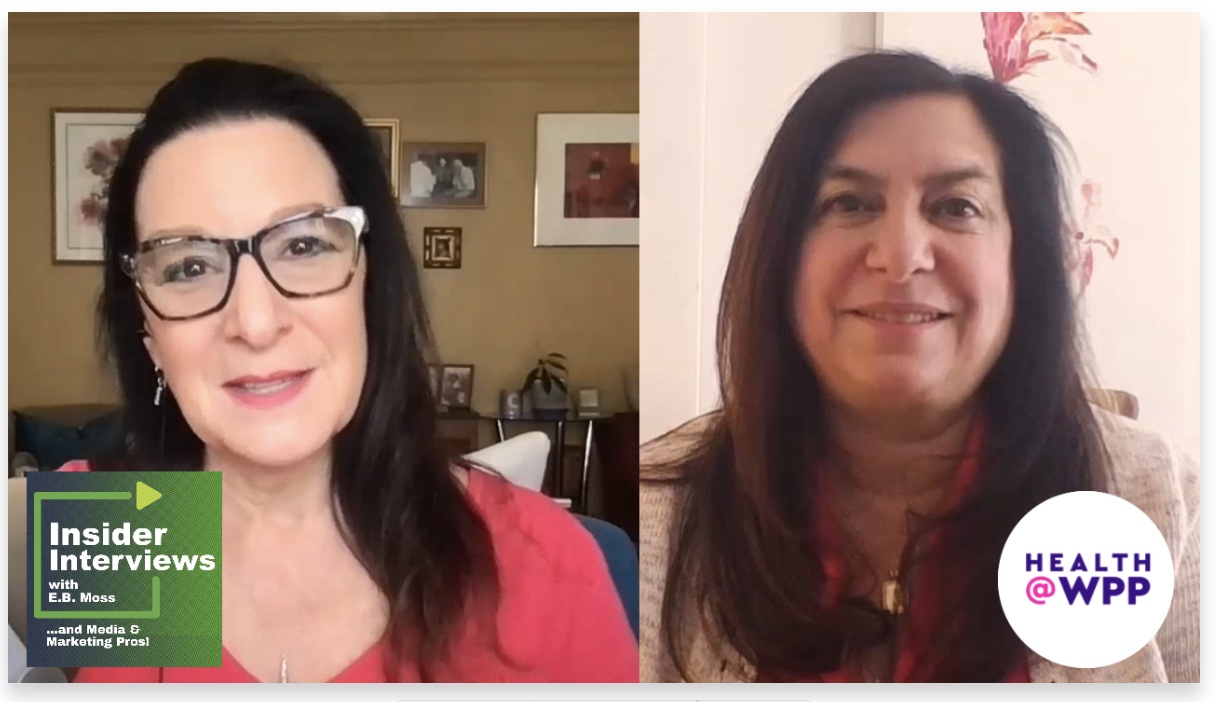
There are lighter details in the public picture, too. In a 2025 interview, host E.B. Moss introduced Lund’s dog, Yogi. Moss also described a longstanding connection through her sister Lisa, who had worked with Lund and later become a neighbor and friend. A business conversation arrived with the familiarity of people whose lives overlap beyond their job titles.
Lund’s recent reflections on women taking risks allow for fear alongside excitement. She wants those conversations to help women recognize that they have company when considering a bold move or a small one. The distance between hesitation and action is part of the story she tells about herself.
Her new job has plenty of room for both preparation and uncertainty. The earlier meeting with Maraldo remains a useful companion to it. Someone asked for a strategy. Lund went away and learned how to supply one. Years later, with an agency to lead and people depending on its direction, the question still has work to do.