Eight meetings is a lot of coffee for an introduction. According to Jesse Derris’s later account, that was how many conversations it took to persuade Lisa Frank to join him in a new business. He had been looking for a partner on the consumer side of communications. Frank was the person he wanted. Getting her to agree required a little more than an attractive idea and a calendar invitation.
That is a useful place to begin her story. Public relations deals in announcements, and announcements tend to make decisions look instantaneous. A title changes. A company opens. Someone smiles for a photograph. Frank’s career offers a longer view: the conversations before the decision, the work before the title, and the people who make an agency function once the excitement of starting it has worn off.
Eight meetings, then a shared workspace
Frank came to the partnership with experience at LaForce + Stevens, where she had worked on the Target account. She knew the consumer side of the business from inside an agency: brands, editors, launches, and the considerable distance between a company’s preferred story and the story someone else wants to tell. Her earlier career also included Burson-Marsteller. Before she helped open a firm, she had worked within established ones.
Neil Blumenthal, the Warby Parker co-founder, introduced Frank and Jesse Derris. He knew both before they became business partners and had sought their advice separately. The connection put two people he trusted into the conversation. It was an introduction with practical consequences: Warby Parker became the agency’s first client.
In 2013, they started Derris in a small co-working space on Manhattan’s 55th Street. A shared workspace is a modest setting for a company that advises other companies on how to present themselves. It does have one advantage over a grand reception area: nobody can mistake the furniture for the business. The partners had to build something clients would want to return to.
Jesse’s account gives Frank a central place in that construction. When she became CEO, he credited her with helping turn his idea into the company it became. Their partnership joined the desire to start a business with the ability to make it work. The agency carried his surname; its development carried both of their efforts.
The product gets a vote
Two years after the agency began, Frank appeared on a panel for Cornell Tech students alongside people from Casper, Tumblr, Red Antler and Niche. The subject was branding. In a room concerned with how a business presents itself, she insisted on the thing being presented.
“The product has to be there.”
Lisa Frank · Cornell Tech, 2015
Her point was that a product needed to justify the conversation around it. An appealing identity could not supply the missing substance. For someone whose work involves making brands intelligible and interesting, that is a fairly stern entry requirement. The publicity has to have something to stand on.
It also explains why her work belongs close to a company’s decisions. A message establishes an expectation; the purchase tests it. Between those two moments lies the relationship a brand is trying to build. However carefully a launch is arranged, a customer eventually meets the product without a publicist standing beside it, helpfully interpreting the experience.
The panel’s discussion put product and brand in conversation with each other. Frank’s contribution kept that conversation attached to reality. A good explanation should make the value easier to understand. It should leave the company with a promise it can keep.
One business, several conversations
By 2017, Frank was describing another question at the heart of the agency’s work: why tell a particular story? She saw a gap in communications that addressed some of a business’s audiences while leaving others outside the conversation. Her interest was in understanding the company well enough to talk across those different constituencies.
The distinction matters for consumer brands. A customer, an investor, and an editor can encounter the same business and ask quite different questions. One wants to know whether to buy. Another wants to understand the commercial model. A third needs a reason to pay attention. A company has to remain recognizable as it answers each of them.
Derris brought consumer and business communications into one offering. Its early thesis was that a new generation of brands would develop a different relationship with their customers, and that communications needed to help define the brand before deciding how to distribute its message. Positioning became a starting point for work across channels.
The client relationships give that approach a concrete setting. Warby Parker, Everlane, Reformation, Harry’s and Glossier became associated with the firm’s consumer work. Later relationships included SKIMS and rhode. These are agency relationships, involving teams and founders; Frank’s story is about helping build the organization in which that work happened.
What have you made?Positioning
Why should anyone care?
An editorial sketch of the relationship between substance, story and audience.
A bigger room, with more people in it
In 2019, Derris acquired London agency Sample. A business that had begun in a Manhattan workspace now had a way to support clients outside the United States. International expansion brought the same basic question into a different setting: how does a company make sense to the people it wants to reach?
The firm also moved closer to companies before they launched. Amity Supply, which Frank co-founded with Jesse Derris and Julie Halpin, brought investment into the picture. The fund began in 2017. Her involvement adds another dimension to a career in which understanding a business can mean participating in its development as well as explaining it.
Project Mercury took a related approach through a partnership between Derris and creative agency Mythology. Announced in 2019, the project sought involvement at the beginning of a company’s life, when founders were still making decisions about what it would stand for. The attraction was practical: an agency can influence more when it arrives before every consequential choice has already been made.
The project’s later remit focused on supporting underrepresented founders through pro-bono strategy, positioning and branding. That provides a concrete example of the firm making its capabilities available to people building new businesses. It is also consistent with the early-stage work around which Frank’s agency career developed.
Other partnerships moved the story into physical space. In Person, a collaboration with the hospitality specialists at thank you, covers retail strategy, customer experience and temporary or permanent retail. A shop or an event gives a company another way to express its ideas. It also gives the audience an opportunity to inspect them at close range.
In August 2022, BerlinRosen invested in a majority stake in Derris. The executive team remained in place. The arrangement supported an expansion of staff and services while preserving the agency’s operating identity. Frank stayed within the business she had helped build as the resources around it changed.
The team behind the new title
By 2023, Frank was president and partner. Her responsibilities included developing the firm’s brand strategy capabilities and scaling creative, content, experiential and influencer work. She was helping manage the expansion of what the business could offer, with the complications that accompany adding more kinds of work.
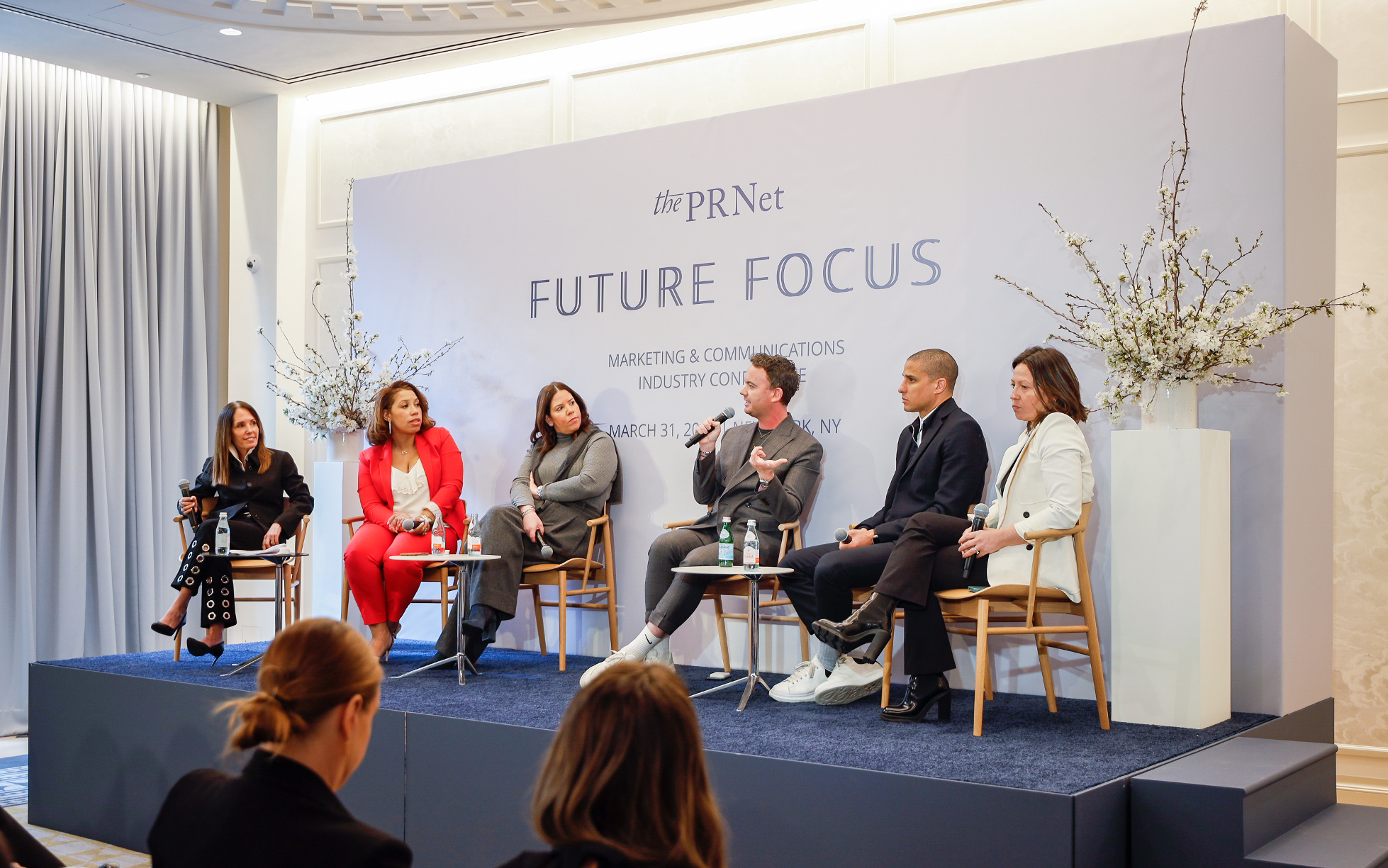
The following March, she became CEO. Jesse moved into the chair role at Derris and a chief strategy officer position at the newly named parent group, Orchestra. The handover redistributed responsibilities within a partnership that had already lasted more than a decade.
His explanation for the change included the leadership team Frank had built inside the company: Abby Dixon, Julie Brown, Lena Griffin, Lindsey Gilchrist and Samantha Weiss. He described them as ready to lead. Naming the colleagues made the succession feel less like a solitary ascent and more like the next step for an organization.
An agency figure reported in April 2024, alongside the observation that several senior leaders had started in entry-level roles.
That historical retention figure needs its date attached. Its interest here is the company it keeps: a leadership group with people who had developed within the firm. Frank’s promotion arrived with evidence of an internal team able to take on more responsibility. The new title sat on top of years of shared work.
What is worth saying next
As CEO, Frank’s remit covers the newer lines of business and international growth. Orchestra gives Derris access to specialists in areas beyond its own consumer practice. Today the agency describes a team of more than 75 people working from New York and London. The original room has become a considerably larger operation.
Her public activity still returns to the work itself. On LinkedIn, she has shared a Derris colleague’s account of a Bath & Body Works campaign featuring Hilary Duff, with thanks to the people involved. The project included communications strategy, experiences and mailers. It offers a recent glimpse of the range of formats around which the agency’s practice has grown.
When discussing the business in 2024, Frank put the editorial problem succinctly: deciding “what are we saying, and what’s worth saying.” It is a question with a useful amount of friction. Something can be ready to announce without being interesting to hear. The judgment lies in recognizing the difference and helping a company make a more meaningful choice.
The eight meetings at the beginning of her story make a fitting companion to that question. Both suggest the value of giving a decision enough conversation. Frank eventually said yes to a partner and a business. More than a decade later, she took responsibility for leading the company they had made together.