There is a moment in the life of an old product when everybody knows what it is and almost nobody knows what to say about it. Stanley had made sturdy bottles for more than a century. Tradespeople knew them. Campers knew them. The problem was not recognition. It was imagination. A thermos lived at the worksite or in the woods, and that mental picture had hardened like yesterday’s coffee.
Kaplow looked at the same object and saw a missing audience. The New York communications agency helped move Stanley 1913 into the hands of millennial and Gen Z women through product seeding, earned media, retailer communications, celebrity collaborations, and pop-ups. More than 500 celebrities, influencers, and tastemakers received products. A bestseller built a 150,000-person waitlist. The brand appeared with Olivia Rodrigo, Barbie, Lionel Messi, and LoveShackFancy. The useful bottle acquired a second identity: everyday accessory.
The recurring Kaplow move is to find the audience a familiar category has trained itself not to see.One agency, many category detours
This is the through-line in Kaplow’s work. For quip, the overlooked audience was the beauty consumer. Its cordless water flosser entered a world of shelfies, sleek design, and beauty editors instead of remaining trapped in a lecture about dental compliance. After six weeks, quip reported that it had become the second-most-popular water flosser in the United States. For Warners, a century-old intimates label, the agency built an always-on influencer system in which style ambassadors, an undergarment educator, and conversion-oriented creators each had a different job. During campaign periods, Warners reported a 60 percent week-over-week lift in Amazon sales.
The meeting before the message
Liz Kaplow founded the agency in 1991 on a belief that now sounds obvious only because the rest of marketing learned to repeat it: brands form relationships through stories. At the time, public relations mostly meant the press. Kaplow’s practice now spans creators, social content, paid media, affiliate links, executive visibility, live events, design, and training. The original premise remained, but the distribution system grew tentacles.
The useful part of its process happens before any of those channels. The agency’s proprietary ONE Strategy Session brings leaders together to settle four questions: what white space belongs to the brand, who should care, how should it sound, and what narrative can the whole organization repeat? The output is a report and roadmap. That may sound less glamorous than a celebrity partnership, but alignment is the hidden constraint in most large campaigns. A company with five versions of itself rarely becomes clearer by publishing all five more loudly.
The Kaplow chain reaction
This is also where Kaplow differs from a shop that sells only press coverage or only creators. The ONE Session is the hinge between corporate strategy and execution. The same narrative can guide a CEO interview, a pop-up, a social post, a paid placement, and an affiliate link. Kaplow calls its approach “New Earned Media,” but the plainer description may be more revealing: one idea, carried by several credible people, measured beyond the clipping.
The account that became an archive
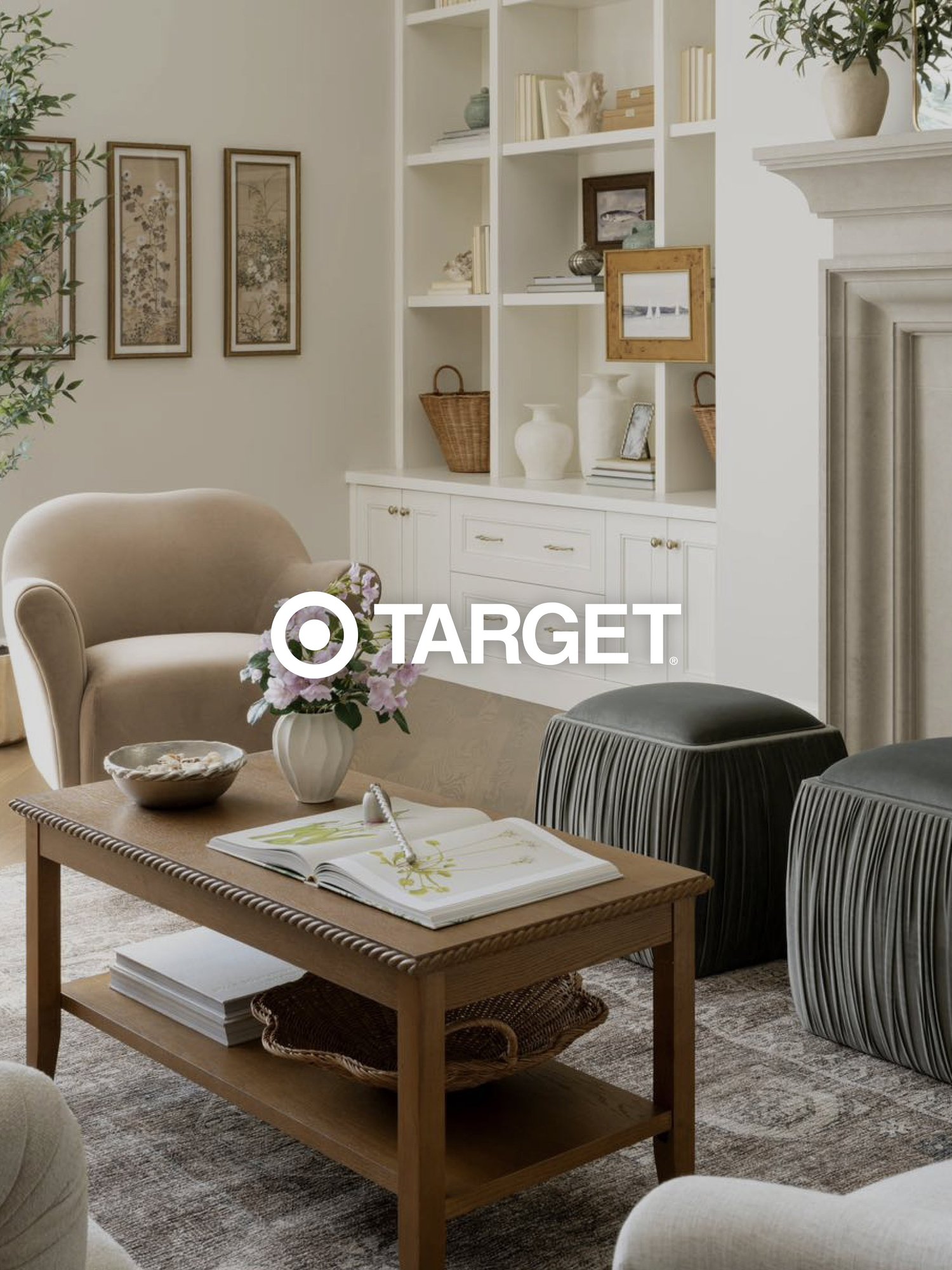
Kaplow’s relationship with Target has lasted more than two decades. In agency years, this is geological. The work includes over 50 brand launches, a giant dollhouse in Grand Central Terminal, a 500-person dinner for the FEED collaboration, a Bullseye Bodega during New York Fashion Week, and a 220-foot floating store on the Hudson River. Over one two-year period, Target’s owned-brand work generated a reported 3.2 billion earned impressions. A program involving home-style experts increased impressions by 868 percent.
The spectacle is memorable, but the deeper advantage is continuity. Kaplow had enough time to understand which part of “Tarzhay” could change and which part needed protecting. It helped introduce approachable design authorities, making taste feel useful instead of remote. It supported inclusive launches, including sensory-friendly children’s furniture and adaptive Halloween costumes. During major retail seasons, it coordinated other agency partners and built routines that could produce coverage between the theatrical moments.
A business made of senior attention
Kaplow earns money the conventional agency way: retainers, projects, integrated campaigns, and a la carte services. Its rates are private. Clients range from startups to Fortune 500 companies and nonprofits, with a center of gravity in beauty, lifestyle, retail, health and wellness, consumer technology, and financial services. The alternatives are large network agencies, independent consumer specialists, creator shops, or an internal communications team. Kaplow’s pitch is that a senior, high-touch team can connect the strategy to every channel without passing the story through a stack of disconnected vendors.
Brand strategy, the ONE Session, positioning, and narrative.
Media relations, executive thought leadership, and training.
Creators, social, paid media, content, and design.
Events, partnerships, pop-ups, and affiliate commerce.
The model works best when a client has something true but under-expressed: a heritage product with a neglected audience, an executive with useful expertise, a nonprofit with research hidden behind a broad awareness message, or a product whose category definition is too small. Kaplow’s eight-year work for the Breast Cancer Research Foundation moved research and scientists toward the center of the October conversation. Its Fidelity program made women’s financial stress discussable through education and recognizable hosts. Both found a human doorway into an institutional subject.
It is less suited to a company hoping publicity can substitute for a differentiated product, leadership agreement, or sustained access to spokespeople. The method depends on credible proof and repetition. A single splash without the news engine behind it leaves only a photograph of the splash.
The culture became a product
The agency describes its internal culture with the acronym TREE: trust, respect, energy, and enthusiasm. Such phrases are easy to print on a wall. Kaplow attaches numbers to them. The company reports that 40 percent of employees have stayed at least five years, more than 90 percent of staff are women, 40 percent of leadership are people of color, and five employee-led committees support the workplace. PR Daily and Ragan both recognized the agency’s workplace in 2024.
In 2025, Kaplow and genconnectU turned TREE into an on-demand leadership course and enterprise seminar. This is a telling expansion. An agency that spends its days extracting a client’s useful story eventually applied the exercise to itself. Culture, once a recruiting claim, became a teachable service.
The media changed. The business remained a wager that people trust people before they trust institutions.Kaplow’s durable operating idea
The part worth borrowing
The easiest Kaplow tactic to copy does not require a barge, a celebrity, or a New York address. Before choosing a channel, write down the audience your category ignores. Then find the person who can make your claim credible to that audience. Give that messenger a specific job. An expert can teach. A customer can demonstrate. An executive can explain the decision. A creator can translate the product into a lived ritual. Treating all of them as interchangeable “influence” wastes what makes each persuasive.
A three-question brief
- What can this brand truthfully own that its competitors cannot?
- Which overlooked audience would care if the story were framed differently?
- Who already has permission to explain it to them?
Kaplow’s portfolio offers a neat answer to what public relations does now. It is not merely securing attention. It is deciding what a company should mean, finding the human carrier for that meaning, and building enough connected moments for the market to remember. Sometimes the result is a conversation about money. Sometimes it is a better way to discuss breast-cancer research. And sometimes, delightfully, it is a very old bottle becoming the newest thing in the room.