In the spring of 2021, someone looked at the lime resting in the neck of a Corona and saw a clock. Not metaphorically. A real clock - the kind millions of people watch in Times Square while a glowing ball makes its slow descent toward midnight. The agency MULTIPLY replaced that ball with a giant lime, brought in actor Josh Duhamel, and staged the drop on May 4, the eve of Cinco de Mayo. A familiar beer ritual became a deadline. Midnight became marketing inventory.
The result, by the agency’s count, was 359 media hits and more than 509 million impressions. Corona became the most talked-about beer for the occasion. The figures matter, but the mental trick matters more. MULTIPLY did not invent the lime. It noticed the little ceremony already happening every time someone opened the bottle, then made that ceremony absurdly, photographically large.
The product is a reason to talk
MULTIPLY is a New York agency founded by Dan Baum in 2000 and previously known as DBC PR & Social Media. It grew up in earned media, where a weak idea gets exposed quickly: a reporter either sees a story or does not. Today the firm pitches a broader service - advertising, creative, PR, social, influencers, paid media, content, activation - while preserving that original test. Before deciding where an idea lives, ask whether anyone would care if it existed.
That is why its portfolio feels like a cabinet of improbable objects. A Fireball keg holding 5.25 liters, or roughly 115 shots. A pair of Basil Hayden shoes made by Maine shoemaker Quoddy from leather sharing tannins with bourbon. A white sneaker collaboration between Peroni and M.Gemi. A 3.5-hour mock filibuster in which comedian Andy Daly read real opinions about Laphroaig, including the unflattering ones.
“The concept comes first; then you figure out where it lives.”MULTIPLY recruiting language
This is what “earned-first” means in practice. It is not a synonym for sending press releases. It means the idea is built with a headline inside it. Social gives the moment motion. Influencers lend it a face. Paid media buys reach. Retail and ecommerce let the audience do something. But the center has to survive a sentence passed from one person to another.
The ritual
The lime in the Corona, spring cleaning, holiday aperitivo, the first tailgate of the season.
The object
A lime drop, a drinking shoe, a shoppable sneaker, a keg too ridiculous to ignore.
The system
Earned coverage, creators, paid social, events, retail, sweepstakes, and a path to purchase.
A shoe with a balance sheet
The Basil Hayden campaign is the most useful case because it supplies a rare cost. The bourbon had leaned on conventional product marketing; the agency’s own description says the bottles were getting dusty. MULTIPLY found a craft analogue in Quoddy, took media and influencers to Maine to watch the shoes being made, and used Huckberry to sell the result online and at a New York holiday pop-up.
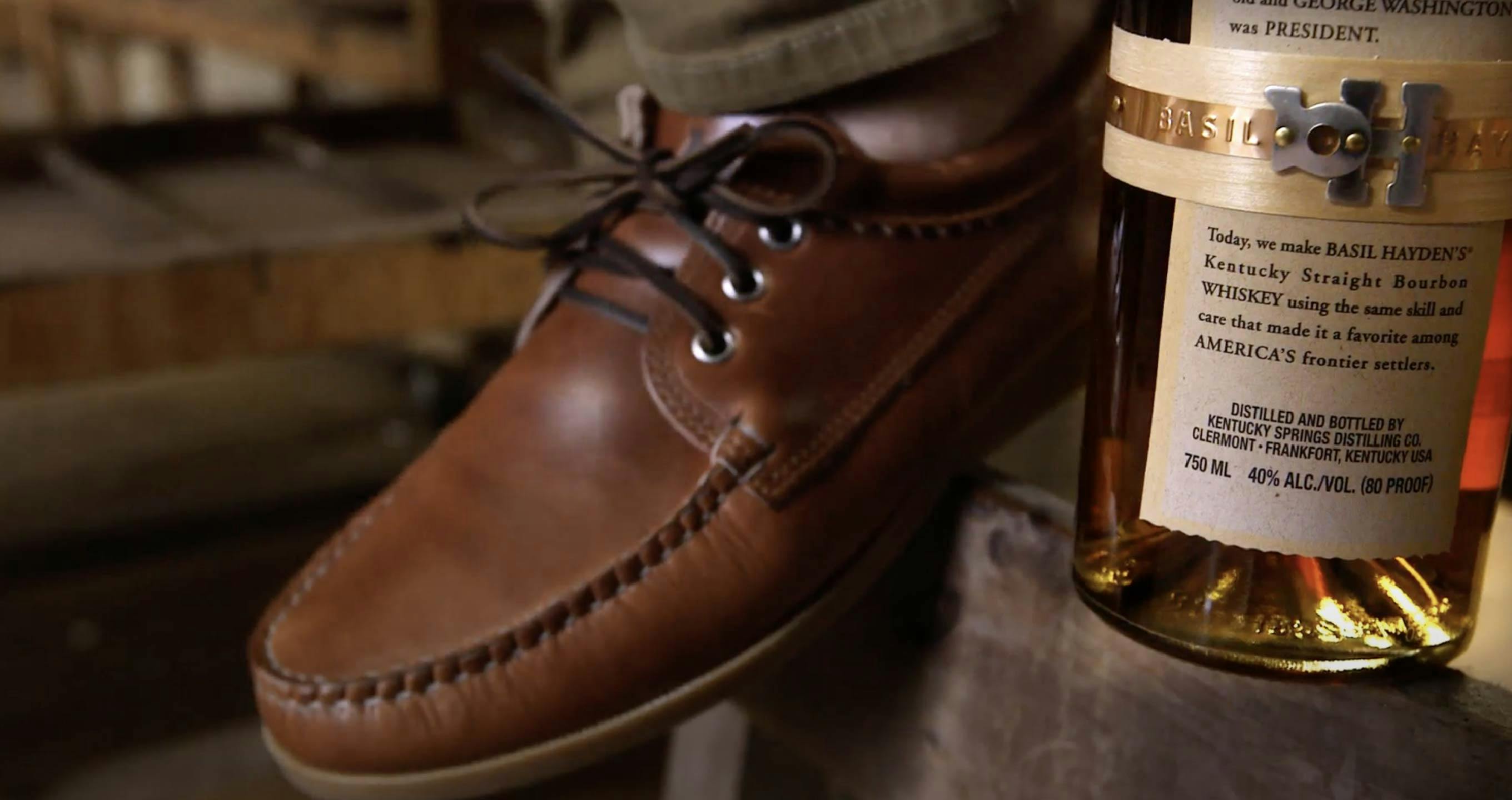
The shoes retailed for about $400, sold out immediately, and, according to MULTIPLY, more than paid for the campaign. That is a compact piece of commercial theater: the prop was also inventory. The disclosed cost was what a customer paid for the object, not the agency fee. Yet the sale created a clean proof point. People did not merely like or share the idea. They bought it.
What failed first was the safe version of the plan. For Basil Hayden, by-the-book product marketing had gone stale. For Corona, the brand was disappearing into Cinco de Mayo programming. For G-SHOCK, a retail-first approach no longer matched the move toward ecommerce. The agency’s response was not the same stunt three times. It changed the unit of attention: a physical product, a cultural countdown, a rebuilt social feed.
The recession made the niche
Baum’s route into beverage was indirect. He started in politics, working with strategist and Kennedy speechwriter Bob Shrum, then moved through the dot-com world and helped start Blackboard. During the 2008 downturn, his agency landed its first spirits client. The constraint helped reveal the lane: drinks are crowded, ritual-rich, regulated, seasonal, and unusually dependent on both storytelling and distribution.
That specialization now runs through the client list: Molson Coors, Corona, Blue Moon, Peroni, AriZona, Beam Suntory brands, Bolthouse Farms, Liquid Death, Fireball, HOPWTR. In 2026, Baum announced a partnership with beverage accelerator LA Libations, pairing marketing with distribution support. It is a telling addition. The funniest campaign cannot rescue a product that cannot reach a cold box. Attention and availability have to meet.
The agency has also widened the machine. Its HUZZAH launch built a consumer brand world, a Shopify presence, Molson Coors’ first Instagram-shoppable experience, and the company’s first TikTok ads. For Liquid Death, the problem was volume: even a loud brand needed more paid creative than its internal team could continuously make. MULTIPLY produced a library of retro-ad and infomercial spoofs designed to rotate, not one film intended to sit on a pedestal.
The part that will not travel
There is a temptation to reduce this work to “do something weird.” That misses the hard part. The drinking shoes worked because bourbon and handsewn leather could plausibly share a craft story. The Corona lime worked because no explanation was required. The Home Edit could sell Blue Moon LightSky’s promise to “lighten up” because decluttering and a lighter beer occupied the same patch of language.
It travels when…
The product has a recognizable ritual, the idea can be retold in one breath, and distribution is ready when attention arrives.
It stalls when…
The stunt needs a paragraph of explanation, celebrity substitutes for relevance, or a limited object has no path into the larger brand.
There are also categories where the approach needs restraint. A mischievous prop is less useful when trust, safety, or technical proof is the main purchase barrier. Even in beverage, novelty decays quickly. A brand cannot live on launches alone. The transferable lesson is therefore less theatrical: make the creative idea carry several jobs. It should earn attention, produce content, invite action, and clarify something true about the product.
MULTIPLY describes its culture with three clipped commands: People First. Work Happy. Hustle Hard. Its current line is even shorter: Fight Boring. The danger of a line like that is obvious - boredom is easy to diagnose and difficult to eliminate on schedule. But the agency’s better work suggests a practical definition. Boring is an idea that belongs to its channel and nowhere else. Interesting is an idea that escapes.
The prop is not decoration. It is the plot.
A lime falls. A shoe sells. A keg becomes a headline before anyone tastes what is inside it. Each is a small machine for moving a story between people. MULTIPLY’s real service is building that machine, then giving it enough outlets - a newsroom, a feed, a store, a party - to keep running.